Skip to Content

Planned Strategically, Federal Buy Clean Investment Can Increase Its Impact Exponentially 

To grow the market for low-carbon building materials, agencies must coordinate with states, involve the private sector in development, and leverage federal funds.

With public procurement under the Buy Clean policies of the Inflation Reduction Act and Infrastructure Investment and Jobs Act, the U.S. General Services Administration, the U.S. Department of Transportation, and states have an enormous opportunity to launch, cultivate, and support a robust market for low-carbon materials like concrete, steel, glass, and asphalt, which will be critical to reducing embodied carbon emissions in buildings while decarbonizing the industrial sector. 

To achieve this transformation, the federal agencies must select projects strategically, coordinate with state and local efforts to drive demand, involve the private sector in the project development process to build capacity, and leverage other federal funding to grow the market for low-carbon materials. Using concrete as an example, we identify regions of the United States where these efforts are more likely to succeed based on the size of the construction market, the number of concrete and cement manufacturers and contractors, readiness to support new construction techniques and capacity of the workforce to do so, and locations of GSA-owned buildings. 

We rank states on their potential to scale up low-carbon concrete based on these factors. The top ten states are California, New York, Texas, Colorado, Michigan, Illinois, Ohio, Florida, North Carolina, and Washington. Without clear government commitment to sustaining the low-carbon concrete market through its early and riskiest stages, manufacturers will be reluctant to enter it. It is critical that policymakers understand these concerns and take targeted action, with priority to the states we have identified in this brief. 
Related Resources

Toward Best Practices for Industrial Innovation: Lessons from the Department of Energy’s Industrial Demonstrations Program
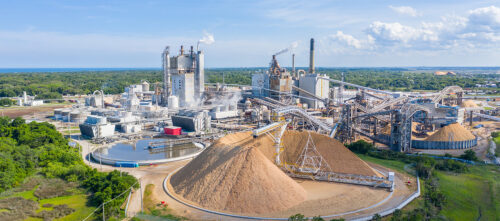
Aerial shot of Paper Mill In Northeast Florida
  • Research Report
  • Industry and Manufacturing
  • Toward Best Practices for Industrial Innovation: Lessons from the Department of Energy’s Industrial Demonstrations Program

    This paper highlights a central lesson for policymakers: Industrial innovation requires alignment across government programs (grants, procurement), financing mechanisms (tax credits, loans), and institutional capacity. When these three are backed by sustained commitment from the public sector, private industry, and external stakeholders, the transition from demonstration to deployment becomes viable.

    Sep 14, 2026

    Bridging the Equity Gap for Utility Energy Efficiency Programs
    equity
  • Research Report
  • Affordability and Energy Equity
  • Energy Efficiency Policy
  • Homes and Buildings
  • Utilities and the Power Sector
  • Bridging the Equity Gap for Utility Energy Efficiency Programs

    Utility energy efficiency programs have increased investment in low-income households, but significant gaps remain. This report examines spending and savings trends across 48 major U.S. utilities, identifies barriers to expanding low-income programs and highlights policies and program strategies that can improve energy affordability and equitable access to efficiency upgrades.

    Jul 31, 2026

    Support the Work That Makes Energy Go Further

    ACEEE’s independent research and advocacy depend on the support of foundations, businesses, and individuals committed to cutting energy bills, waste, and climate pollution.