2026 R2E2 TA Cohort Application: Applications due by Friday, July 24th
Nationwide Initiative to Accelerate Energy Upgrades for Affordable Housing
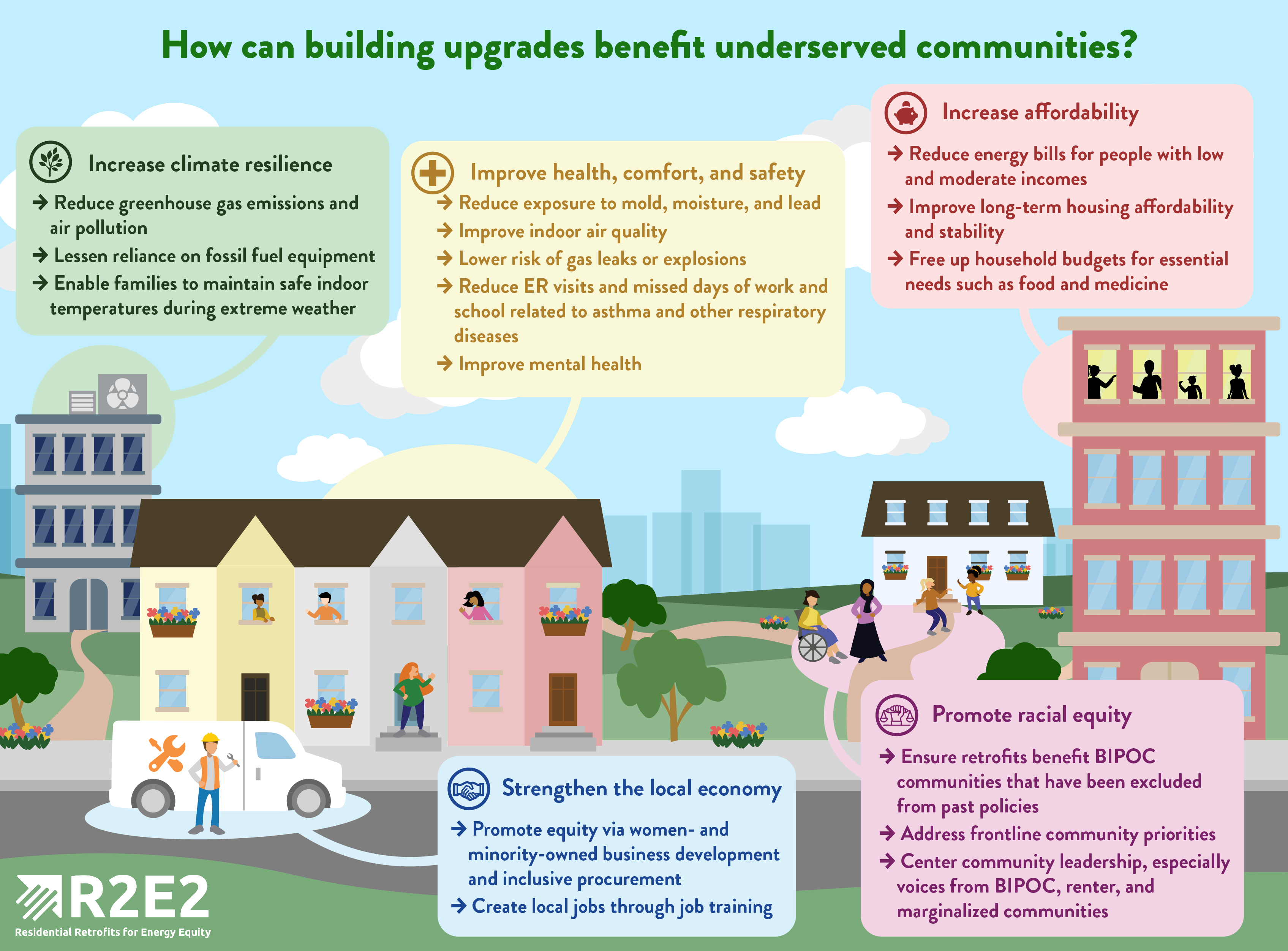
Residential Retrofits for Energy Equity (R2E2) provides deep technical assistance to state, local, and tribal governments as well as community-based organizations to jumpstart energy upgrades for single family and multifamily affordable housing, especially in frontline communities. These retrofits will lower utility bills, reduce greenhouse gas emissions, improve residents’ health, create good-paying local jobs, and help mitigate racial inequity.
From 2022 to 2025, R2E2 provided training and capacity building assistance to 45 local teams participating in a federal prize initiative to scale building energy upgrades in their communities. Separately from this work, R2E2 provides technical assistance to state and local governments, community-based organizations, and other entities to jumpstart energy retrofit programs rooted in energy equity for both single family and multifamily low- to moderate-income housing (“LMI” housing).
R2E2 is a partnership of the American Council for Energy-Efficient Economy (ACEEE), Elevate, Emerald Cities Collaborative, and HR&A Advisors. During the initiative’s start-up phase, People’s Climate Innovation Center advised on centering equity in the project and its outcomes and on facilitating community-driven planning processes.
The Problem
Energy insecurity is particularly acute in Native American, Black, and Hispanic households, which spend an average of between 20% and 45% more of their incomes on energy bills than non-Hispanic white households. Higher energy burdens correlate with greater risk for respiratory diseases, increased economic hardship, and difficulty moving out of poverty. Poor insulation, inefficient appliances, and air leaks in windows, doors, and walls are key reasons for higher energy burdens. Weatherization and other energy-saving measures can significantly decrease energy burdens, but affordable housing is typically not prioritized for energy upgrades.
 "Our transition to an energy-efficient economy must include underinvested communities that have been most impacted by our history of environmental injustice."
– Meishka Mitchell, former CEO, Emerald Cities Collaborative
 "We're taking a holistic approach to zero-carbon buildings in a way that benefits the communities that need it most."
– Henry Love, Senior Director of Municipal and Community Programs, Elevate
Centering Community Priorities and Racial Equity
R2E2 advances energy equity by helping communities fairly distribute resources, authentically engage underserved residents, support local leadership and workforce development, and reach those historically excluded, including BIPOC communities and renters. We will be transparent and accountable, center community voices, embrace community ideas, and fairly compensate community partners for their time and expertise.
To ensure these communities benefit from job creation, R2E2 identifies models for jurisdictions to work with community-based businesses, implement job training for local residents, and develop inclusive procurement practices.
How We Work
R2E2 offers guidance on energy upgrade financing models, economic inclusion, and navigating the complexities of the affordable housing sector. We help local teams design energy upgrade plans that leverage funding and financing from sources such as existing state programs, utility incentives, federal programs, and private sources.
The aim of R2E2 is to drive policy and program innovation, with government and community groups building long-term relationships and capacity to accelerate community-driven policies for home energy upgrades that promote energy equity. Solutions are geared toward public housing, privately-owned subsidized housing with affordability requirements, and unsubsidized housing serving low-to-moderate income renters.
 "“The R2E2 team did a fantastic job truly listening and understanding the gaps in knowledge and resources that the District of Columbia Housing Authority had and identifying the deliverables the agency would need to fill those gaps. This initiative is incredibly helpful!”
– Isabel Guide, Sustainability Manager, District of Columbia Housing Authority
 “As a local grassroots community organization, we are not always able to be in consistent conversation with local government agencies. Being part of R2E2’s technical assistance cohort gave us the ability to strengthen these relationships and help narrow the information silos between government and community sectors.”
– Alison Dunn Almaguer, Executive Director, Washington Interfaith Network
 “Our experience with R2E2 was incredibly positive and provided a vital framework for our low-income retrofit program expansion efforts. The technical assistance has given us the confidence to scale our energy efficiency and healthy homes programs into new geographies and to underserved clients.”
– Jim Plantico, In Homes Program Director, Community Energy Project


Stay Informed
To receive periodic updates and information about Residential Retrofits for Energy Equity, sign up below.