ACEEE | American Council for an Energy-Efficient Economy
Sep 20, 2023
A Modeling Approach to Estimate Handprint Impacts: Applications in Grid Management and Fleet EV Charging
Information and communication technologies (ICT) can help reduce emissions in applications across the supply chain. However, because many actors contribute to developing and implementing ICT soluti…
Information and communication technologies (ICT) can help reduce emissions in applications across the supply chain. However, because many actors contribute to developing and implementing ICT solutions in complex value chains, it is difficult to quantify—much less attribute to individual entities—the emissions reductions these technologies enable. There is not yet an agreed-upon methodology for these calculations.
Carbon handprint is an emerging accounting method to overcome this barrier. A carbon handprint refers to the difference in emissions between a baseline process and the same process with a new application that reduces emissions; in this case, new technology. When paired with a carbon footprint estimation, the handprint provides a more comprehensive understanding of companies’ emissions reduction contributions in the supply chain.
This white paper—intended as a proof of concept—evaluates the potential of the carbon handprint to help calculate the downstream emissions reductions impacts of two specific applications of ICT: the optimization of utility substations through a grid management solution and the optimization of depot charging of EVs used for short-haul freight, drayage, and fleets. The paper also explores necessary next steps, including pilot planning and policy in order to further the handprint concept towards attribution.
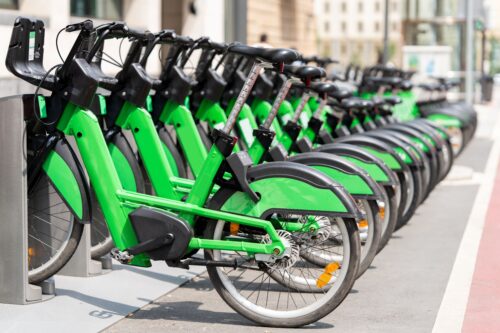
Explore practical strategies, best practices and case studies for planning and implementing clean transportation projects, including electric vehicles, e-bike programs and charging infrastructure, with a focus on improving mobility, reducing costs and expanding transportation access in underserved communities.
Toward Best Practices for Industrial Innovation: Lessons from the Department of Energy’s Industrial Demonstrations Program
This paper highlights a central lesson for policymakers: Industrial innovation requires alignment across government programs (grants, procurement), financing mechanisms (tax credits, loans), and institutional capacity. When these three are backed by sustained commitment from the public sector, private industry, and external stakeholders, the transition from demonstration to deployment becomes viable.
This report identifies pathways for India’s cement industry to decarbonise at a pace compatible with the national climate goal of net-zero emissions by 2070.
Support the Work That Makes Energy Go Further
ACEEE’s independent research and advocacy depend on the support of foundations, businesses, and individuals committed to cutting energy bills, waste, and climate pollution.
Hoffmeister, Andrew, Pavitra Srinivasan, Avi Mersky, and Ethan Taylor. 2023. A Modeling Approach to Estimate Handprint Impacts: Applications in Grid Management and Fleet EV Charging. Washington, DC: ACEEE. aceee.org/resource/modeling-approach-estimate-handprint-impacts