Skip to Content
  • Toolkit
  • Transportation
  • Nov 20, 2026

    Engaging Communities to Inform Electric Truck Infrastructure Decisions

    This toolkit helps guide local, regional, and state government agencies, freight hubs, charging hub developers, and electric truck fleets in the important work of partnering with communities as they plan for and invest in electric truck charging infrastructure. We interviewed members of six community-focused organizations and representatives from a state agency, a port, and a charging hub developer. Strategies gleaned are grouped into four key steps in the community engagement timeline: preparing for engagement, early contact and planning, communicating and making decisions with the community, and post-project follow-through. The robust community engagement described is critical because it helps maximize the benefits derived from electric truck deployment and supports the communities most impacted by diesel truck pollution. This level of engagement can also build support for projects, mitigate delays due to opposition, and ensure the development of long-lasting solutions by incorporating transparency and investment from the outset.

    Summary

    This toolkit helps guide local, regional, and state government agencies, freight hubs, charging hub developers, and electric truck fleets in the important work of partnering with communities as they plan for and invest in electric truck charging infrastructure. We interviewed members of six community-focused organizations and gathered additional information via interviews with representatives from a state agency, a port, and a charging hub developer. Strategies gleaned from these discussions are grouped into four key steps in the community engagement timeline: preparing for engagement, early contact and planning, communicating and making decisions with the community, and post-project follow-through. The robust community engagement described here is critical because it helps maximize the benefits derived from electric trucks and supports the communities most impacted by diesel truck pollution.

    Introduction

    To meet climate goals, reduce air pollution, and lower freight operating costs, state agencies, local governments, fleets, and other entities are beginning to accelerate the transition from diesel freight trucks to battery electric trucks. Electric trucks have lower greenhouse gas emissions and eliminate the tailpipe pollutant emissions, including nitrogen oxides (NOx) and fine particulate matter (PM2.5), that come from diesel trucks.1Rakesh Krishnamoorthy Iyer et al., “Vehicle-Cycle and Life-Cycle Analysis of Medium-Duty and Heavy-Duty Trucks in the United States,” Science of The Total Environment 891 (September 2023): 164093, https://doi.org/10.1016/j.scitotenv.2023.164093; Sara F. Camilleri et al., “Air Quality, Health and Equity Implications of Electrifying Heavy-Duty Vehicles,” Nature Sustainability 6 (September 2023): 1643–53, https://doi.org/10.1038/s41893-023-01219-0.See all footnotes To facilitate this transition, public and private truck charging infrastructure—charging stations that are publicly available or only available to a specific fleet, respectively—must be developed. Given this and the importance of prioritizing community perspectives, this toolkit helps guide local, regional, and state government agencies, freight hubs such as ports and intermodal facilities, charging hub developers, and electric truck fleets (collectively referred to as “project leads”) in partnering with communities as they plan for and invest in electric truck charging infrastructure.2This toolkit defines project leads as public and/or private entities that are funding or installing truck charging infrastructure. Community-based organizations (CBOs) can also fund and install charging infrastructure, but this resource uses project leads as a single term for stakeholders who would be engaging with CBOs.See all footnotes

    Not every process will involve the same timelines or actors, but effective community engagement can ensure that local harms are reduced and the benefits of these infrastructure projects are shared with all impacted stakeholders. Strong community engagement requires time and resources, and must be done with transparency and collaboration. Achieving it can ensure that the benefits of electric trucking, including improved air quality and reduced noise, are delivered to affected communities, including historically disadvantaged ones. This level of engagement can also build support for projects, mitigate delays due to opposition, and ensure the development of long-lasting solutions by incorporating transparency and investment from the outset.

    In addition to investing in electric truck charging, state departments of transportation may be seeking to partner with private companies to enable industrial development along highways through the America’s Great Corridors of Commerce initiative.3“America’s Great Corridors of Commerce; Request for Information,” Federal Register, September 11, 2026, https://www.federalregister.gov/documents/2026/09/11/2026-18521/americas-great-corridors-of-commerce-request-for-information.See all footnotes New manufacturing facilities can bring jobs to historically disadvantaged communities, but they can also bring concerns with siting, increased air pollution, and other hazards to communities that already experience high levels of pollution. States and developers should consider the impact on communities already experiencing local harms from industry, how their project may reduce or increase those impacts, and how community benefits and harm reductions are negotiated with the community. Furthermore, as of October 2026, the U.S. Environmental Protection Agency (EPA) is considering amendments to regulations involving the emissions of heavy-duty trucks. The proposed rule would allow trucks experiencing a failure in their selective catalytic reduction (SCR) emission control system to continue operating.4U.S. Environmental Protection Agency, “Trump EPA Unveils Proposal to Save Truckers $12 Billion by Revising Unworkable Biden-Era Rule,” news release, July 9, 2026, https://www.epa.gov/newsreleases/trump-epa-unveils-proposal-save-truckers-12-billion-revising-unworkable-biden-era-rule; Dave Cook, “Diesel Emission Controls Work … Which Is Why They Are Under Attack,” Transportation, Union of Concerned Scientists (blog), August 12, 2026, https://blog.ucs.org/dave-cooke/diesel-emission-controls-workwhich-is-why-they-are-under-attack/.See all footnotes If finalized, this rule would result in significantly higher NOx pollution from the industry.5Dave Cook, “Diesel Emission Controls Work … Which Is Why They Are Under Attack.”See all footnotes Thus, charging infrastructure that is developed in close collaboration with disproportionately exposed communities is more critical than ever.

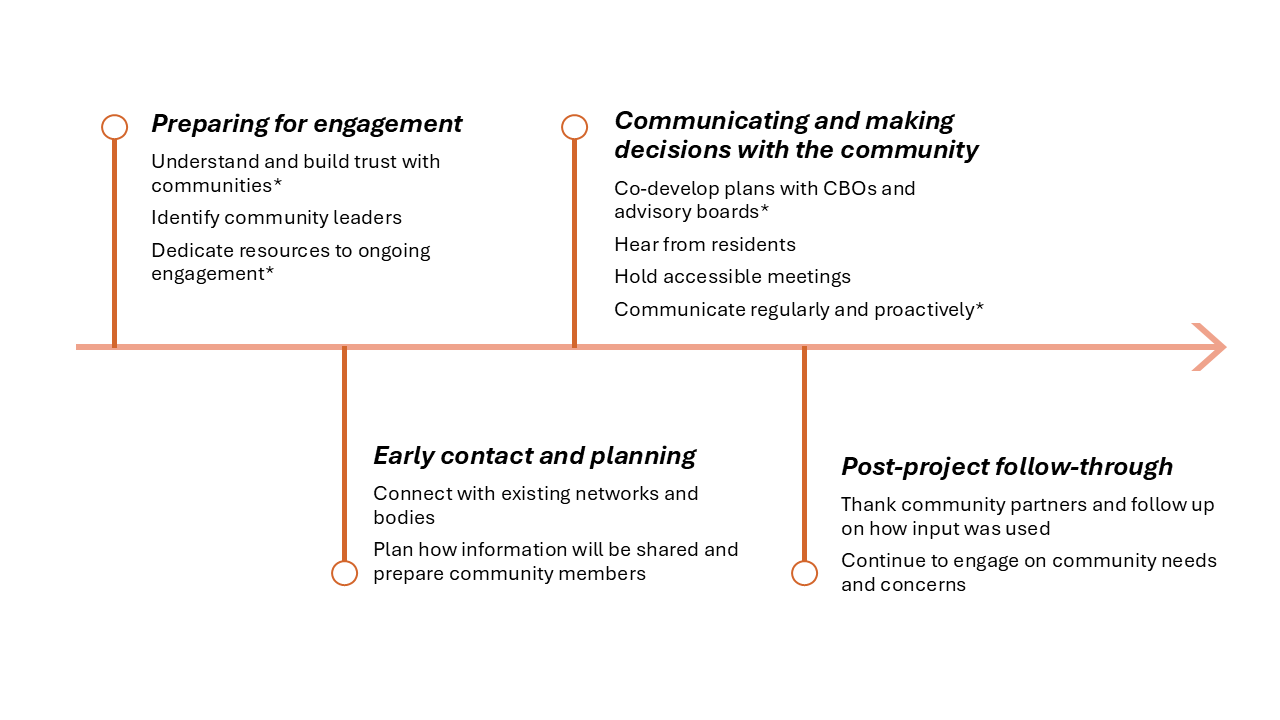
    To help inform the strategies included in this toolkit (figure 1), we conducted exploratory interviews with members of six community-focused organizations. These allowed us to learn about preferred engagement practices from organizations working extensively to reduce freight-related pollution in their communities. We also interviewed one representative each from a state agency, a port, and a charging hub developer. The strategies presented here are additionally supported by literature on inclusive community engagement. See Appendix A for additional details of our approach.

    A timeline with key steps for community engagement. Each step and strategy is described in the “Steps and strategies for engaging communities on truck charging infrastructure” section.

    Figure 1. Summary of our key steps for robust engagement. The strategies identified in our interviews as among the highest priority are noted with an asterisk.

    How communities are impacted by freight

    More than 66 million Americans, nearly one-fifth of the country’s population, live near freight transport hubs.6Sam Wilson, Addressing Freight Pollution at the Source (Union of Concerned Scientists, 2026), https://www.ucs.org/sites/default/files/2026-05/addressing-freight-pollution-at-source-report.pdf.See all footnotes These communities are significantly exposed to NOX, PM2.5, volatile organic compounds, carbon monoxide, and other air pollutant exposure that results from freight transport.7Jason G. Su et al., “Impacts of Port and Locomotive-Related Air Pollution on Respiratory Symptoms within Vulnerable Communities in Southern California,” Environment International 202 (2025), https://www.sciencedirect.com/science/article/pii/S0160412025003691; Michelle Meyer et al., Seattle Drayage Truck Emissions and Environmental Justice Analysis (TRUE Initiative, 2026), https://trueinitiative.org/wp-content/uploads/2026/01/Seattle-drayage-truck-emissions_Jan-2026-.pdf; Maninder P. S. Thind et al., “Environmental Health, Racial/Ethnic Health Disparity, and Climate Impacts of Inter-Regional Freight Transport in the United States,” Environmental Science & Technology 57, no. 2 (2022): 884–95, doi: 10.1021/acs.est.2c03646; Shuai Pan et al., “The Air Quality and Health Impacts of Projected Long-Haul Truck and Rail Freight Transportation in the United States in 2050,” Environment International 130 (2019), https://www.sciencedirect.com/science/article/pii/S0160412019300376.See all footnotes Diesel trucks in particular produce substantial NOX and PM2.5, and these elevate the risk of health problems including cancer, cardiovascular and respiratory disease, child development issues, and premature death.8Douglas Houston et al., “Diesel Truck Traffic in Low-Income and Minority Communities Adjacent to Ports: Environmental Justice Implications of Near-Roadway Land Use Conflicts,” Transportation Research Record 2067, no. 1 (2008): 38–46, doi.org/10.3141/206; Su et al., “Impacts of Port and Locomotive-Related Air Pollution on Respiratory Symptoms within Vulnerable Communities in Southern California.”See all footnotes A 2019 study estimated that 5,800 premature deaths per year in the United States can be attributed to PM2.5 emissions from combination trucks.9Thind et al., “Environmental Health, Racial/Ethnic Health Disparity, and Climate Impacts of Inter-Regional Freight Transport in the United States.”See all footnotes

    Like many other public health issues, the harms of freight-related air pollution are disproportionately suffered by disadvantaged communities, many of which live near busy highways and ports.10Daniel J. Hutch et al., “Potential Strategies to Eliminate Built Environment Disparities for Disadvantaged and Vulnerable Communities,” American Journal of Public Health 101, no. 4 (2011): 587–95, https://doi.org/10.2105/AJPH.2009.173872; Sheila Cyril et al., “Exploring the Role of Community Engagement in Improving the Health of Disadvantaged Populations: A Systematic Review,” Global Health Action 8, no. 1 (2015): 29842, doi: 10.3402/gha.v8.29842; Mark Barna, “Freight Routes Harm Health of Nearby Residents: People of Color, Low Incomes Disproportionately Harmed,” The Nation’s Health (2022), https://www.thenationshealth.org/content/52/8/13.1.See all footnotes Communities of color and low-income individuals, especially those who live close to ports, have been shown to have greater health risks than white, wealthy households who tend to live in less polluted neighborhoods. For example, Native American, Latino, and Asian residents of Seattle’s diverse Duwamish Valley experience notably high NOX exposure from drayage trucks; the International Council on Clean Transportation found that emissions from drayage truck idling exposed people of color to 33% higher NOX pollution than non-Latino white residents. Much of this pollution exposure occurred in the neighborhoods of Georgetown and South Park, which are designated environmental justice communities by EPA.11Meyer et al., Seattle Drayage Truck Emissions and Environmental Justice Analysis; University of Washington, “Duwamish Valley,” accessed on November 9, 2026, https://edge.deohs.washington.edu/duwamish-valley.See all footnotes

    Truck traffic and safety are additional concerns for affected communities. Trucks can account for as much as 40% of total traffic along major highways, and in a 2010 study, this was estimated to cost $7.8 billion per year in delays.12Kazuya Kawamura and Laya Hossein Rashidi, “Economic, Environmental and Congestion Impacts of Trucking,” Procedia-Social and Behavioral Sciences 2, no. 3 (2010): 5920–30, https://doi.org/10.1016/j.sbspro.2010.04.007.See all footnotes Increased volumes of medium- and heavy-duty (MHD) vehicles passing through residential neighborhoods also raise concerns about road safety, particularly safe routes to schools. Thus, managing freight traffic will require solutions that prioritize the health and safety of multiple vulnerable groups.

    Context and critical partners in truck electrification decisions

    Various stakeholders play important roles in the transition to electric MHD trucks. The description of these roles below is informed by a review of the literature on electric MHD vehicles.

    Critical partners in truck electrification decisions
    An icon of a government building

    State agencies

    Several state governments have established funding programs to support truck charging infrastructure. For example, California established the EnergIIZE (Energy Infrastructure Incentives for Zero-Emission) Commercial Vehicles project in 2021, and it awards funding for electric charging and hydrogen refueling equipment for MHD vehicles.13California Energy Commission, “Implementation Manual for Energy Infrastructure Incentives for Zero-Emission (EnergIIZE) Commercial Vehicles Project,” 2025, https://energiize.org/wp-content/uploads/2025/12/FINAL_EnergIIZE_IM_Q3_10.14.25-1.pdf.See all footnotes Additionally, agencies like the Illinois Department of Transportation invited proposals for National Electric Vehicle Infrastructure (NEVI) funding for both light-duty and MHD vehicle charging infrastructure during summer 2026.14National Association of State Energy Officials, “Funding Mechanisms for Medium- and Heavy-Duty Electric Vehicles and Charging Infrastructure: Options for States,” June 2026, https://www.naseo.org/Data/Sites/1/documents/publications/NEW%20-%20Final_Funding%20Options%20for%20States%20to%20Support%20MHDV%20EV%20Charging%20and%20Vehicles_060926%203.pdf.See all footnotes A detailed overview of various state efforts is in a 2026 ACEEE report that analyzed infrastructure needs and costs for regional and long-haul trucking.15Rachel Aland et al., Pathways to Zero-Emission Freight: Infrastructure Needs for Regional and Long-Haul Trucking (ACEEE, 2026), https://www.aceee.org/research-report/t2601.See all footnotes

    An icon of a container crane

    Freight facilities

    Ports and other freight facilities leverage state and federal funding to install charging infrastructure for electric drayage trucks, electric cargo handling equipment, and other equipment and vehicles. In 2024, EPA awarded $2.8 billion through the Clean Ports Program to applicants across 17 states to deploy zero-emission port equipment and infrastructure.16U.S. Environmental Protection Agency, “Clean Ports Program Awards,” accessed on July 19, 2026, https://www.epa.gov/ports-initiative/clean-ports-program-awards.See all footnotes

    An icon of a government building

    Local governments

    Cities and counties process permit applications from charging hub developers seeking to construct a new hub. State legislation can also require local governments to streamline permitting processes, as California did with AB 1236 and AB 970.17California Governor’s Office of Business and Economic Development, “Electric Vehicle Charging Station Permit Streamlining Fact Sheet,” n.d., https://business.ca.gov/wp-content/uploads/2021/11/EV-Charger-Permit-Streamlining-AB-1236-Fact-Sheet-Version-1.pdf.See all footnotes In some cases, zoning codes must be updated to accommodate truck charging stations.

    An icon of an electric vehicle charging station

    Developers

    MHD charging hub developers build and often operate charging stations, and the charging ports provide anywhere from 50 kW to 1.2 MW of power for MHD vehicles. These stations are typically either public, in which case any fleet can access and charge at the station, or shared, in which case fleets must sign a contract with the charging hub or reserve a spot in advance.18Daivie Ghosh, Shared Charging Hubs for Medium- and Heavy-Duty Electric Vehicles (ACEEE, 2025), https://www.aceee.org/sites/default/files/pdfs/shared_charging_hubs_for_medium-_and_heavy-duty_electric_vehicles.pdf.See all footnotes Additionally, some fleets build their own private charging depots that exclusively serve their trucks.19Electrification Coalition, “An Overview and Assessment of Drayage Charging Site Models,” May 13, 2025, https://electrificationcoalition.org/resource/an-overview-and-assessment-of-drayage-charging-site-models/.See all footnotes Charging hub developers are often the first to propose the location of a charging station, although the funding source (including state governments), local authorities, and local community can also inform or place requirements around siting.

    An icon of a transmission tower

    Utilities

    Utilities play a critical role in supplying the electricity needed to recharge electric trucks. However, the local grid’s capacity might not be prepared to support 10+ MW charging sites. In that case, the utility may need to upgrade or build new substations, and that could result in a substantially longer charging deployment timeline.20Aland et al., Pathways to Zero-Emission Freight: Infrastructure Needs for Regional and Long-Haul Trucking.See all footnotes For reference, a 10-MW charging site for MHD trucks has the same power demand as a site with 30 Tesla superchargers.21“Supercharger,” Tesla, accessed October 13, 2026, https://www.tesla.com/supercharger.See all footnotes

    An icon of a group of people

    Community-based organizations (CBOs)

    CBOs are representative of a community or substantial segments of a community, defined by place or population, and provide resources aimed at enhancing community welfare. They range from formal organizations with legal nonprofit status to informal, grassroots community groups led by respected community leaders.22Diana Morales and Mandy Lee, Best Practices for Local Governance Boards for Building Energy Upgrade Programs (ACEEE and Emerald Cities Collaborative, 2025), https://www.aceee.org/topic-brief/2025/10/best-practices-local-governance-boards-lgbs.See all footnotes Many CBOs focused on environmental justice conduct activities to help inform decisions around MHD charging infrastructure. Such activities range from collecting local air quality and truck traffic data to partnering with other CBOs, universities, and nonprofits to develop and advocate for specific trucking-related policies and outcomes. Many CBOs also identify and uplift local priorities around truck pollution and the electric truck transition. A list of local and state nonprofits working to advance clean freight in their communities is in Appendix B.

    An icon of a house

    Residents

    Residents living near future electric truck charging stations are directly impacted by these stations. They can help inform decisions by providing project leads with valuable, on-the-ground insights based on their lived experiences.

    An icon of a truck

    Drivers and owner-operators

    Truck drivers and owner-operators who own and operate their own trucking companies are key partners because they will use the truck charging infrastructure. They are also more likely than larger private fleets to rely on public or shared charging infrastructure.23Claire Sugihara and Gil Botham, Compendium of Responses to Medium- and Heavy-Duty Vehicle Charging Related RFIs (New Jersey Department of Environmental Protection, 2026), https://cleancorridorcoalition.org/wp-content/uploads/2026/05/mhdv-rfi-response-compendium.pdf.See all footnotes The Puget Sound Zero-Emission Truck Collaborative’s Decarbonizing Drayage Roadmap contains insights from discussions with approximately 20 truck drivers, including their views of the benefits of zero-emission trucks and concerns around charging costs, route planning, and other potential challenges.24Puget Sound Zero-Emission Truck Collaborative, Decarbonizing Drayage Roadmap (2025), https://www.rossstrategic.net/Zero-Emission-Truck-Collaborative/docs/Puget%20Sound%20ZE%20Truck%20Collaborative%20Roadmap.pdf.See all footnotes

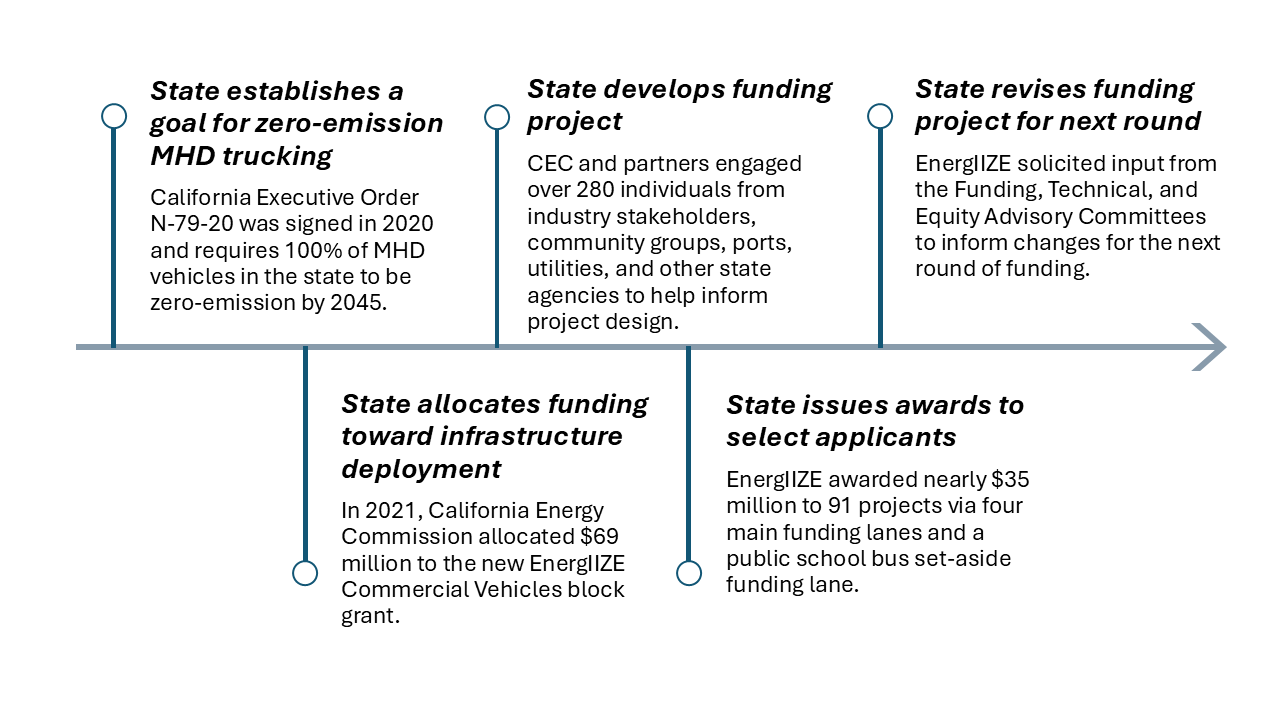
    The process of funding and deploying truck charging infrastructure varies from place to place and the example in figure 2 is from California. In this California process, the strategies in our toolkit that are applicable to state agencies would begin in the third step, “state develops funding project.” However, different partners will initiate engagement at different stages; for example, ports, local and regional governments, and utilities can begin to build relationships with communities before funding is allocated.

    A timeline of California’s EnergIIZE project. The first step reads “State establishes a goal for zero-emission MHD trucking” with the description, “California Executive Order N-79-20 was signed in 2020 and requires 100% of MHD vehicles in the state to be zero-emission by 2045”. The next step reads “State allocates funding toward infrastructure deployment” with the description, “In 2021, California Energy Commission allocated $69 million to the new EnergIIZE Commercial Vehicles block grant.” The following step reads “State develops funding project” with the description, “CEC and partners engaged over 280 individuals from industry stakeholders, community groups, ports, utilities, and other state agencies to help inform project design.” The next step reads “State issues awards to select applicants” with the description, “EnergIIZE awarded nearly $35 million to 91 projects via four main funding lanes and a public school bus set-aside funding lane.” The last step reads “State revises funding project for next round” with the description, “EnergIIZE solicited input from the Funding, Technical, and Equity Advisory Committees to inform changes for the next round of funding.”

    Figure 2. Sample timeline of MHD charging infrastructure deployment from the perspective of a state agency. This example follows the timeline of the Energy Infrastructure Incentives for Zero-Emission (EnergIIZE) Commercial Vehicles Project in California.25Patrick Brecht, 2022–2023 Investment Plan Update for the Clean Transportation Program (California Energy Commission, 2023), https://www.energy.ca.gov/publications/2022/2022-2023-investment-plan-update-clean-transportation-program-0; Benjamin Tuggy, “2023–2024 Investment Plan Update for the Clean Transportation Program,” California Energy Commission, March 2024, https://efiling.energy.ca.gov/GetDocument.aspx?tn=254963&DocumentContentId=90648; California Energy Commission, “EnergIIZE Impact Map,” accessed on October 13, 2026, https://calstartorg.maps.arcgis.com/apps/dashboards/93ba3501edad4f51beb4d8d4dda46647#; Amanda Le, “EnergIIZE Public Meeting Slides by CalStart,” virtual meeting, November 17, 2021, https://efiling.energy.ca.gov/GetDocument.aspx?tn=240636.See all footnotes

    Three key decisions that can be improved with input from communities

    Local communities, particularly historically disadvantaged communities, can share valuable input to help shape decisions around truck charging infrastructure. While every community has different priorities, needs, and preferences, our interviews identified the following critical decisions for community input:

    • Location of charging stations
    • Pedestrian safety and experience
    • Local workforce support

    In a compendium of responses to six requests for information relating to MHD vehicle charging, several respondents highlighted the need to encourage charging station development in two types of areas: in disadvantaged communities (to support the replacement of diesel trucks that travel through these communities with electric trucks) and near highways.26Sugihara and Botham, Compendium of Responses to Medium- and Heavy-Duty Vehicle Charging Related RFIs.See all footnotes However, multiple interviewees expressed to us that developers should avoid siting stations near schools, in residential areas, or near busy intersections. Decisions around nuanced development and/or adjustment of designated truck routes, which help to mitigate truck traffic in residential areas, are also strengthened with input from CBOs and residents.

    Some interviewees noted increased truck traffic and the resulting impact on pedestrian safety as a concern when thinking about developing new truck charging stations. Therefore, the physical design of the station and surrounding infrastructure should be carefully considered. Finally, the potential for charging station development to benefit the local workforce was a common theme across interviews. Interviewees focused particularly on ways to ensure that truck drivers in historically disadvantaged communities and small owner operators are not left behind as funding is made available to subsidize electric truck purchases and expand charging access.

    Community highlight: Funding workforce training programs for electric vehicles in New Jersey

    The New Jersey Department of Environmental Protection is advancing electric truck infrastructure workforce development using funding it received from an EPA Climate Pollution Reduction Grant. In August of 2026, the department released a request for proposals for workforce training programs that will recruit and train at least 140 individuals in fields supporting electric vehicle infrastructure, including installation, maintenance, repair, and other functions. According to the request for proposals, the selected vendor should prioritize outreach to overburdened communities when recruiting program participants.

    Truck charging stations impact the surrounding community beyond the perimeter of the parcel, and each community has a different perspective on which decisions they are most concerned about as stations are planned and constructed. States, cities, and ports should strive to understand the priorities of each community that will or might receive a charging station.

    Steps and strategies for engaging communities on truck charging infrastructure

    A timeline with key steps for community engagement. Each step and strategy is described in the “Steps and strategies for engaging communities on truck charging infrastructure” section.

    Figure 3. Summary of key steps for robust engagement. While the highest priority strategies based on interviews are noted with an asterisk, some communities may consider other strategies to be highest priority.

    Preparing for engagement

    It is important to have a strong foundation of trust and connection prior to bringing engagement opportunities to communities. While it is not always the case that there are preexisting relationships with every community, local and regional governments, utilities, and port authorities are the prime actors to establish and identify potential organizations and individuals to engage and dedicate resources for engagement. Utilities should also be prepared to discuss the grid’s capacity to support new truck charging stations, any plans to build additional power plants, and potential impacts to ratepayers. State agencies can establish program and policy requirements and provide funding for engagement while collaborating with CBOs and local jurisdictions, and charging hub developers can partner with local jurisdictions that have built relationships with communities to understand local priorities and prepare for engagement. Developers may also find it useful to prepare educational resources and language that will be accessible to ensure that community members and organizations are able to engage in an informed manner.

    Understand and build trust with communities: Building trust takes time and investment, and the best practices for engagement are likely to be more impactful with an existing, positive base level of trust. Trust can be assessed through a variety of means. One way is to evaluate the types and frequency of posts in online spaces like local Facebook groups and Nextdoor; this may involve frequent posts complaining about the lack of city attentiveness to potholes or frequent posts sharing appreciation for city-hosted festivals. It can also be achieved by reviewing the results of funding referendums and considering the level of volunteerism.27Nate Bernitz, “Understanding Public Trust at the Local Level,” University of New Hampshire, September 2024, https://extension.unh.edu/resource/understanding-public-trust-local-level.See all footnotes Trust can be increased by identifying and executing high priority, short-term initiatives that deliver immediate positive impact in the community.28ACEEE, “Section 1: Planning an Equitable Engagement Process,” R2E2 Playbook, accessed on July 20, 2026, https://r2e2playbook.org/section-1-planning-an-equitable-engagement-process/.See all footnotes For example, one interviewee noted that an elected official in their community championed the construction of a local health center that was a high priority for residents. The official also showed up for the community by hosting community cleanup events and installing new signage. Showing a genuine interest and willingness to spend time on improving community members’ lives can build trust. Figure 4 shows the dimensions of public trust.

    Public Trust Issue Set
    Narrow Broad
    People Specific Someone trusts the town’s snowplow driver will not block their driveway with snow Someone trusts that the longtime town manager will be helpful on whatever issues come up, and if there is an issue they will contact the town manager directly
    General Someone trusts local government will execute a specific project effectively Someone trusts local government will be efficient and effective on all issues under their purview

    Figure 4. Dimensions of public trust, which can be for specific people or general institutions in addition to narrow or broad policy issues. Source: Nate Bernitz, “Understanding Public Trust At the Local Level,” University of New Hampshire Extension, September 2024, https://extension.unh.edu/resource/understanding-public-trust-local-level.

    Tips for building trust

    These recommendations are adapted from the New York State Energy Research and Development Authority’s Building Trust and Collaboration in Clean Transportation Projects: A Guide to Community Engagement Plans and the City of Philadelphia’s Equitable Community Engagement Toolkit.29Peter Huether and Daivie Ghosh, Building Trust and Collaboration in Clean Transportation Projects: A Guide to Community Engagement Plans (NYSERDA, n.d.), https://www.nyserda.ny.gov/-/media/Project/Nyserda/Files/Programs/Clean-Transportation-Prizes/Guide-to-Community-Engagement-Plans.pdf; City of Philadelphia, “Building Trust,” Equitable Community Engagement Toolkit, accessed August 13, 2026, https://engagement-toolkit.phila.gov/guides/building-trust.See all footnotes

    • Research the historical, cultural, economic, and environmental context of a community because these factors shape how a community makes decisions.
    • Supplement external research, such as reviewing U.S. Census data, with on-the-ground observations and interactions with community members.
    • Be transparent and honest in all stages of the engagement process, especially about collection and use of personal data, and assure people that their data will not be shared with external groups.
    • Adopt a community-centered mindset to problem-solve with communities, rather than for communities.
    • Share decision-making power with communities.
    • Identify and overcome barriers to building trust, such as a lack of clear follow-up after a prior engagement.
    • Work with trusted messengers such as community leaders to build and strengthen relationships and champion the project’s benefits to the community.
    • Focus engagement on the communities most impacted by freight pollution that would benefit the most from electric truck infrastructure.

    Identify community leaders: Identifying the leadership in communities is critical groundwork prior to presenting specific engagement opportunities. This leadership could come from individuals with direct ties to community organizations and businesses and from residents without those direct ties. Collaborating with CBOs, especially ones that work directly with the community or issue area that the project will impact, is critical to successful engagement. However, project leads should seek to obtain a greater breadth of community perspectives by also engaging other leaders, including those not affiliated with an organization. One interviewee noted that decision-makers and project leads can also support the development of residents into community leaders by providing resources such as civic education opportunities to the community.

    Dedicate resources to ongoing engagement: Fund the time it takes for project or agency staff to build and maintain trusting relationships with communities. The City of Seattle funds two full-time staff members to organize city responses to needs, elevate priorities, and build relationships in the Duwamish Valley. In this structure, CBOs and community members know who to go to with concerns and how to obtain credible information. Building and maintaining relationships over time will ensure that when it is time to engage on topics like electric truck infrastructure, there is faith that community perspectives will be heard, understood, and incorporated. Additionally, building these relationships in advance of securing funding for charging infrastructure will allow engagement to happen more seamlessly when the funding is eventually secured. When developing a budget for relationship-building and community engagement, consider expenses for both ongoing engagement such as staffing and translation services, and for events, things like event materials, meals or snacks, transit stipends, childcare, CBO and/or advisory committee compensation, and more. Facilitating Power created a guide on the Spectrum of Community Engagement to Ownership that outlines recommendations for budget allocations depending on the level of intended engagement.30Rosa González, The Spectrum of Community Engagement to Ownership (Facilitating Power, 2026), https://assets.nationbuilder.com/facilitatingpower/pages/111/attachments/original/1780955277/Spectrum_of_Community_Engagement_to_Ownership_%28CE2O%29_%E2%80%A2_2026_%283%29.pdf?1780955277.See all footnotes

    Community highlight: State-level funding in California to support local community engagement and planning

    California’s AB 617 was enacted in 2017 to reduce air pollution in overburdened communities. The legislation directed the state’s air districts to work with specific local communities to measure and reduce air pollution. This mandate was supported by funding for air districts to conduct community engagement and funding for CBOs to build community capacity, monitor air quality, develop plans, and execute pollution-reduction strategies.31West Oakland Environmental Indicators Project and Bay Area Air Quality Management District, Owning Our Air: The West Oakland Community Action Plan (2019), https://www.baaqmd.gov/~/media/files/ab617-community-health/west-oakland/2019-meetings/100219-files/final-plan-vol-1-100219-pdf.pdf?rev=77062b14b6e64f1196ec7c9aa870d82d; California Air Resources Board, “Implementation Funds,” accessed August 5, 2026, https://ww2.arb.ca.gov/capp/fund/implementation-funds; California Air Resources Board, “Community Air Grants,” accessed August 5, 2026, https://ww2.arb.ca.gov/capp/fund/cag/community-air-grants.See all footnotes AB 617 is an example of one way that state legislatures can allocate resources toward collaborative development and implementation of air quality plans.

    Early contact and planning

    Connect with existing networks and bodies: Work with existing and well-known groups and systems such as standing advisory bodies, local community boards, and engagement notification systems to prepare communities for upcoming opportunities. At the state level, where the local relationships may not be as clear, agencies can connect with local and regional governments to support this identification and connection. There are functioning state-level groups, including the Disadvantaged Communities Advisory Group (DACAG) that advises the California Energy Commission. Comprised of community representatives from across the state, the DACAG gives insight and feedback on program and policy implementation on behalf of disadvantaged communities. These groups are not specific to state-level work, though, and can exist at regional, local, and neighborhood levels, as well. If these groups do not exist or are not regularly being engaged, the Residential Retrofits for Energy Equity (R2E2) initiative has developed a best practice guide for building, operating, and maintaining local governance boards.32Morales and Lee, Best Practices for Local Governance Boards for Building Energy Upgrade Programs.See all footnotes Additionally, seek advice from CBOs, as they may have recommendations on existing informal communication channels.

    Plan how information will be shared and prepare community members: Community members may expect information through certain channels, and staying consistent with use of those channels can ensure that information is coming from an official source. Understanding prior use of these systems and creating a plan to engage with them directly for this effort is an important step. Governments may need to weigh strengths and weaknesses of different communication channels when informing communities. For example, meetings with CBOs can facilitate honest conversations and real-time feedback, but they require substantial time and resources and thus the number of meetings may be limited. Perspectives are also limited to the representatives of the given CBO. Digital communications, on the other hand, are more cost effective in reaching a broad audience on platforms that they already use. However, not everyone has social media or even broadband connection.33Huether and Ghosh, Building Trust and Collaboration in Clean Transportation Projects: A Guide to Community Engagement Plans.See all footnotes

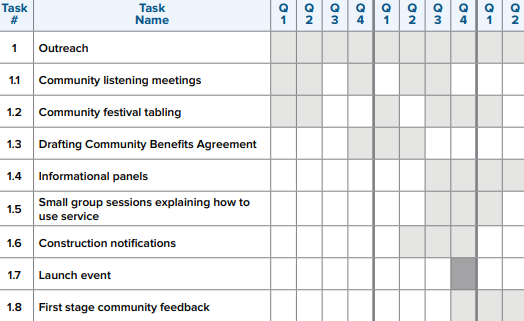
    Generally, a detailed engagement strategy would combine multiple channels of communication to maximize reach and meet different people’s needs and preferences. Figure 5 is a Gantt chart that governments can use to plan and organize different types of community engagement. Regardless of chosen channels, project leads should prioritize identifying community leaders and organizations for direct engagement. Additionally, communications should be provided in multiple languages when reaching out to multilingual communities.

    A Gantt chart outlining 9 tasks (outreach, community listening meetings, community festival tabling, drafting community benefits agreement, informational panels, small group sessions explaining how to use service, construction notifications, launch event, and first stage community feedback). 10 columns follow each task representing each quarter over a two and a half year period, and different columns are highlighted grey for each task.

    Figure 5. Sample Gantt chart for tracking different engagement activities. Source: NYSERDA, “Building Trust and Collaboration in Clean Transportation Projects: A Guide to Community Engagement Plans,” n.d., https://www.nyserda.ny.gov/-/media/Project/Nyserda/Files/Programs/Clean-Transportation-Prizes/Guide-to-Community-Engagement-Plans.pdf.

    Depending on the scale of the project and available resources, project leads can share information about upcoming opportunities, introductory information on topics to support understanding, and developer and agency contact information for the project. Standing advisory boards can be informed early to give feedback on engagement plans and help garner attendance at and participation in engagement events. These groups could also host engagement events and serve as conduits of community perspective.

    Community highlight: Port of Detroit and Southwest Detroit Environmental Vision (SDEV) collaborate on community engagement

    The mission of SDEV is “to work in coalition with residents, community organizations, schools and other community institutions, business and industry, and municipal agencies to improve the quality of life and eliminate pollution-related health impacts in Southwest Detroit and the region.” The Port of Detroit connected with SDEV to serve as the community engagement partner for its Decarbonization and Air Quality Improvement Plan. This effort involves a port-funded Community Advisory Board that has resulted in ongoing community meetings and education sessions. Community ideas and feedback have been incorporated into plan updates, implementation strategies, and additional plans like the port’s roadmap to 2040. More information on what this engagement entails, the input collected from residents, and ongoing updates can be found on the port’s webpage. Today, SDEV and the Port of Detroit are working to prepare the local workforce for the clean energy transition by identifying jobs that will be created or changed, and by mapping the locations of clean energy jobs.34SDEV, “Port of Detroit Decarbonization Planning Project,” accessed August 5, 2026, https://www.sdevweb.org/pod-mobility.See all footnotes

    Communicating and making decisions with the community

    Co-develop plans with CBOs and advisory boards: Project leads should see CBOs as partners. For example, the Bay Area Air District partnered with the West Oakland Environmental Innovators Project and a steering committee composed of several neighborhood, industry, and other groups to co-develop the West Oakland Community Action Plan, which includes several strategies to transition to zero-emission trucks.35West Oakland Environmental Indicators Project and Bay Area Air Quality Management District, Owning Our Air: The West Oakland Community Action Plan.See all footnotes Similarly, members of the Puget Sound Zero-Emission Truck Collaborative, including but not limited to the Northwest Seaport Alliance, City of Seattle, Washington Department of Ecology, and environmental justice organizations like the Duwamish River Community Coalition, worked together to create the Decarbonizing Drayage Roadmap. It outlines guiding principles, recommendations, and near-term actions for transitioning the drayage trucking industry to zero-emission vehicles.36Puget Sound Zero-Emission Truck Collaborative, Decarbonizing Drayage Roadmap.See all footnotes By co-designing solutions and making decisions collaboratively, public-sector staff can move from “inform” or “consult” in Facilitating Power’s Spectrum of Community Engagement to Ownership to “collaborate” (table 1).

    Community highlight: Convening partners of the Duwamish Valley Clean Air Program

    The Duwamish River Community Coalition (DRCC) leads the Duwamish Valley Clean Air Program, which was launched in 2013 after a cumulative impact assessment found that air pollution was a major contributor to lower life expectancy among residents of the Duwamish River Valley. Affected communities have a 13-year shorter average life expectancy than wealthier, whiter areas of Seattle and an eight-year shorter average life expectancy the city average. DRCC brings together governments, nonprofits, universities, and other CBOs around the Clean Air Program’s four strategies, and the first focuses on clean transportation. The solutions its partners identified include engaging truck owners and renters to identify barriers to switching to electric trucks and installing charging infrastructure at nearby ports.37Mia Ayala-Marshall, The Duwamish Valley Clean Air Program (The Duwamish River Community Coalition, 2025), https://static1.squarespace.com/static/5d744c68218c867c14aa5531/t/6920b7fbf72302305f1c602b/1763751931517/FINAL+Duwamish+Valley+Clean+Air+Program+%28Nov+2025%29.pdf.See all footnotes

    Table 1. Simplified depiction of the Spectrum of Community Engagement to Ownership
    Stance toward community Community engagement goals Sample activities Impact
    Defer to Foster democratic participation and equity through community-driven decision-making; bridge the divide between community and governance
    • Community-driven planning, solutions, and governance
    • Participatory action research
    • Cooperative ownership models
    Community ownership
    Collaborate Ensure community capacity to play a leadership role in decision-making and the implementation of decisions
    • Collaborative decision-making
    • Memorandum of understanding with community-based organizations
    • Co-design and co-implementation of solutions
    Delegated power
    Involve Ensure community needs and assets are integrated into process and inform planning
    • Citizen advisory committees
    • Community organizing and advocacy
    • Interactive workshops
    Voice and power shift
    Consult Gather input from the community
    • Public comment
    • Community forums
    • Surveys
    Limited voice or tokenization
    Inform Provide the community with relevant information
    • Fact sheets
    • Presentations
    • Videos
    Preparation or placation
    Ignore Deny access to decision-making processes
    • Closed-door meetings
    • Misinformation
    • Voter suppression
    Marginalization

    Adapted from Rosa González, The Spectrum of Community Engagement to Ownership (Facilitating Power, 2026), https://assets.nationbuilder.com/facilitatingpower/pages/111/attachments/original/1780955277/Spectrum_of_Community_Engagement_to_Ownership_%28CE2O%29_%E2%80%A2_2026_%283%29.pdf?1780955277.

    Hear from residents: Beyond working with CBOs, project leads should engage residents directly on decisions around truck charging infrastructure. Project leads can take advantage of existing networks and events, such as community festivals or church programs, to connect with residents and communities that may have historically been excluded from opportunities to inform policy.

    Hold accessible meetings: When organizing meetings, whether for steering committees, discussions with CBOs, or broader public engagement events, work to ensure that meetings are accessible. This includes hosting meetings in the community at locations accessible by public transit, providing translation services and materials in multiple languages, making information clear to laypeople, and offering childcare for attendees. Accessibility also includes how community members are made aware of the engagement opportunities. Common outreach strategies can include utilizing local media, partnering with CBOs, and utilizing any messaging platforms that the jurisdiction already uses like social media. Project leads can partner with CBOs to identify ideal meeting locations, facilitate discussion, and promote input opportunities to the broader community. Regardless of the level or type of support, CBOs that are asked to support engagement and community members serving on an advisory council should be compensated.

    Communicate regularly and proactively: Project leads should strive to maintain regular and transparent communication with residents and partner organizations. Prior to and during meetings, this includes sharing the project lead’s goals, what parameters of the project can and cannot be changed—this is particularly relevant when the project involves federal funding—and how input will be used. Outside of meetings, regular updates on the project will help keep partners and residents informed and engaged. Several interviewees noted a desire to not be surprised by a major pivot from what was agreed upon through a broad, untargeted social media post; rather, CBOs would often prefer to be informed of major updates directly by project leads, as recognition of their role as project partners.

    Post-project follow-through

    Thank community partners and follow up on how input was used: Even if the community was engaged early and often in the process, concerns were addressed, and ideas were incorporated, engagement should not end with a ribbon cutting. This is because the charging infrastructure and its associated impacts will continue to affect the community. Project leads should transparently share project outcomes, including the final site selection, estimated opening date, and any decisions made around workforce development with community partners and the public. For example, after adopting its sustainability and resilience action plan, Indianapolis created a public online progress tracker that is regularly updated with the status of each action item (“Action Needed,” “In Progress,” or “Complete”).38Indianapolis Office of Sustainability, “Tracking Our Progress,” Thrive Indy, accessed August 5, 2026, https://www.thriveindianapolis.com/tracking-our-progress.See all footnotes Table 2 contains the status of each action in the plan’s Transportation & Land Use Objective 1 as of October 2026. It is important to explain how input was incorporated and recognize the community’s contributions after installation. Project leads may consider planning in advance for follow-up events that include details of project delivery progress and long-term outcome updates, and sharing the plans and timelines for these events at the start of their engagement with the community.

    Table 2. Actions and corresponding status for Transportation & Land Use Objective 1 in the Thrive Indianapolis Plan

    Action Status
    TL:1A Through equitable redesign, extended hours and completing construction on the bus rapid transit lines, IndyGo will increase transit service by 70% and increase ridership by 15%. Action Needed
    TL:1B Implement existing transportation plans to increase the miles of sidewalks, bikeways, trails and complete streets and the number of intersections with safety and operational improvements. Action Needed
    TL:1C Increase transit-oriented development through high density housing, access to employment opportunities and economic growth with measurably less consumption of energy Complete
    TL:1D Encourage local businesses to adopt commuter incentives for employees, to promote alternative modes of commuting such as walking, biking, and transit. In Progress
    TL:1E Continue to identify opportunities to create temporary pedestrian-only zones in our cultural and entertainment districts by 2020. Complete

    Source: Indianapolis Office of Sustainability, “Transportation & Land Use,” Thrive Indianapolis, https://www.thriveindianapolis.com/transportation-land-use

    Continue to engage on community needs and concerns: Agencies, local officials, port officials, and other decision-makers should continue to manage and build relationships with communities after installation, to ensure that the planned benefits are realized and that future projects continue to be shaped by communities. For example, a charging hub that, three years after construction, is experiencing high rates of charger downtime due to a lack of maintenance is likely not producing the air quality benefits that were originally promised. In the same way that a high level of trust is not achieved when only engaging with communities to check a box for project input, ceasing communication and input channels after the infrastructure is installed reduces long-term trust. Continuing to provide information and listen to, address, and incorporate feedback from community members after a project is complete may allow for a higher level of engagement and championing of future projects and initiatives.

    Other considerations

    Certain themes, particularly support for small owner operators and drivers, arose from over half of our conversations with community-focused organizations. Some interviewees noted that trucking is seen as a gateway to economic mobility and prosperity in their communities. Given this, they felt that electric truck incentive programs and electric truck charging initiatives should prioritize support for small owner-operators from historically disadvantaged communities. The aforementioned Decarbonizing Drayage Roadmap contains several strategies for equitably transitioning drayage trucks to zero-emission vehicles, including developing publicly available charging stations to ensure that independent owner-operators can charge their trucks, even if they cannot afford to invest in private infrastructure.39Puget Sound Zero-Emission Truck Collaborative, Decarbonizing Drayage Roadmap.See all footnotes

    Conclusion

    The approaches and practices highlighted here will help those developing infrastructure for electric MHD trucks avoid unintended harms and ensure that the benefits derived from electric trucks support the communities most impacted by diesel truck pollution. As a result, robust engagement will be more than worth the time and resources required. Public-sector agencies, freight hubs, and utilities should seek to build trust with communities so that when a grant is obtained to build infrastructure, much of the work to identify community leaders and develop relationships has already been accomplished. Charging hub developers and fleets can also play an active role in working with local communities by engaging CBOs and residents to understand their concerns and priorities. Regardless of how the project is ultimately completed, project leads should follow up with the community to share how their input was used and how project leads intend to stay engaged.

    Appendix A. Methodology

    We selected the following community-focused organizations and individuals for one-on-one interviews:

    These interviewees were selected because they are geographically diverse and have conducted extensive work to reduce air pollution from major freight hubs. Each organization was offered compensation for their time and insights.

    To gather additional information and complement the perspectives of the community-focused organizations, we also interviewed a representative of the New Jersey Department of Environmental Protection (NJDEP), which is working to deploy medium- and heavy-duty truck charging infrastructure, alongside staff from its consulting team; a representative of a private charging hub developer operating in California; and a representative of a major port.

    All interviews were semi-structured and took place from June to August 2026. Insights that arose across multiple interviews and those that were consistent with existing literature were identified to inform our strategies.

    The authors gratefully acknowledge the valuable time and insights provided by interviewees and the external reviewers. External reviewers included Dori Chandler (Coalition for Clean Air), Juliana Hernandez (Air Alliance Houston), Sarah Cinco (Public Citizen), Mia Ayala-Marshall (DRCC), Joseph Santana (DRCC), Alexandra Johnson (DRCC), Claire Sugihara (NJDEP), and Molly Greenberg (Moving Forward Network). Lastly, we are grateful for the assistance of Ian Cadger of Catalyst Mobility, who confirmed details around California’s EnergIIZE Commercial Vehicles Project.

    Appendix B. Organizations advocating for reduced pollution from freight

    This sample of local and state nonprofit organizations working to advance clean freight policies and initiatives is intended to help state agencies, local governments, ports, and charging hub developers identify potential community partners as they begin planning for and investing in truck charging infrastructure. The list is not exhaustive, and other organizations that advocate for cleaner freight may exist in the communities you are targeting. Additionally, the Moving Forward Network has over 50 member organizations across the United States, including frontline/fenceline community-based organizations (CBOs), and works to “grow frontline and fenceline power and shift freight and environmental decision-making from extractive systems to community-rooted ones, ultimately reducing emissions, protecting health, and advancing environmental justice.”40“About Moving Forward Network,” Moving Forward Network, accessed October 13, 2026, https://movingforwardnetwork.org/about-us/.See all footnotes

    Name City State Website
    Mobile Environmental Justice Action Coalition Mobile AL https://www.mejacoalition.org/
    Central California Asthma Collaborative Fresno CA https://www.centralcalasthma.org/
    Long Beach Alliance for Children with Asthma Long Beach CA https://www.millerchildrens.memorialcare.org/specialties/childrens-pulmonary-institute/asthma-center/long-beach-alliance-children-asthma-lbaca
    Coalition for Clean Air* Los Angeles CA https://www.ccair.org/
    East Yard Communities for Environmental Justice Los Angeles CA https://eycej.org/
    Environmental Health Coalition National City CA https://www.environmentalhealth.org/
    Regional Asthma Management & Prevention Oakland CA https://rampasthma.org/
    West Oakland Environmental Indicators Project* Oakland CA https://woeip.org/
    Center for Community Action and Environmental Justice Riverside CA https://www.ccaej.org/
    People’s Collective for Environmental Justice San Bernardino CA https://pc4ej.org/
    Central Valley Air Quality Coalition — CA https://www.calcleanair.org/
    Trade, Health, Environment Impact Project — CA https://faculty.sites.uci.edu/cejrl/the-impact-project/
    Southeast Energy Efficiency Alliance Atlanta GA https://www.seealliance.org/
    Little Village Environmental Justice Organization Chicago IL http://www.lvejo.org/
    Respiratory Health Association Chicago IL https://resphealth.org/about-us/
    Warehouse Workers for Justice Chicago IL https://ww4j.org/
    Ecology Center Ann Arbor MI https://www.ecocenter.org/
    Eastside Community Network Detroit MI https://www.ecn-detroit.org/
    Southwest Detroit Environmental Vision Detroit MI https://www.sdevweb.org/
    South Ward Environmental Alliance Newark NJ https://www.southwardea.com/
    Coalition for Healthy Ports NY NJ — NJ https://cleanwater.org/coalition-healthy-ports-ny-nj
    New Jersey Environmental Justice Alliance (NJEJA) — NJ https://njeja.org/
    WEACT for Environmental Justice Harlem NY https://weact.org/
    Bayou City Waterkeeper Houston TX https://bayoucitywaterkeeper.org/
    Achieving Community Tasks Successfully Houston TX https://acts-organization.org/
    Air Alliance Houston* Houston TX https://airalliancehouston.org/
    Healthy Port Communities Coalition (HPCC)* Houston TX https://healthyportcommunities.org/
    Duwamish River Community Coalition* Seattle WA https://www.drcc.org/

    * indicates that a representative from the organization participated in an interview for this toolkit.

    Appendix C. Community partner mapping

    The following stakeholder mapping worksheet is intended to be used in the early stages of engagement, to help identify potential CBO and environmental justice project partners and consider their roles in the project. We encourage referencing Facilitating Power’s Spectrum of Community Engagement to Ownership as you complete the worksheet. Meet with each organization to get their input on the rightmost two columns.

    Organization name Organization contact Organization’s priorities Capacity for involvement (low, medium, high) Project role
    Organization A Amy Brown Clean air for environmental justice communities in Savannah, GA; reducing pollution from drayage trucks at the Port of Savannah Medium Organization A will help to inform project goals and support engagement with residents and other CBOs

    Appendix D. Resource library

    Resource title Source Description
    Pathways to Zero-Emission Freight: Infrastructure Needs for Regional and Long-Haul Trucking ACEEE A report analyzing infrastructure needs and costs for regional and long-haul zero-emission trucking. It includes an overview of various state efforts to support truck charging infrastructure.
    Request for Proposals: Building an EV-Ready Workforce in Support of the Clean Corridor Coalition (C3) NJDEP A request for proposals for electric vehicle infrastructure workforce training programs.
    Understanding Public Trust at the Local Level University of New Hampshire An information brief that includes guidance on measuring and building trust.
    Building Trust and Collaboration in Clean Transportation Projects: A Guide to Community Engagement Plans NYSERDA A resource that outlines the steps for developing a community engagement plan for a clean transportation service or project.
    Equitable Community Engagement Toolkit City of Philadelphia A guide for understanding community conditions, universal accessibility, engagement planning, and civic participation.
    Spectrum of Community Engagement to Ownership Facilitating Power A guide to help local governments, CBOs, and others achieve greater participation by impacted communities in solutions development and decision-making.
    California Assembly Bill 617 California Air Resources Board An overview of California AB 617, which requires certain regulatory agencies to work with community members, CBOs, and others to develop programs to reduce air pollution.
    Best Practices for Local Governance Boards (LGBs) ACEEE A brief with guidance on forming, operating, and maintaining robust local governance boards such as advisory boards, task forces, and committees.
    Thrive Indy: Tracking Our Progress City of Indianapolis A web page with a list of all of the actions in “Thrive Indianapolis,” the city’s sustainability and resilience action plan, that have been completed. Each action is categorized into one of eight plan elements (e.g., “Built Environment”). Clicking on an action takes you to the associated plan element’s web page, and that lists each action under that plan element (including those not yet completed) and the action’s status.
    Decarbonizing Drayage Roadmap Puget Sound Zero-Emission Truck Collaborative Contains recommendations to enable the transition to zero-emission drayage trucks in the Pacific Northwest, including those that support drivers, independent owner-operators, and small businesses.

    Related Resources

    Advancing Clean Transportation Projects
  • Toolkit
  • Transportation
  • Advancing Clean Transportation Projects

    Explore practical strategies, best practices and case studies for planning and implementing clean transportation projects, including electric vehicles, e-bike programs and charging infrastructure, with a focus on improving mobility, reducing costs and expanding transportation access in underserved communities.

    Oct 22, 2026

    Maximizing State Transportation Investments: How Redirecting Spending from Highway Expansion to Public Transit Supports Economies and Communities
    City-bus-public-transit
  • Research Report
  • Energy Efficiency Policy
  • Transportation
  • Maximizing State Transportation Investments: How Redirecting Spending from Highway Expansion to Public Transit Supports Economies and Communities

    Costs to deliver transportation projects have risen drastically in recent years. To avoid wasteful spending, each new dollar invested in transportation infrastructur…

    May 13, 2026

  • Support the Work That Makes Energy Go Further

    ACEEE’s independent research and advocacy depend on the support of foundations, businesses, and individuals committed to cutting energy bills, waste, and climate pollution.