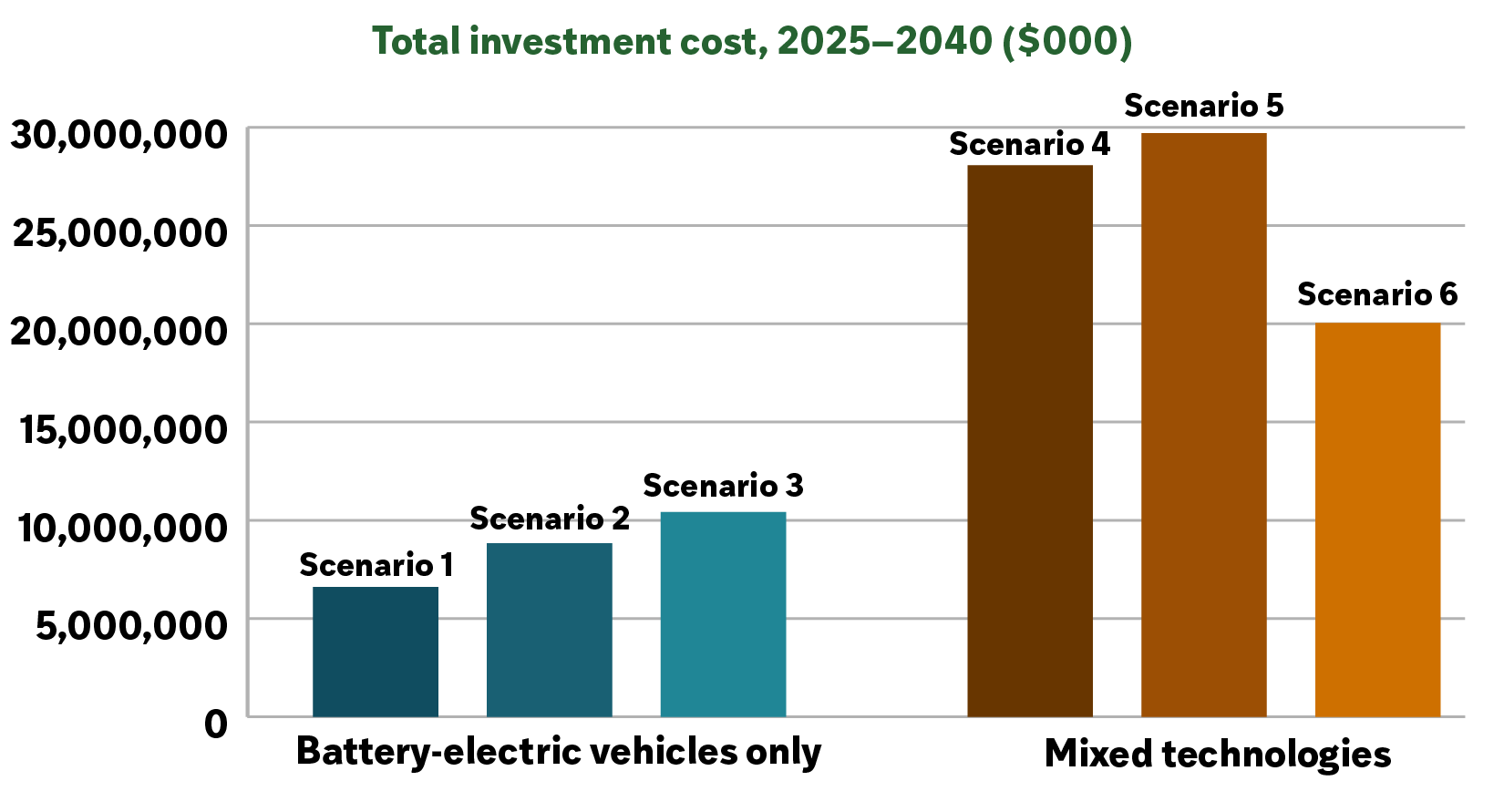
Building electric charging stations for heavy-duty trucks is a far more cost-effective way to decarbonize the heavy-duty freight sector than building hydrogen fueling stations, according to new research from the American Council for an Energy-Efficient Economy (ACEEE). The finding comes as states and regional coalitions plan zero-emission freight corridors and consider how and where to make the necessary infrastructure investments.
Read the Report ACEEE’s study modeled six scenarios for a zero-emission freight future—three with electric trucks only and three that included both hydrogen fuel cell trucks and electric trucks—and found that building stations to meet the charging and refueling needs of both technologies would cost two to four times more than deploying battery-electric charging alone.
The report found that shared charging hubs available to multiple fleets, potentially requiring a reservation for use, are critical for longer-distance trips because they enable charging en route and serve regional and long-haul trucks from different fleets at the same locations, increasing utilization and cutting costs.
“Heavy-duty electric trucks are arriving faster than many expected, and so states need to act strategically and soon to enable a smooth, cost-effective transition,” said Rachel Aland, lead author of the study and ACEEE’s transportation director. “Shared electric charging hubs can lower the cost of electrifying freight while delivering cleaner air and economic benefits to communities along major freight routes.”
The National Zero-Emission Freight Corridor Strategy, released by the federal government in 2024, sought to catalyze utility and regulatory planning and action at local, state, and regional levels. To enable cost-effective zero-emission freight corridors, the ACEEE report recommends that state officials coordinate across state lines and with regional coalitions, utilities, and the private sector. Alignment among those entities on station siting, timelines, and funding can avoid fragmented networks, reduce costs, and ensure continuous charging coverage for electric trucks, according to the report.
The six scenarios ACEEE modeled varied in both the share of hydrogen trucks and the reliance on public charging versus private depot charging. All scenarios assumed rapid adoption of zero-emission trucks, reaching 95% of new truck sales by 2040, but tested differing levels of electric and hydrogen infrastructure to fuel the trucks. The results show that even with hydrogen trucks making up only 20% of heavy-duty vehicles, building a new hydrogen fueling network sharply raises total system costs compared with all-electric charging scenarios. The study did not model a 100% hydrogen truck scenario because of the industry consensus that a hydrogen-only freight system is unlikely given limited hydrogen production, infrastructure constraints, and more advanced developments in battery-electric trucks and charging infrastructure.
Public Transit Is a Smart Investment. Here Are Five Ways States Can Support It.
We’ve identified five key actions states can take to better invest their limited transportation dollars
Support the Work That Makes Energy Go Further
ACEEE’s independent research and advocacy depend on the support of foundations, businesses, and individuals committed to cutting energy bills, waste, and climate pollution.