Skip to Content
  • Insight
  • Industry and Manufacturing
  • Nov 5, 2026

    Factories Have Used Electric Heat for Decades. New Map Shows Where and Why.

    Our new map shows more than 1,800 electric boilers, industrial heat pumps, and thermal batteries at U.S. industrial sites, along with regional factors that shape adoption. Lessons from decades of electric boiler use can help speed deployment of the newer, highly efficient technologies.


    Facilities across the United States have been electrifying heat for decades, benefiting from increased efficiency and a more reliable energy supply. Understanding the factors that could be making certain regions attractive for electrification, such as supportive policies, lower electricity costs, and limited gas infrastructure, can help accelerate adoption of new technologies.

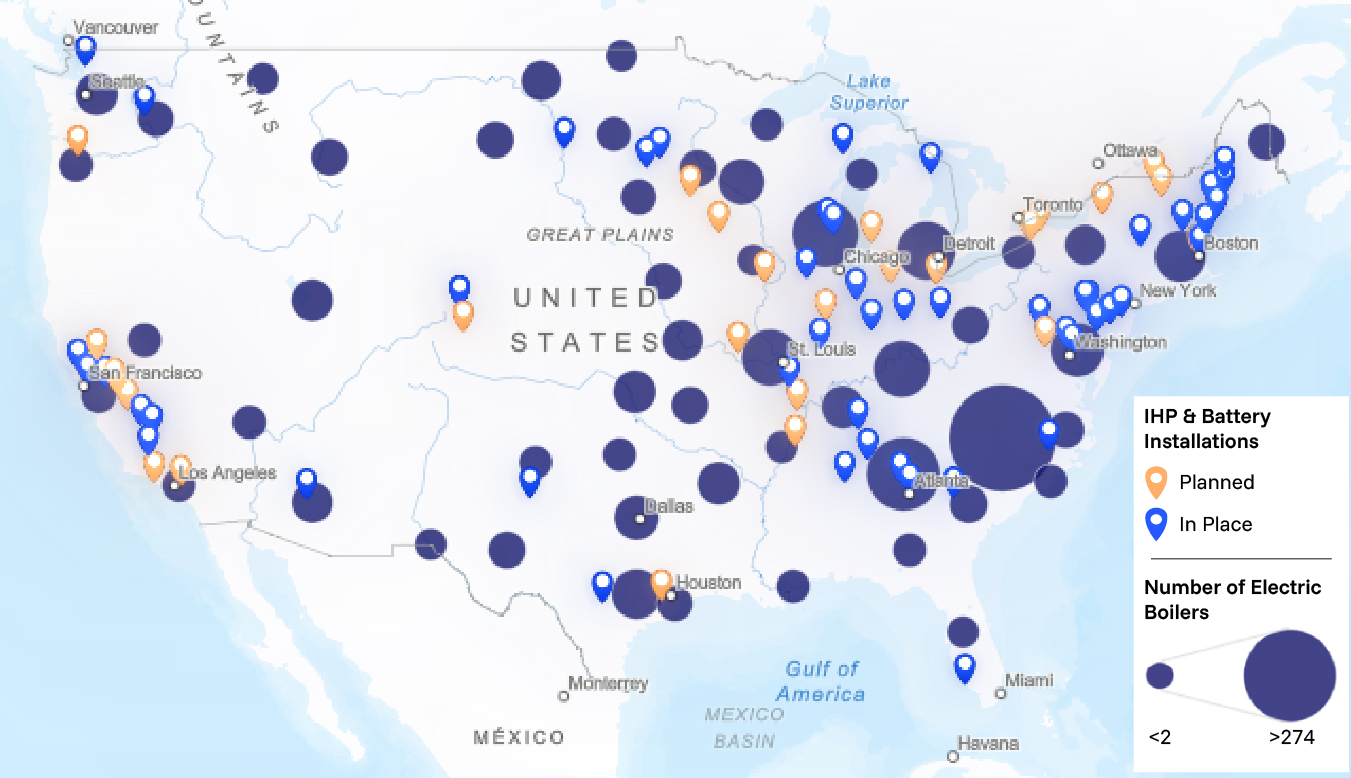
    Our new interactive map identifies electric heat technologies in industrial facilities across the country and factors that may impact their deployment. It builds on a previous ACEEE map of industrial heat pumps (IHPs) and thermal batteries, adding 29 more of those deployments (10 installed in the past year). In addition, the map provides a far more comprehensive picture of the electrification landscape by including electric boilers, with data that we obtained through public records requests to states.  

    Map view showing electric boilers and planned and installed IHPs and thermal batteries

    In total, the map identifies nearly 1,800 electric boilers and 77 IHPs and thermal batteries across the United States. We will continue to update it as we learn of additional installations, including in the nine states where we could not obtain boiler data.1Colorado, Idaho, Indiana, Mississippi, New Mexico, Pennsylvania, Vermont, West Virginia, and WyomingSee all footnotes We welcome updates, corrections, and additional submissions (contact Fikayo Omotesho).

    Electric boilers’ track record provides pathway to accelerate IHPs and thermal batteries

    There is a long history of industrial electric heat—we mapped over 150 electric boilers that are more than 30 years old. They are most common in food and beverage processing and in textile, vehicle, chemical, and biotechnology manufacturing. Facilities continue to install electric boilers more quickly than IHPs and thermal batteries, which remain much earlier in adoption. IHPs are highly efficient, and thermal batteries store heat made from electricity that facilities can use when needed. Both have been installed across a range of industrial sectors, including food, biofuels, and lumber processing.

    We interviewed electric boiler vendors to understand why the technology became well established. Several of the same factors can accelerate uptake of IHPs and thermal batteries:

    • Regional differences. Electric boilers do well in regions with limited gas supply, strong utility efficiency programs, and a mix of industries with different heat needs. IHPs and thermal batteries benefit from similar regional factors, discussed below.
    • Operational advantages. Electric boilers have no onsite emissions and can be sited close to where the factory needs heat. They also have no purging losses (heat lost when a gas boiler clears its combustion chamber) and can reach full output faster than gas boilers. IHPs offer similar operational benefits, including modularity, lower maintenance costs, and efficient waste heat capture between cooling and heating processes.
    • Hybrid configurations. Electric boilers and IHPs can run in hybrid configurations that switch to gas when electricity demand or prices are high. Thermal batteries also offer flexibility: they can charge when electricity is cheap and plentiful and supply heat later.
    • Corporate goals. Companies with decarbonization goals are deploying electric boilers and other electric technologies. IHPs and thermal batteries can cut greenhouse gas emissions and help companies meet those goals.

    Four regional factors correlate with electric heat adoption

    We also mapped economic and policy factors that can impact adoption. No single factor explains where electric heat takes hold; companies weigh operational needs, efficiency, energy prices, gas and electricity infrastructure, and state policy. Four factors stand out as companies weigh technology selection:

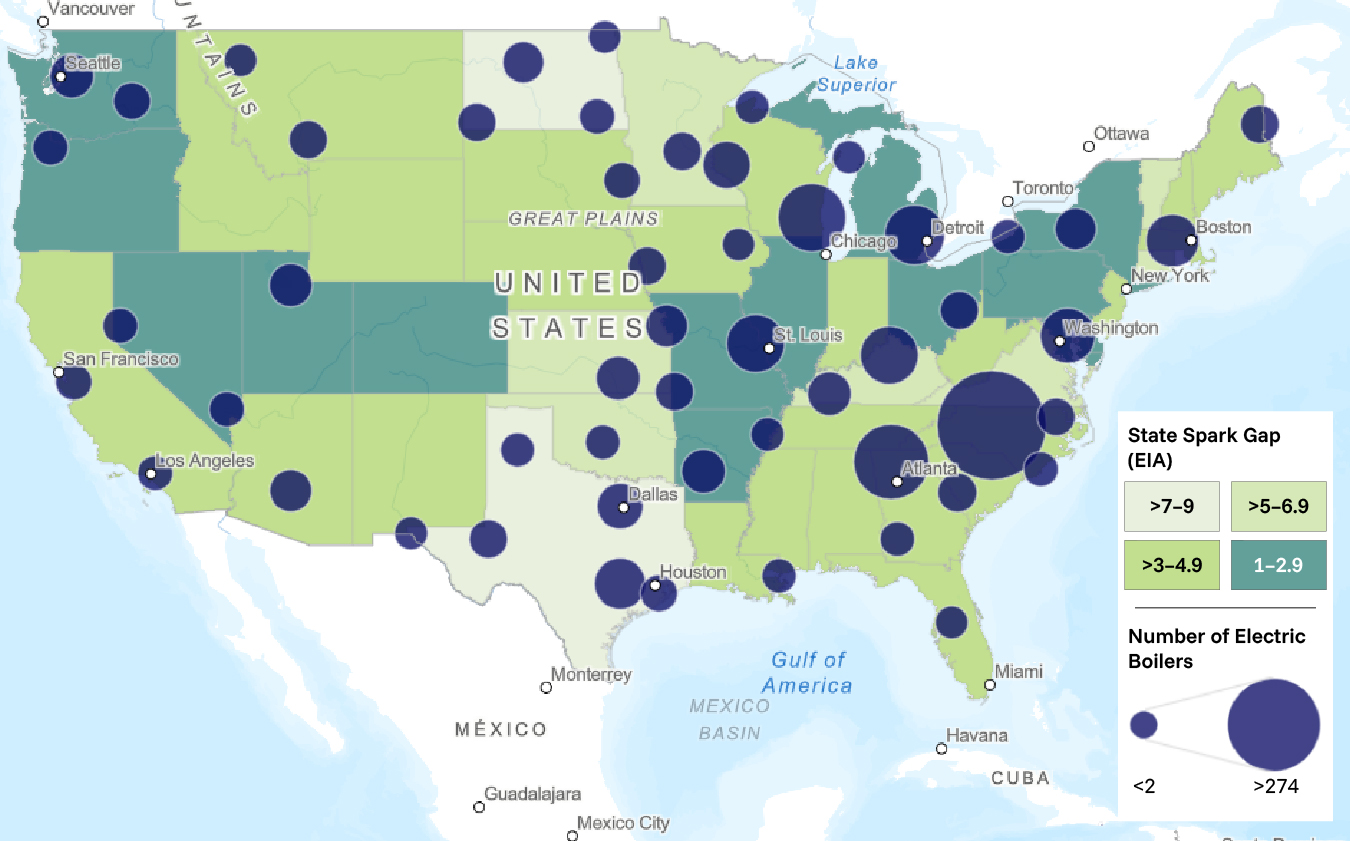
    • Low spark gaps. The spark gap is the ratio of electricity prices to natural gas prices. Where it is low, facilities can electrify with little or no increase in operating costs, and may even reduce costs. The map view below shows states where relatively low spark gaps can attract electric heat technology deployments, such as Michigan and Missouri.
    Map view showing electric boilers against state spark gaps

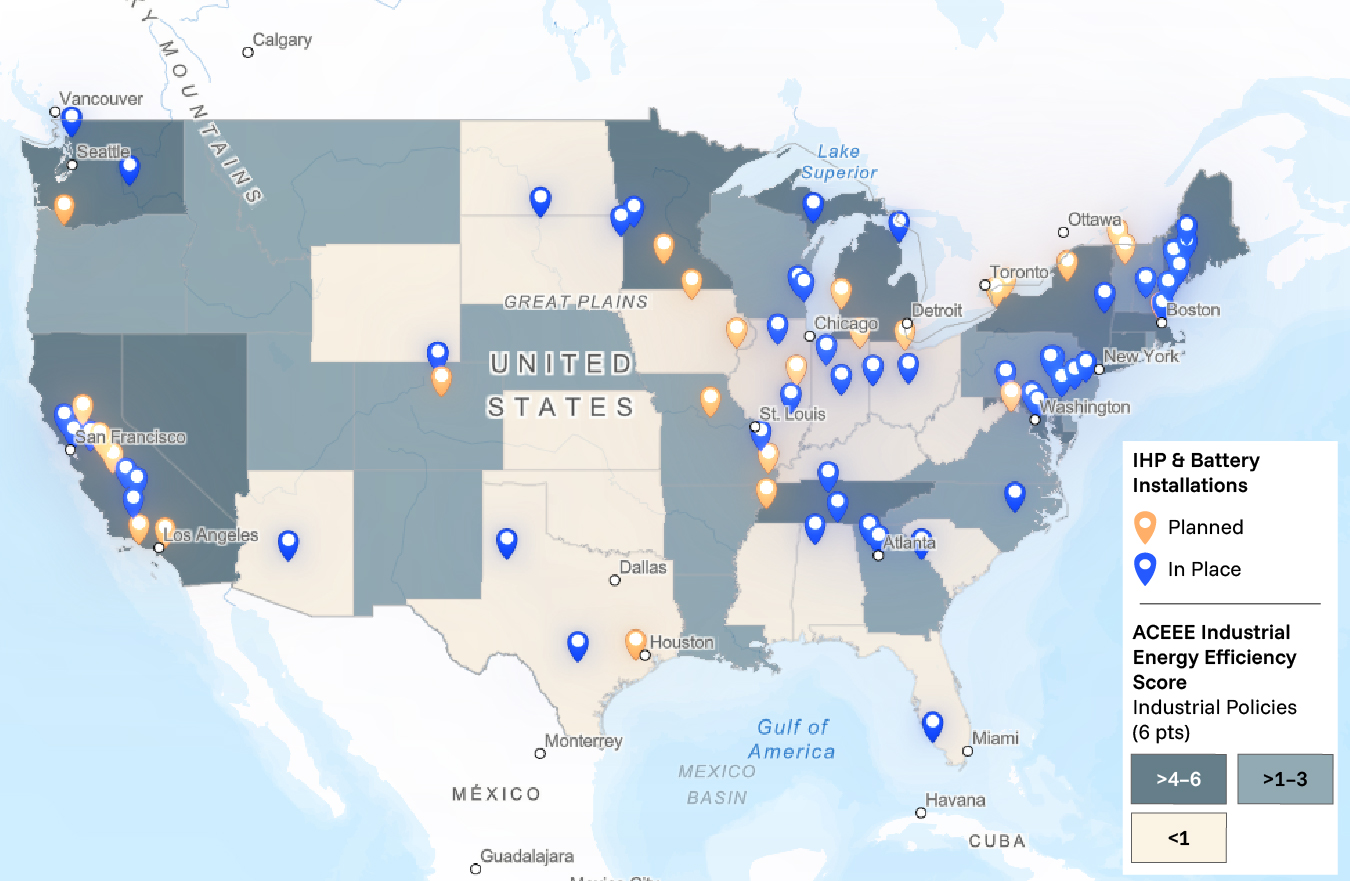
    • Supportive industrial energy efficiency policies. Supportive policies can attract electric heat deployments, even where spark gaps are higher. The map view below compares states’ industrial efficiency policy scores in ACEEE’s 2025 State Energy Efficiency Scorecard. It suggests supportive policy environments (high Scorecard results) play an important role, such as in states in the Northeast that combine strong energy efficiency policies with electrification incentives.

    Map view showing IHP and thermal battery installations against state industrial energy policy scores

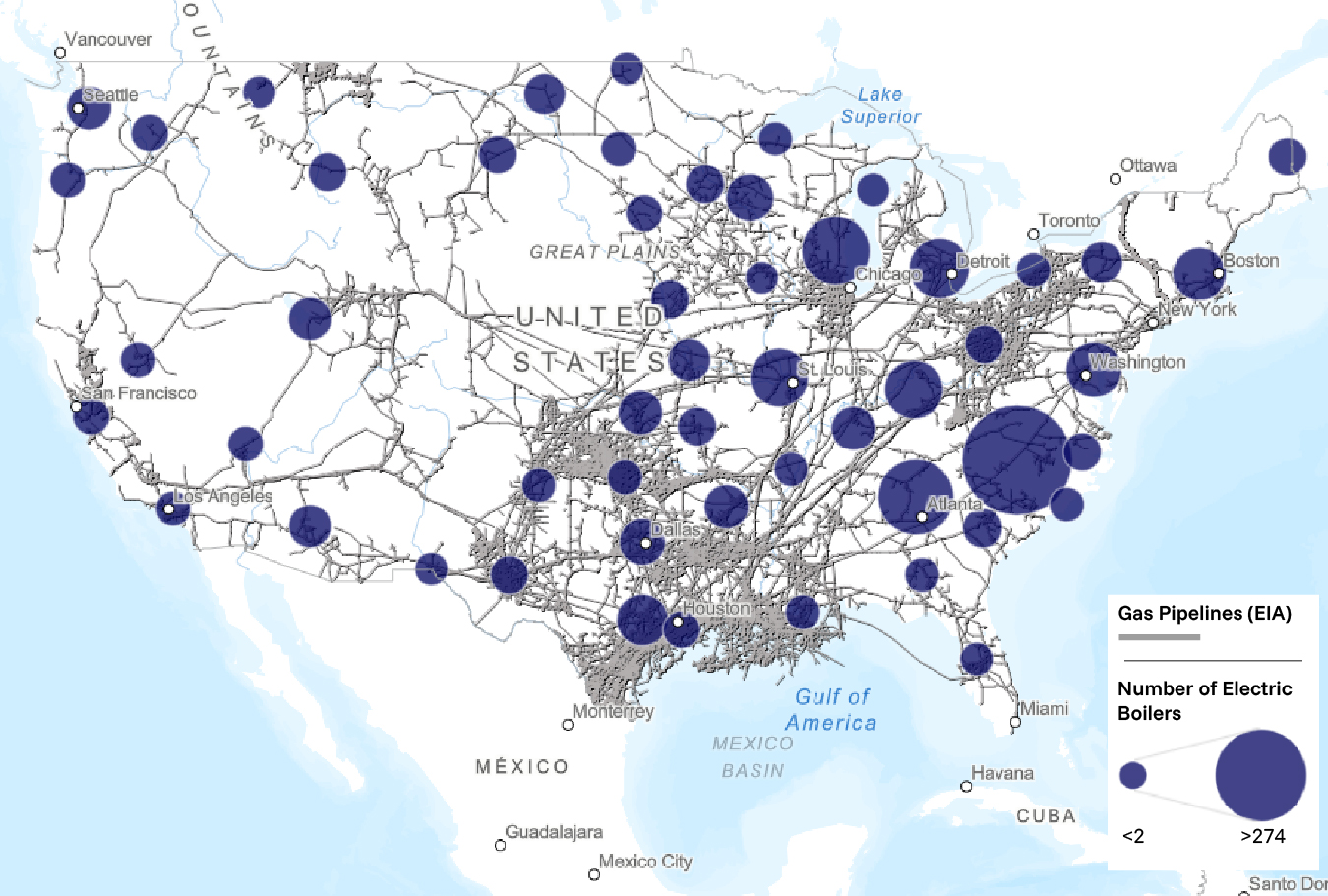
    • Limited gas infrastructure. Our interviews found that some facilities choose electricity as their primary fuel source when they are sited in areas without adequate gas infrastructure. Electricity may be the most accessible fuel for facilities in states such as North and South Carolina, where we see fewer gas pipelines and many electric heat deployments. In those locations, the spark gap between electricity and natural gas may be a misleading metric, since facilities are comparing electricity with costly and less reliable (more cumbersome delivery and volatile prices) delivered fuels, such as propane or fuel oil, rather than piped natural gas.

    Map view showing electric boiler counts against gas transmission pipelines

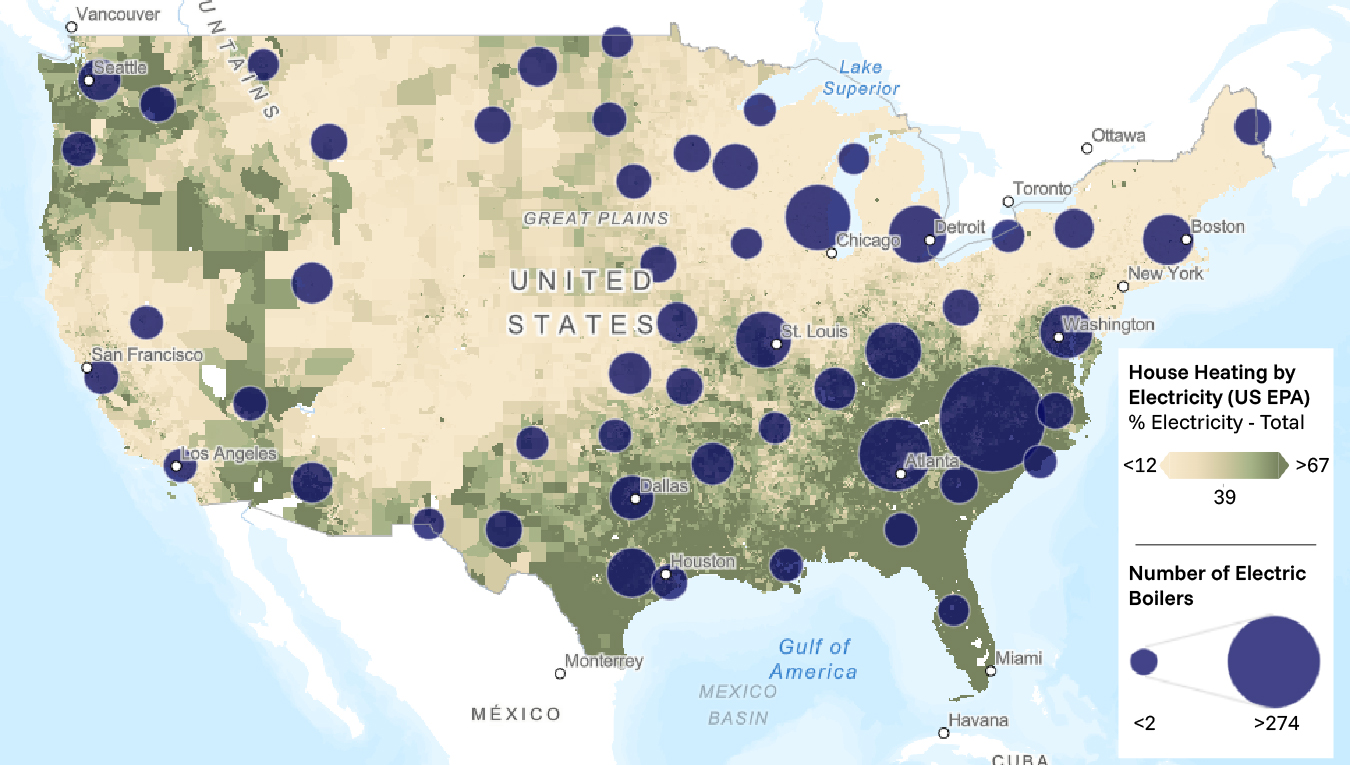
    • Contractor and installer experience including electric home heating. Low spark gaps and limited gas infrastructure have also driven residential customers to adopt electric heating. The map suggests two factors to consider for efficient electrification in industry: First, a contractor workforce familiar with electric heat technology in homes can strengthen the opportunity in industry. Second, electric home heating can act as a proxy for market potential.

    Map view showing electric boilers against regions using electricity as the primary fuel to heat their homes

    Industrial plants across the United States have relied on electric hot water and steam heating for more than 30 years. Now it’s time for policymakers, utilities, vendors, and industrial companies to apply the lessons learned from decades of electric boiler deployments to scale up a suite of electric industrial solutions like IHPs and thermal batteries.

    Related News

  • Support the Work That Makes Energy Go Further

    ACEEE’s independent research and advocacy depend on the support of foundations, businesses, and individuals committed to cutting energy bills, waste, and climate pollution.