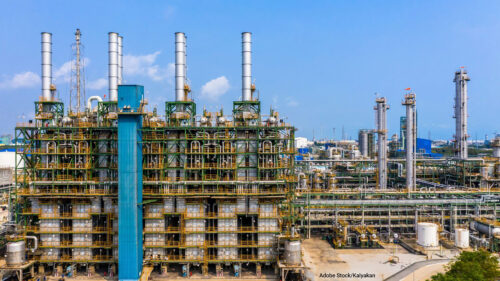
Ethylene is the most widely produced organic chemical in the world. A new paper outlines how domestic producers can reduce their greenhouse gas emissions by up to 60% by 2035 while laying the groundwork for even greater long-term reductions.
As you read this, an ethylene-based product is likely within reach: a phone case, a food wrapper, the carpet under your feet. Ethylene is the world’s most widely produced organic chemical. In the United States, its production emits over 44 million metric tons of CO2e per year, equivalent to the emissions of 10 million cars. The chemicals sector is the largest source of industrial greenhouse gas (GHG) emissions, and within it, ethylene production is the second-largest source of those emissions after ammonia.
A new ACEEE paper explores four near-term levers chemical producers can use to achieve real GHG reductions on existing assets, using equipment and practices that are proven today. We estimate that they could cut emissions by as much as 60% by 2035 if all four are deployed, while also improving air quality and potentially delivering cost savings to producers through increased efficiency.
The timing of these decisions matters. Major chemical plant upgrades take years to plan and build, so the choices operators make in the next two to three years will largely set the sector’s emissions a decade from now. With the following steps, operators don’t have to wait for entirely new, next-generation production methods. They can begin targeting emissions from ethane crackers, which convert ethane molecules—a byproduct of natural gas production—at extreme temperatures to remove hydrogen atoms and make ethylene.
- Energy efficiency: Operators have leveraged efficiency successfully in the past, but sizeable opportunities remain to cut energy waste while lowering costs. Examples include capturing and reusing waste heat, optimizing steam systems, and improving furnace efficiency. These upgrades typically pay back faster than fuel switching or electrification, and they shrink the size and cost of those larger projects.
- Tail-gas reuse: Ethane crackers produce substantial volumes of hydrogen and methane-rich tail gas as byproducts. Recovery systems can capture more of that gas for reuse, whether as a cleaner furnace fuel, a feedstock, or an exportable product.
- Hydrogen fuel switching: Ethane crackers rely on combustion to drive the chemical reaction, so replacing methane gas with hydrogen in the fuel mix is one of the most direct paths to lower emissions, and it doesn’t require reinventing the cracking process itself. This would retrofit existing infrastructure and not force an entire rebuild, making it attractive for owners of aging ethane crackers.
- Compressor electrification: Compressors move materials throughout chemical facilities, pressurize gases, and power reactions. Unlike crackers, compressors don’t need combustion to function, making them a logical electrification target. Where renewable power is available and cost-competitive, converting steam- or gas-turbine-driven compressor trains to electric motors cuts fuel use and emissions. Compressors are a technology that engineers already understand well, which shortens the engineering timeline and the risk profile compared with novel furnace designs.
None of these four strategies get an ethane cracker to zero emissions. However, together they cut emissions now while other more comprehensive solutions mature. The technology and economics are attractive for producers, and demonstrations will further improve the justification case.
U.S. producers also have a broader reason to act. Low-cost domestic ethane gives them an edge on cost and carbon intensity today, but overseas competitors are closing the gap. Investing in these upgrades now can lock in those advantages and establish a competitive position in the emerging market for low-carbon products.
Chemical-sector infrastructure investments can take a long time to deploy. Projects are capital-intensive, facilities run continuously, and major upgrades only happen during maintenance windows that come around once every several years. Shell picked the site for its Monaca, Pennsylvania, ethane cracker in 2012; that plant didn’t begin operations until late 2022. A decade from site selection to first production is not unusual.
That long lead time means the carbon intensity of the U.S. chemical sector in 2035 is effectively being decided now. Implementing near-term actions like the four levers above is essential to minimize emissions while the technologies and markets for a sector with vastly lower emissions and environmental impact develop.

Support the Work That Makes Energy Go Further
ACEEE’s independent research and advocacy depend on the support of foundations, businesses, and individuals committed to cutting energy bills, waste, and climate pollution.