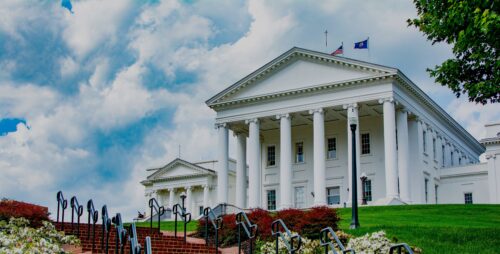
Governor Spanberger is expected to sign a flurry of bills in the coming days that will help tackle the problem of high utility bills by expanding support for energy efficiency improvements in homes.
Like households across the country, Virginians are feeling the strain of high utility bills. More than one in five reported in 2024 that they’d been unable to pay at least one bill in full in the past year. As energy costs continue to rise, the problem has only gotten worse.
Legislators in the state’s General Assembly recently passed a series of bills to help by ramping up energy efficiency programs, with an emphasis on helping low-income families make energy-saving home upgrades. Governor Spanberger will take a critical step to improve affordability when she finishes signing these bills into law in the coming days.
Key bill will help more low-income families reduce high heating costs
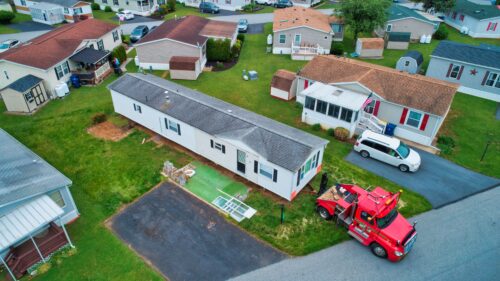
Several bills on the governor’s desk will provide relief for Virginians who need it most. One key bill (HB2) sets targets for the state’s two largest electric utilities, Dominion and Appalachian Power, to provide no-cost energy efficiency upgrades to 30% of low-income residents who use oil or propane heating. Those fuels can be particularly expensive, and heating oil prices have recently spiked, with a potentially volatile future.
This bill will for the first time allow efficiency programs to help these customers lower their costs by switching to electric heat pumps. Heat pumps are efficient and don’t rely on delivered fuels. Swapping to heat pumps and coordinating with weatherization programs to upgrade insulation and air sealing could slash heating costs for low-income Virginians by as much as $1,400 per winter. The bill passed with bipartisan support in both chambers of the General Assembly.
Virginia’s reentry into RGGI will fund cost-saving upgrades for low-income households
This summer, Virginia is on track to rejoin the Regional Greenhouse Gas Initiative (RGGI), a joint effort by multiple Eastern states to cap and reduce power-sector emissions, following a law signed by Governor Spanberger in February. Half of the revenue will directly help low-income households make energy-saving upgrades (as well as critical home repairs needed first to improve health and safety), providing a major source of additional efficiency funding.
RGGI raised more than $413 million for energy efficiency in the three years Virginia participated previously, enabling Virginians like the Collins family in Blacksburg to make home improvements that dramatically cut their utility bills. Yet the last governor unlawfully removed the state from the program.
Additional efficiency bills will lower Virginians’ costs
Several additional bills that the governor has signed or is expected to will also improve energy efficiency. These include bills to:
● Extend utility programs for bill assistance and weatherization for low-income households that had been set to sunset in 2028 to 2038. (SB253)
● Create a task force to help remove barriers in the way of low-income households participating in energy efficiency programs. (HB3/SB5)
● Protect Virginians from higher utility bills caused by possible rollbacks of federal energy efficiency standards for appliances and equipment. (HB672/SB256)
Virginia is also looking at ways to manage data center load growth and protect households from bearing the costs of the needed power expansion. One interesting example is a bill (HB1467) directing Appalachian Power to establish a pilot program for a virtual power plant, a way to aggregate certain equipment owned by households and businesses (e.g., smart thermostats, electric water heaters, EV batteries) to support the grid and reduce the need for costly new generation and transmission infrastructure. Another (HB284/SB371) will enable large customers like data centers to participate in demand flexibility programs to either curtail their own electricity use during peak times or secure peak load reductions from other customers (e.g., by funding efforts to help residents using electric resistance heating switch to heat pumps).
There is much further Virginia can go to improve efficiency in homes, but the actions we’ve described are meaningful steps to improve affordability. At a time of escalating prices and challenging bills, it’s a response to be applauded.