
States, industries, and utilities are making critical decisions about where, when, and how to invest in and plan for infrastructure for zero-emission trucks. But with limited federal guidance and rapidly evolving technology, these choices carry significant cost, reliability, and coordination implications.
Join us as we explore findings from a new analysis comparing the state of technology for battery-electric and hydrogen fuel-cell trucks, including the infrastructure requirements, costs, and risks associated with different investment pathways.
Attendees will hear directly from industry, state agency, and utility leaders who are planning and deploying corridor infrastructure today. We aim to provide practical insights to help decision-makers avoid fragmented investments, reduce risk, and build a reliable, cost-effective nationwide freight network.
Read the report here:

Speakers:

Rachel Aland, Transportation Director, American Council for an Energy-Efficient Economy (ACEEE)
Rachel oversees transportation-related research and the development of policy priorities focused on transforming freight and passenger transportation systems to be more efficient, sustainable, and equitable. Rachel joined ACEEE in 2024. Rachel has a master’s degree in city planning with a focus on sustainable transportation and infrastructure planning from the University of Pennsylvania and a bachelor of arts in urban studies from Brown University.

Peg Hanna, Director of the Division of Climate Change Mitigation and Monitoring, New Jersey Department of Environmental Protection (NJDEP)
Peg develops and oversees economy-wide decarbonization initiatives, advances clean and renewable energy strategies, and oversees operation of the state’s ambient air monitoring network. She has been with the NJDEP for 34 years, focusing most recently on transforming the transportation sector to a zero-carbon footprint. The first 15 years of her DEP tenure were spent in the compliance and enforcement program, developing policies and regulations for stationary sources. She received a B.S. in biology from the University of Scranton.
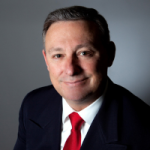
William (Bill) Zobel, Senior Director of Hydrogen Supply and Infrastructure, Pilot Company
Bill is responsible for the development and execution of Pilot’s clean hydrogen strategy. Pilot delivers innovative solutions across its retail, energy, and logistics operations, keeping interstate travelers moving through its network of more than 800 travel centers across North America. Prior to joining Pilot, Bill served in senior roles with Iwatani, Love’s Alternative Energy, the Sempra Utilities, BP, and ARCO. Bill also served as the executive director of the California Hydrogen Business Council. Bill is a graduate of Columbia University’s executive business program and holds a bachelor of science degree in chemical engineering from California State University Long Beach.

Pedro Jardim, Principal Analyst, National Grid
Pedro works on transportation electrification and storage related projects. Pedro led National Grid's DOE-funded Northeast Freight Corridor Charging Plan. The study identified 39 priority sites to electrify in the Northeast to enable electric freight travel in the region. He also focuses on identifying proactive investments needed to meet future load growth to file in New York's Proactive Planning Proceeding. Pedro joined National Grid in 2022 after completing his MBA at NYU – Stern. Prior to Stern, Pedro worked in political consulting focused on Latin America, helping companies navigate new and challenging regulatory landscapes. Pedro has a BA in political science and urban studies from Tufts University.
By registering for this event, you are opting to receive future email communication from ACEEE. You may unsubscribe via the link included in all emails.