Public transit investments deliver more economic development, savings for families, and job growth than highway spending. States can take five key actions to prioritize high-impact transit investments.
States control billions of dollars in flexible transportation funding each year. Despite generating more benefits per dollar when funding public transit, states continue to spend a larger share of their transportation dollars on costly and ineffective highway expansion.
A new white paper from ACEEE describes why conventional transportation project evaluation models need to be reexamined and details how states can lower costs for families, increase jobs, and drive economic growth by ramping up support for critical public transit services.
States should base transportation decisions on real-world results
State departments of transportation often use modeling tools like economic impact analyses (EIAs) and benefit/cost assessments (BCAs) to justify the large price tags of highway expansion projects. But these tools are incomplete and flawed: EIAs only offer insights on macroeconomic impacts, while highway BCAs rely heavily on a “value of travel time” metric that likely massively overstates benefits.
Policymakers must supplement modeling exercises with real-world evidence on how different investments perform. When the actual impacts of investments in public transit operations and highway widenings are measured, highways often fall short while transit exceeds expectations.
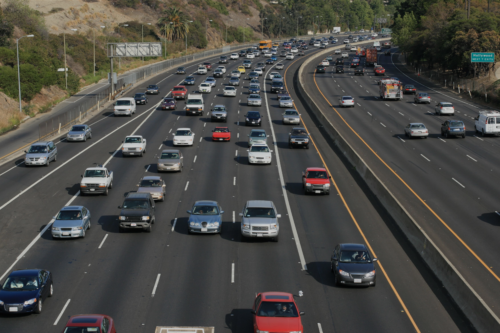
While most highway projects aim to mitigate congestion, they typically don’t achieve that goal. As the Katy Freeway in Houston exemplifies, expanding highway capacity is expensive and ineffective: at a $2.8 billion price tag in 2008, the freeway was widened to a whopping 26 lanes to ease traffic. Yet less than five years later, commute delays had surpassed the pre-widening levels, and whatever value was produced from the temporary travel time savings disappeared.
Stories like this have played out across U.S. metros for decades, with highway widening outpacing population growth while congestion continues to worsen. The concept of induced demand explains why: when roads are widened to relieve congestion, congestion temporarily decreases but returns to or surpasses previous levels as new trips fill the new capacity within a few short years.
Conversely, transit investments made with the purpose of growing ridership by increasing service frequency typically deliver strong results. The METRO regional transit authority in Akron, Ohio, grew bus ridership by 40% in just two years after making new operating investments focused on increasing service frequency, and a local bus corridor upgraded to bus rapid transit (BRT) in Richmond, Virginia, saw ridership double initial projections.
Transit delivers strong economic benefits in both urban and rural areas
Public transit investments support twice as many direct jobs per dollar than highway spending. These direct, on-project jobs, like an operator hired to drive a bus, are also more likely to stay local than indirect jobs further up the supply chain, meaning jobs and wages stay in state economies.
Transit spending also supports households by enabling trips to essential destinations like jobs and medical care. More than half of all U.S. transit agencies are rural, and this benefit is especially important for the communities they serve: 4.3 million rural Americans lack access to a car, and long distances make alternative mobility choices like biking or rideshare unfeasible in these areas.
In cities, transit investments drive local economic development and support additional housing development in connected and amenity-rich neighborhoods. BRT is a low-cost and impactful form of transit that boosts housing and commercial development while growing ridership. In Minneapolis, every $1 spent upgrading a corridor to BRT has translated to $12 in new housing and commercial development, and 35% of all housing spurred by the upgrade is affordable.
Five key steps for states to improve transportation investments
Through five key actions, states can better invest their limited transportation dollars:
1. Direct more existing dollars toward transit programs by “flexing” funds: Federal guidelines give states the flexibility to move (or “flex”) funds between Federal Highway Administration (FHWA) and Federal Transit Administration (FTA) programs. But only two states flex more than 10% of these funds. Besides providing an influx of federal dollars into transit programs (freeing state dollars for other transit uses, like helping fund operating budgets, that are ineligible for federal funds), flexing funds can also expedite project delivery: smaller construction projects that improve pedestrian safety and access to transit, like sidewalk upgrades, are faster and cheaper to deliver under FTA contracts.
2. Strategically group urban transit projects in state plans: States can only direct federal funds to projects that are in their state transportation improvement program (STIP) plans. This requirement can be met by listing projects individually or by grouping eligible projects under a lump sum. Listing projects individually requires a longer amendment process if project needs change, but grouping them under broad categories allows projects to be modified with less paperwork. Many states group funds for other routine projects, but urban transit projects are often listed individually. States can coordinate with metropolitan planning organizations, which work most closely with urban transit agencies, to group eligible urban transit projects (like bus purchases, shelter upgrades, or other standard expenses) and help implement projects more quickly.
3. Dedicate state funds to support transit operations: Federal money for transit in urban areas is largely limited to capital expenses, and most agencies recoup only about 15–20% of their operating expenses from fare revenue. As fuel and labor costs rise, transit systems need reliable and sufficient operating funding to provide quality service. Strategies from Illinois and Massachusetts show how states can redirect existing revenue or raise new revenue to support transit operating budgets.
4. Enact transit-oriented development policies that complement transit investments: State-level legislation on transit-oriented development (TOD) uses regulatory power to spur the private sector to make investments in housing and commercial development along key transit corridors. Well-designed TOD policies help make communities more connected, affordable, and accessible. Examples from Washington, Colorado, and California offer blueprints other states can follow.
5. Support small urban and rural transit with funding and technical assistance: Per-trip operating expenses are especially high for transit outside urban areas. Although federal funds provide some rural transit operating support, additional state investment can allow agencies to make their operations more impactful, such as with evening or weekend service. States can also support rural and small urban transit providers with centralized technical assistance, like in North Carolina’s Mobility for Everyone, Everywhere program.
In the coming years, states will make consequential decisions about how to spend their transportation dollars. By investing less in highway expansion and more in public transit, state leaders can maximize benefits for residents from urban to rural communities.