
Behind the rapid growth of artificial intelligence lies a growing network of data centers that are impacting communities. These facilities can consume vast amounts of electricity, strain local water supplies, and affect the quality of life of people who live near them.
Join the Behavior, Energy & Climate Change (BECC) community for a webinar exploring the behavioral and climate change implications of data centers and AI. We’ll examine key questions about AI’s impacts and mitigation strategies, including:
- How are data centers impacting priority populations?
- What steps are regulators and policymakers taking to increase transparency, accountability, and protection for individuals?
- How can individuals and organizations reduce the climate impact of AI use?
- What are strategies toward responsible, ethical AI and sustainable data centers with positive societal impacts?
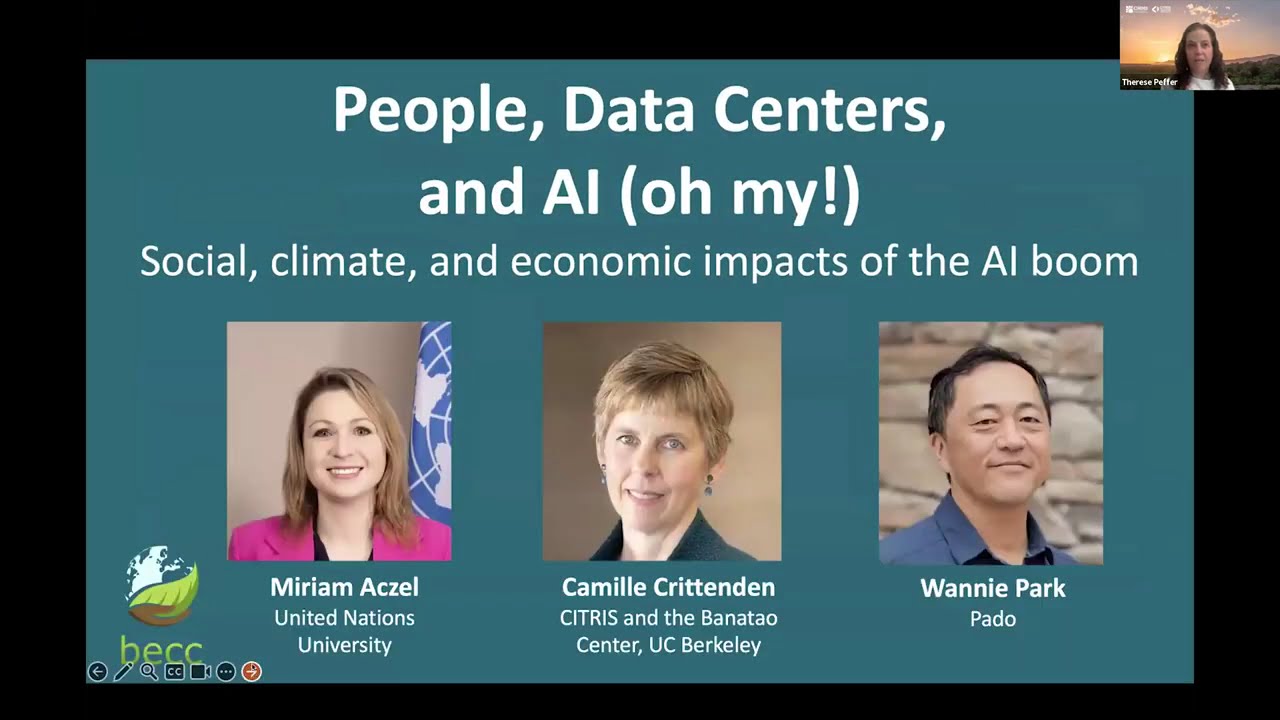
Speakers
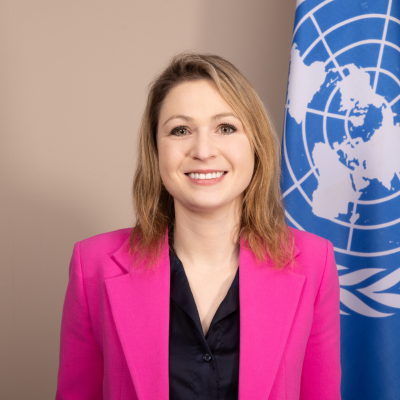
Dr. Miriam Aczel, Researcher, United Nations University Institute for Water, Environment and Health (UNU-INWEH)
Dr. Aczel works on sustainability transitions, climate resilience, environmental justice, and the intersections of energy, water, and emerging technologies. She is the lead author of UNU-INWEH’s report Environmental Cost of AI’s Energy Use: Carbon, Water and Land Footprints. She holds degrees from McGill University and Imperial College London, where she completed her Ph.D. in environmental policy as a Presidential Ph.D. Scholar. Before joining UNU-INWEH, Miriam was the inaugural McQuown Postdoctoral Fellow at the California Institute for Energy and Environment at UC Berkeley. She is also a co-founder of an educational nonprofit operating in Cambodia and an honorary research fellow at Imperial College London.
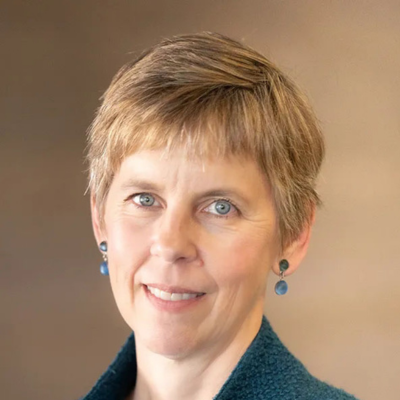
Dr. Camille Crittenden, Executive Director, Center for Information Technology Research in the Interest of Society (CITRIS) and the Banatao Institute
Dr. Crittenden is a co-founder of both the CITRIS Tech Policy initiative—previously known as the CITRIS Policy Lab—and EDGE in Tech (Expanding Diversity and Gender Equity) at the University of California. Between 2019 and 2020, she chaired the California Blockchain Working Group and played a key role as co-chair for the Student Experience subcommittee within the UC Presidential Working Group on Artificial Intelligence. Her ongoing leadership includes membership on the UC AI Council. Before her 2012 arrival at CITRIS, Dr. Crittenden was the executive director of the Human Rights Center at Berkeley Law, where she advanced programs focused on the intersection of technology, digital media, and human rights.
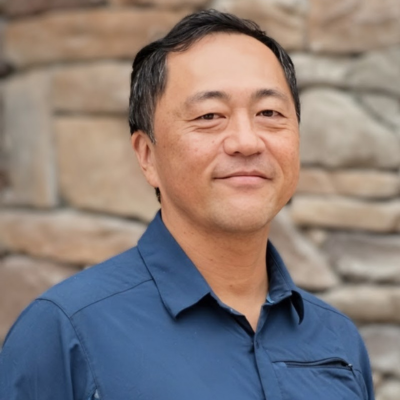
Wannie Park, Founder and CEO, Pado
A seasoned entrepreneur with over 25 years of experience in energy, IoT, and SaaS, Wannie has incubated and scaled companies in cleantech and sustainability, delivering three successful exits. Prior to founding Pado, Wannie was SVP of Business and Corporate Development at Bidgely, a global AI-powered SaaS provider, CEO of Zen Ecosystems, a leading provider of energy management solutions to SMB, and SVP of Business and Corporate Development at Inspire Energy, a leading renewables and sustainability company.

Moderator: Therese Peffer, Project Manager and Researcher, California Institute for Energy and Environment (CIEE)/Center for Information Technology Research in the Interest of Society (CITRIS), University of California, Berkeley
Therese manages and conducts research in community and commercial decarbonization, contractor training, building and EV demand flexibility, and thermostat usability research projects with the objective of creating comfortable and energy efficient spaces. She serves as an associate director for CIEE and for the CITRIS Climate initiative and is the co-chair of the annual Behavior, Energy & Climate Change conference. Therese completed a Ph.D. in architecture with an emphasis on building science at UC Berkeley. As an Architect, she worked in San Francisco and Pismo Beach. Therese earned a master’s degree in architecture at the University of Oregon. She lived on a solar and wind-powered homestead while working for Home Power magazine.
By registering for this event, you are opting to receive future email communication from ACEEE. You may unsubscribe via the link included in all emails.

Support the Work That Makes Energy Go Further
ACEEE’s independent research and advocacy depend on the support of foundations, businesses, and individuals committed to cutting energy bills, waste, and climate pollution.