Key Findings
- About one in five (approximately 19% of) income-eligible households in our national survey were initially deferred from the Weatherization Assistance Program (WAP) in 2023 due to repairs needed to address existing conditions and health and safety issues.
- About 60% of these initially deferred homes were repaired and eventually served by WAP, while 40% could not be made weatherization ready (and could not gain associated benefits).
- Initially deferred homes that were ultimately served after receiving weatherization readiness repairs experienced significant benefits including an average annual $372 in utility bill savings (2022 dollars, as stated by U.S. DOE). This is roughly equivalent to 23 metric tons of carbon dioxide averted per weatherized unit over the life of installed measures.
- If the 40% of homes that were eventually deferred could be weatherized, we estimate that 49,236 MWh (168,000 MMBtu) of energy would be saved annually, and 153,000 metric tons of carbon dioxide emissions (MTCO2e) would be avoided over the lifetime of the measures.
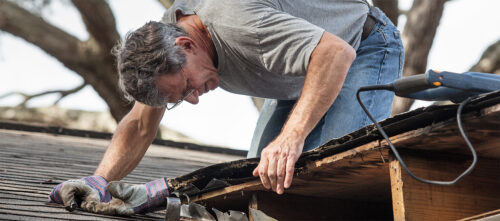
- The most frequently reported reasons for initial deferrals were roof leaks or repairs (estimated median 45% of deferred homes), followed by floor damage (estimated 23%), and unsafe or outdated electric service panels (estimated 23%).
|
Executive Summary
Weatherization programs play a vital role in alleviating the high energy bills faced by millions of low-income households across the United States, contributing to improved health and safety outcomes, enhanced comfort, and reduced energy consumption. The cornerstone of these efforts is the federally funded Weatherization Assistance Program (WAP), complemented by expanding utility sector programs for low-income customers, and various other funding streams such as the Low-Income Home Energy Assistance Program (LIHEAP) and state and local programs. WAP and some utility programs provide energy efficiency retrofit services at no cost to qualifying households.
Participation in these programs, however, is often hampered by existing home conditions and repair needs that restrict the ability of implementors to install energy saving equipment and measures. This report explores the frequency, causes, and factors associated with deferring homes from WAP. We estimate the costs to address issues that cause deferrals from WAP and project potential energy and greenhouse gas emissions reductions that could be unlocked by treating these homes. We examine the benefits both from the weatherization readiness repairs themselves and from enabling the deferred homes to participate in WAP.
Weatherization Program Background
WAP has been in operation since 1976 and is administered through the U.S. Department of Energy’s (DOE) Office of State and Community Energy Programs (SCEP). WAP promotes a whole-house approach to weatherization that involves upgrading a home’s insulation, reducing air leakage, repairing or replacing heating and cooling systems, and addressing health and safety issues.
WAP funds are allocated by population-based formula to state and local program administrators who in turn dispatch auditors to visit homes, identify cost-effective energy-efficient equipment and measures, and implement/install energy savings projects. Through its grantees and subgrantees, WAP has served over seven million households since its inception and weatherizes an average of 35,000 households each year using WAP formula funds. About 69,000 housing units were weatherized by WAP in 2022, using all sources of funds. WAP saves participants an average of $372 per year in energy costs (2022$), while improving comfort, safety, and health outcomes for thousands of households annually.
WAP funds can also be leveraged alongside state, local, or utility incentives to enable deeper savings for households, alleviate issues related to health and safety, and make needed repairs. In many jurisdictions, utilities combine federal and ratepayer funding to provide more flexibility than allowed by WAP requirements. This coordination of funding sources allows programs to serve families that are otherwise left behind. Utility programs are funded separately and not subject to fluctuations in allocations of federal funds. Therefore, they play a key role in implementing more comprehensive programs that reach underserved customers.
Deferral of Weatherization Projects
Deferrals occur when an auditor visits a residence and determines that existing conditions impede the ability to implement energy efficiency measures. Deferrals not only delay and possibly eliminate the opportunity for energy savings but also expend auditor time and resources on households that do not ultimately proceed in WAP and other similar weatherization and energy efficiency programs for low-income customers.
Homes are initially deferred for a variety of reasons. Based on our 2024 survey, these most frequently include
- Envelope issues such as roof leaks (45%), floor/framing damage (23%), and foundation damage (15%)
- Unsafe, damaged, or outdated electrical service panels (23%) and wiring (11%)
- Plumbing leaks or standing water in basement (10%), or damaged or missing gutters/downspouts (10%)
- Presence of pests (15%), asbestos (13%), or mold (10%)
- Occupant behavior (25%)
Many deferrals can be addressed and allow households to participate in the future. Others are too costly or not achievable. This report focuses on how to capture the opportunities and benefits associated with deferrals that can be addressed.
To resolve deferrals, weatherization providers need funding to address or repair the issues noted above. The survey results indicate that repair costs per home range from approximately $2,000 to $25,000, depending on the types of repairs and regional differences in material and labor costs. The mean cost of repairs was estimated at $13,870 (+/–$221), and the weighted median cost of repairs was estimated at $15,000 per home.
Many low-income residents do not have the means to overcome an initial monetary outlay of $2,000 to $25,000, even if it means saving money in the long run. This report focuses on the value of providing additional funding to assist low-income residents in improving their homes while unlocking energy savings from WAP.
ACEEE Survey and Analysis
To support this analysis, we conducted surveys of WAP grantees and subgrantees that asked respondents to estimate the frequency of deferrals, types of repairs needed to address deferrals, average weatherization readiness project repair costs, and characteristics of WAP-eligible buildings in their service territories. Respondents were well distributed geographically, representing 28 different states, with 29% from the Midwest, 10% from the Northeast, 38% from Southern states, and 23% from Western states. They also represented all major U.S. climate zones (from zone 2 to zone 7). Primary findings from our survey include
- Approximately one in five homes (about 19%) that seek WAP services were initially deferred for addressable or repairable issues.
- About 60% of initially deferred homes were repaired and eventually served by WAP, while the remaining 40% could not be made weatherization ready and did not benefit from the average annual $372 in utility bill savings that WAP unlocks (2022 dollars, as stated by U.S. DOE). This is roughly equivalent to 23 metric tons of carbon dioxide averted per weatherized unit over the life of the measures.
- The most frequently reported preventable reasons for initial deferrals were roof leaks or damage (estimated median 45% of deferred homes), followed by floor damage (~23%), and unsafe or outdated electric service panels (~23%).
- Most WAP-eligible homes are single-family (~63%), followed by mobile/manufactured homes (~28%) and multifamily buildings (~3.6%).
We also completed building energy modeling to estimate the potential benefits of weatherization readiness activities. Our primary findings from this analysis are
- Some weatherization readiness measures result in significant energy use reductions, while others do not produce notable savings.
- As the savings are highly dependent on the type of repair, the baseline characteristics of the modeled homes, and climate zone, there is a wide range of estimated savings.
- In general, heating system upgrades for older homes in cold and mixed climates (climate zones 5 and 4) produce the most savings, and cooling system upgrades in cooling-dominated climates (zones 2 and 3) result in significant savings.
- However, because of the relatively low frequency of heating, ventilation, and air conditioning (HVAC) replacements (estimated median 5% of projects nationally from the survey) we cannot generalize these levels of savings to all deferred homes.
- We estimate that although the overall median energy savings of weatherization readiness repairs across all measures, home types, and projects modeled is 539 kWh annually, some of the most likely weatherization readiness repair packages are projected to save between 967 kWh and 9,876 kWh annually for typical colonial-style homes.
We also extrapolated that approximately $9.5 million in annual potential health and bill savings benefits and 49,236 MWh of energy savings could be realized if all eventually deferred homes in the 2023 WAP program were made weatherization ready:
- $2.5 million in annual utility bills savings (based on $372 average annual bill savings per program participant)
- $3.4 million in medical expense reduction (based on $514 per year reduction in out-of-pocket medical expenses per program participant)
- $3.6 million in annual benefits from reduced sick days (based on $538 annual benefit per household)
- 49,236 MWh (168,000 MMBtu) of energy saved each year
- 153,000 metric tons of carbon dioxide emissions reduced (MTCO2e) over the lifetime of the measures
Value of Weatherization Readiness
Weatherization readiness is the process of correcting in-home issues that can or do cause deferrals. These efforts are generally focused on needed repairs and health and safety improvements. This allows households that have previously been deferred, or are likely to be deferred in the future, to participate in WAP and other similar low-income weatherization programs, and to realize the health and bill savings benefits we note above.
Weatherization readiness achieves many important outcomes, including both energy and non-energy benefits. These accrue to program participants, as well as to the utility system and society at large. We include those generated by weatherization readiness activities, and the additional benefits accrued from the completed weatherization project, because the completed project would not have occurred without the weatherization readiness work. The benefits for weatherization readiness and weatherization are described below, with a breakdown of benefits by perspective.
Benefits of Weatherization Readiness
- Participant: Improved safety, improved health, increased home value, and improved comfort
- Societal: Economic development, job creation and retention, reduced air emissions
Benefits of Weatherization
- Participant: Lower utility bills (electricity, natural gas, and water), improved health outcomes, increased home value, improved comfort, and increased ability to pay other bills
- Utility: Avoided energy production; avoided investments in incremental capacity for generation, transmission, and distribution (which lower costs for all customers); reduction in arrearages and service disconnections/reconnections
- Societal: Job creation and retention, reduced air emissions driven by lower power plant utilization, avoided environmental damages (harm to human health and the natural environment) driven by lower electric power air emissions, and economic development
Next Steps and Recommendations
Weatherization programs, including WAP, are life-changing programs for families who are able to participate; however, too many are left behind due to addressable issues in their homes. There are compelling financial, social, and environmental reasons to substantially increase weatherization readiness funding, and for governments, nonprofits, utilities, and private companies to invest in expanding available weatherization readiness resources and programs.
Specifically, we recommend the following actions to improve outcomes in the low-income weatherization space:
- Improve tracking and data collection on weatherization deferrals. Gaining a better understanding of why low-income customers are deferred and how those issues can be mitigated is paramount to improving WAP and other, similar low-income weatherization programs.
- Increase funding for weatherization readiness programs. Based upon our survey and analysis, we estimate that for the 2023 WAP, increasing funding by $91.3–94.2 million per year could have funded nearly all addressable weatherization readiness work and enabled nearly 7,000 additional households to participate in WAP in 2023. We estimate the weighted average cost of weatherization readiness is $13,649–14,091 per home. The increase in funding could come from utilities, federal and state government, nonprofit organizations, and corporate investment to improve low-income communities. Appendix A presents case studies demonstrating these various funding models.
- Engage states, utilities, localities, and nongovernmental organizations in the weatherization readiness process. Leveraging diverse funding sources, particularly from utilities that already serve and can easily identify eligible customers, is vital to expanding coverage of weatherization readiness and reaching a previously inaccessible portion of the market.
Weatherization readiness projects and programs can save energy and money, reduce greenhouse gas emissions, and provide a host of non-energy benefits. Adopting the above recommendations will produce better outcomes, including significantly increasing access to WAP and similar programs for underserved households by reducing WAP deferrals so that thousands more homes become eligible.