
Improving energy efficiency in buildings, transportation, and industry in the United States could save about $4.8 trillion in energy and related costs in the next decades—equivalent to almost $31,000 per household—a new report finds. The American Council for an Energy-Efficient Economy (ACEEE) study points to a key opportunity for policymakers as families face challenging home energy bills and gasoline prices, the electric grid is strained by new demand from data centers and other loads, and extreme weather events increase because of high greenhouse gas emissions.
The report finds that energy efficiency improvements and demand flexibility measures made between now and 2050 could also:
- Reduce growing peak electric demand by 20% on average, a reduction equivalent to the output of more than 400 large power plants (this is from the electric efficiency measures alone);
- Spur an additional 1 million jobs (net) per year, on average;
- Reduce climate pollution by a third in 2050, avoiding 22 billion metric tons of emissions cumulatively; and
- Cut small particulate and other air pollution by about a quarter and thus avert approximately 280,000 premature deaths cumulatively.
ACEEE found opportunities for progress in eight broad areas: buildings equipment efficiency, zero-emissions new buildings, existing building improvements, industrial energy efficiency and electric heat, reduced industrial materials, efficient and electric vehicles, transportation system efficiency and access, and electricity demand flexibility.
“High utility bills and gasoline costs are straining family budgets. Improving energy efficiency can save consumers thousands of dollars while easing strain on the electric grid and slashing pollution,” said Lowell Ungar, senior fellow at ACEEE and lead author of the report. “The opportunity to cut energy waste is enormous, from our homes to our factories and our cars and trucks. The costly option would be inaction. We need to unlock ways that consumers, businesses, and communities can benefit from the savings.”
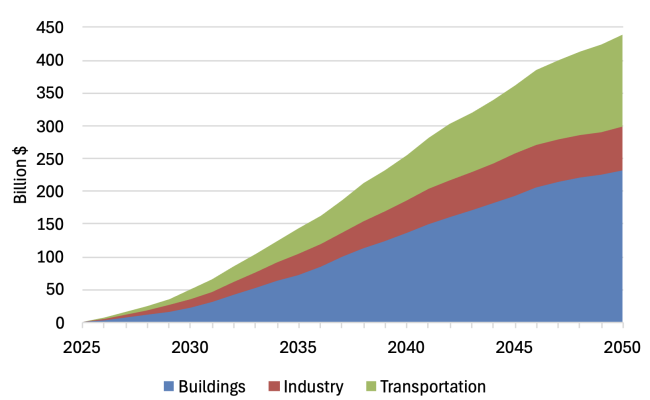
Capturing these savings would require a range of policies and programs, including stronger standards for equipment, buildings, and vehicles; expanded consumer information on purchase choices; new financial incentives to support innovative products; and research, development, and demonstration funding to develop new technologies.
ACEEE researchers used Energy Innovation’s Energy Policy Simulator, a widely respected economic model, in developing the report.

Support the Work That Makes Energy Go Further
ACEEE’s independent research and advocacy depend on the support of foundations, businesses, and individuals committed to cutting energy bills, waste, and climate pollution.