During this week’s winter storm, Americans in poorly insulated and leaky homes without power are facing dangerous indoor temperatures. Those who still have electricity but use inefficient heating systems will face surging bills. Policymakers should help.
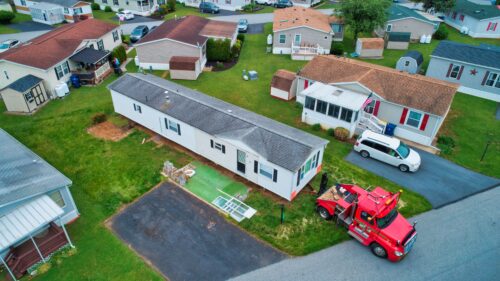
Hundreds of thousands of people remain without power across the Southeast in the wake of a winter storm. With multiple days of sub-freezing temperatures, many are facing dangerous indoor cold. Two Louisiana residents have died indoors—one in a manufactured home—according to state officials.
Where the power has stayed on, people whose homes have poor insulation and air sealing, inefficient furnaces, or electric resistance heating may see their energy bills skyrocket.
Most homebuilders simply haven’t built houses to maintain safe indoor temperatures during outages where codes have not required them to do so. Fully 89% of detached homes in today’s stock are under-insulated, for example. And we face worse ahead: Power outages from extreme weather have been on the rise for years.
Ensuring every new and existing home has enough insulation, minimizes air leaks, and uses efficient heat pumps will reduce future safety threats and bills. Yet today, some state and federal policymakers are stepping backward, not forward, in making homes more prepared for storms like this one.
Poorly sealed homes reach dangerous temperatures quickly
When the power goes out, the vast majority of homes lose heat. Even gas furnaces and boilers require electricity to run.
Most U.S. homes—even many new ones—are not adequately sealed and insulated to provide protection. But others show that better construction can keep residents far safer.
A national laboratory study found, for example, that in a multi-day, extreme-cold power outage in Houston, a home built or renovated to modern energy codes would maintain safe temperatures for three days longer than the average home in the region today.
Households in inefficient homes will see high energy bills in the coming weeks
Many Americans are already struggling with high utility bills. This prolonged stretch of severe cold will make things worse.
The price tag will vary widely, even for similarly sized homes facing the same temperatures. Well-insulated and air-sealed homes should see far smaller increases. Inefficient homes—disproportionately housing lower-income residents—will likely see more dramatic spikes.
Gas prices also spiked this week, affecting homes heated by gas as well as those heated by electricity generated from gas power plants. Homes with inefficient furnaces and electric resistance heat could pay the most.
Inefficient homes strain the grid in extreme cold
In severe cold weather, homes that are poorly sealed and have electric resistance heat—such as electric baseboard heating or electric coils in an HVAC system—can draw enormous amounts of energy.
In 2021, during Winter Storm Uri in Texas, power outages were widely attributed to failures in power generation, particularly coal and gas plants. But the blackouts were also caused by a significant surge in demand in a region where electric resistance heating and little insulation are common.
Well-insulated, sealed homes with the most efficient heat pump types can mitigate these spikes in demand. During this week’s cold, demand has spiked, but fortunately not exceeded grid capacity.
Policymakers’ support is critical to improve the efficiency of American homes
There are several areas where policymakers can help—as well as immediate risks of policy going backward.
Ensuring brand-new homes have adequate insulation should be a no-brainer. But earlier this month, the U.S. House of Representatives voted to cancel recent standards that would help protect tens of thousands of Americans. Many new manufactured homes are built with poor insulation because the Department of Housing and Urban Development’s energy code for them hasn’t been updated for more than 30 years. New standards set by the Department of Energy in 2022 will help, but have been delayed from taking effect. Americans need those standards. The Senate can safeguard them by not taking up the House’s bill to axe them.
For site-built homes, many states have very outdated energy codes, so most are not reasonably efficient. States should adopt updated codes to help protect residents.
To help Americans improve their existing homes, utilities, states, cities, and the federal government have programs that cover part or all of the cost of energy-saving upgrades. These programs and incentives should be scaled up. Instead, many have been weakened or are under threat.
The Trump administration terminated tax credits that had incentivized efficiency improvements, such as adding insulation and installing efficient heat pumps. We estimated that those credits saved the millions of households that used them an average of $130 a year in energy costs. But they were ended on December 31.
Some states are stepping forward. Illinois lawmakers, for example, are expanding utility efficiency programs, including for low-income households.
But some utilities and their regulators, as well as governors, are considering scaling back efficiency programs. The Arizona Corporation Commission voted last month to slash efficiency programs at the state’s largest electric utility. The primary electric utility in Rhode Island proposed to shrink programs, and the governor has floated even deeper cuts.
Making homes more efficient will protect the public in future winter storms
Efficient, well-built homes are a frontline defense against extreme weather. They are not an optional feature, but essential infrastructure that protects households during outages, keeps energy more affordable, and strengthens grid reliability. Policymakers should use the full array of tools at their disposal to ensure new homes are more efficient and to invest in improving existing ones.