ACEEE | American Council for an Energy-Efficient Economy
Events
ACEEE conferences bring professionals together to collaborate and advance energy efficiency. Join a diverse group of researchers, policymakers, utilities, industry professionals, and program leaders to explore how we can cut energy waste in your field.
The Behavior, Energy & Climate Change (BECC) conference examines energy and climate change from a behavioral lens and highlights how behavioral science can be applied to policies and programs.
Date: TBD
Click Here for Hot Water & Hot Air Forums 2026OverviewHyatt Regency Portland at the Oregon Convention Center ACEEE’s Hot Air and Hot Water Forums are the nation’s premier policy and techni...
2024 Summer Study on Energy Efficiency in Buildings
EQUITY AND CLIMATE ACTION: TIME TO DELIVERAsilomar Conference GroundsPacific Grove, CAThe 2024 Summer Study on Energy Efficiency in Buildings is the 23rd biennial event. Summer Study will brin...
EER is the premier event on policies and programs to reduce utility customers' energy waste and help utilities meet climate goals and infrastructure ch
Thanks to your feedback on this conference, we were able to make a $1,000 donation to Detroiters Working for Environmental Justice (DWEJ).MGM Grand Hotel Detroit, MI Theme: Decarboni...
National Press Club, Washington, DC Forum Overview The 117th Congress and the first two years of the Biden administration have been an era of major progress for federal energy efficiency pol...
BECC Webinar: New Innovations for Saving Energy in Buildings Through Behavior Change
Join us for a webinar to learn from four experts about new innovations in behavioral science that move beyond focusing on general energy consumption by consumers at home
New Federal Funding Opportunities for Affordable Housing Retrofits
Join us for a webinar to hear about an opportunity for state and local governments to increase investments in retrofits for low- and moderate-income housing
BECC Webinar: Leaving No One Behind in the Energy Transition
The disparities that minority communities have experienced due to institutional racism and environmental injustices have not only contributed to the health decline of residents in these communities, but also wealth and employment gaps. Energy has been one of the fastest growing industries in the United States, but as the industry transitions it must strengthen its racial diversity. According to the latest U.S. Energy and Employment Report, while there were job losses in the industry during the pandemic, there is a steady growth in employment in wind energy, battery storage, and hybrid and electric vehicles. Increased work in energy efficiency and electrification--together with retirements--have created a need for more skilled workers. Investing in programming and uplifting communities with workforce development initiatives can create a monumental impact as we transition to a clean energy future. In this webinar, we will explore how engaging with disadvantaged and environmental justice communities though investments and workforce development can right some of the wrongs of systemic racism and environmental injustice in energy while bringing economic stability, empowerment, and wealth. Register for the Webinar Moderator: Reuven Sussman, Director, Behavior & Human Dimensions Program, American Council for an Energy-Efficient Economy Dr. Sussman conducts research on energy efficiency behavior change and co-chairs the annual conference on Behavior, Energy and Climate Change (BECC). He joined ACEEE in 2016. He has authored numerous academic papers and book chapters on the psychology of climate change, behavioral interventions to encourage energy efficiency, and the psychological determinants of pro-environmental behavior. Dr. Sussman has been an advisor for organizations, including the G20, that implement energy efficiency behavior change programs, and an expert reviewer for academic journals and large-scale grant opportunities. Reuven is an adjunct professor and member of the Faculty of Graduate Studies at the University of Victoria (Canada). He is the winner of the 2019 Early Career Award from the Environmental, Population and Conservation Psychology division of the American Psychological Association, and currently sits on the editorial board of the Journal of Environmental Psychology and Journal of Social Psychology. Dr. Sussman earned a doctor of science in social and environmental psychology from the University of Victoria. Speakers Pamela Fann, CEO, Integrated Solutions | BECC DEI Coordinator Pamela, an award-winning diversity specialist and speaker, develops frameworks to successfully and sustainably implement diversity within organizations. Integrated Solutions’ mission is to drive industry transformation through organization cultural competency, workforce development, caring conversations, and additional diversity advisory services. Pam is also an Owner/Principal of Impact Energy, a minority women-owned energy services company that helps organizations build strategies for their diverse spending to create economic empowerment. Pam has a degree in Marketing, a certification in Human Resource Management, and is a Certified Cultural Diversity Professional and Trainer (CDP, CDT). She also holds a certification in Understanding Diversity and Inclusion from Perdue University. Jasmine Johnson, MPA, MBA, President, Sparrow Energy Services Jasmine created Sparrow Energy with a focus on operational excellence, strategic national expansion implementation, multi-million-dollar energy efficiency program management and corporate culture creation. Jasmine serves the energy industry by holding board positions with nonprofits and industry organizations; the most recent appointment being with the Association of Energy Service Professional (AESP)’s inaugural Diversity, Equity, and Inclusion (DEI) Council. Jasmine founded The Sparrow Foundation, a foundation dedicated to closing the racial, gender and age gaps in STEM industries; Dasia’s Angels Foundation, a nonprofit organization dedicated to helping young girls see themselves the way God sees them; and most recently the development of 8:32, a legal advisory organization. By registering for this event, you are opting to receive future email communication from ACEEE. You may unsubscribe via the link included in all emails.
Sonesta White Plains White Plains, NY Over 150 individuals met in person to learn about financing the clean energy transformation needed to tackle the climate crisis and strengthen the economy as w...
BECC Webinar: Leveraging Behavioral Science for Continuous Improvement within SEM
Energy efficiency program administrators across the U.S. and Canada have been working together to improve the performance of their Strategic Energy Management (SEM) programs. While SEM can support decarbonization of operations at customer sites, and it often provides other non-energy benefits, these programs are challenging to administer and implement, and they rely on customer commitment. To ensure program offerings meet customers’ needs while maintaining flexibility, a committee of program administrators from the Consortium for Energy Efficiency (CEE), with input from their SEM implementation contractors, is looking at the key role of behavioral science in making SEM more effective and inspiring customer commitment. The committee is also determining how to most effectively evaluate energy-saving measures that leverage behavioral science. To cite an example: at a recent CEE Industry Partners session, an SEM implementer illustrated the importance of employee engagement in making the cultural shift to SEM. One way he leverages behavioral science in practice is through treasure hunts, which support customer buy-in to SEM. To further explore this topic and work toward concrete demonstration of verifiable SEM impacts, a panel of several program administrators and SEM implementers will discuss the role of behavioral science in SEM based on their observations so far. Panelist presentations will be followed by facilitated discussion. Moderator: Reuven Sussman, Director, Behavior & Human Dimensions Program, American Council for an Efficient-Economy Dr. Sussman conducts research on energy efficiency behavior change and co-chairs the annual conference on Behavior, Energy and Climate Change (BECC). He joined ACEEE in 2016. He has authored numerous academic papers and book chapters on the psychology of climate change, behavioral interventions to encourage energy efficiency, and the psychological determinants of pro-environmental behavior. Dr. Sussman has been an advisor for organizations, including the G20, that implement energy efficiency behavior change programs, and an expert reviewer for academic journals and large-scale grant opportunities. Reuven is an adjunct professor and member of the Faculty of Graduate Studies at the University of Victoria (Canada). He is the winner of the 2019 Early Career Award from the Environmental, Population and Conservation Psychology division of the American Psychological Association, and currently sits on the editorial board of the Journal of Environmental Psychology and Journal of Social Psychology. Dr. Sussman earned a doctor of science in social and environmental psychology from the University of Victoria. Speakers Kjell van Zoen, Strategic Energy Management (SEM) Coach, Energy 350, Inc. As a Strategic Energy Management (SEM) coach, Kjell combines his 25+ years of entrepreneurial and consulting experience to help industrial and commercial facilities throughout North America reduce their energy use through continuous improvement and change management practices. This includes SEM program recruitment, managing program budget expectations, hiring and training SEM coaches, producing reports, creating content for and leading workshops, organizing and facilitating events (e.g., treasure hunts/kaizen blitzes, employee engagement events, Energy Management Assessments (EMAs)), and one-to-one coaching with key site contacts on all aspects of SEM. Kjell has also written for and presented on SEM at the NW SEM Collaborative fall workshops, ACEEE Summer Study, and the Behavior, Energy and Climate Change Conference (BECC). In his work as an operations consultant Kjell has always applied what he likes to call a lean whole-systems thinking lens and has developed and delivered over 100 workshops. Todd Amundson, P.E., Industrial Engineer Technical Lead for Energy Efficiency, Bonneville Power Administration Todd is currently the industrial engineer technical lead in energy efficiency at the Bonneville Power Administration, where, among other projects, he manages the development, training and application of BPA’s Measurement & Verification Protocols and Guidelines, including a Selection Guide. A new BPA Commercial and Industrial SEM M&V Reference Guide will be completed in March 2022. This body of work provides BPA’s Pacific Northwest utility customer service territory with an overview of protocols, application and reference guides, and documentation for determining verifiable, reliable energy savings. Todd currently serves on the Efficiency Valuation Organization International Performance Measurement and Verification Protocol (EVO IPMVP) technical committee and several subcommittees, as well as the Pacific Northwest SEM Collaborative leadership team and M&V working group. Faith DeBolt, Principal, SBW Consulting, Inc. Faith is a principal at SBW Consulting and an energy data nerd who is passionate about decarbonizing our built environment. She became interested in efforts targeting holistic, performance-based approaches to reducing energy use and carbon emissions in buildings over a decade ago while evaluating Puget Sound Energy’s Resource Conservation Management (now Commercial SEM) program. She has continued to explore this area through work for the Northwest Power and Conservation Council, Pacific Gas & Electric, Seattle City Light, Washington State Department of Commerce, and Seattle Office of Sustainability & Environment, among others, by interviewing regional stakeholders, conducting early M&V of a commercial whole building program, directing the development of pay-for-performance program M&V guidelines, and supporting development of building performance standards for the State of Washington and the City of Seattle. She recently led development of a tool to statistically detect and adjust for non-routine events to help a commercial SEM program distinguish program savings from COVID-related reductions in energy use. She currently serves on the leadership team of the Northwest Strategic Energy Management Collaborative and the Energy Trust of Oregon Evaluation Advisory Group. Monet Springmeyer, Strategic Energy Management Coach and Program Manager, Cascade Energy Leveraging her experience in industrial efficiency, Monet provides SEM coaching and engineering services on behalf of multiple DSM programs throughout the country, with a focus on Southern California. Monet developed a special interest in change management and behavioral science in relation to businesses after completing her MBA at Pepperdine University in 2020. Monet’s background is in process engineering, with a BS in engineering from the University of Washington. She has received her Lean/Six Sigma green belt as well as a CEM certification. Kira Ashby, Principal Program Manager, Behavior, CEE Kira is a Principal Program Manager at the Consortium for Energy Efficiency (CEE), where she oversees the newly launched Center for Equity and Energy Behavior. For the past 12+ years she has facilitated CEE members’ work applying behavioral science techniques to energy efficiency programs. Most recently, Kira has served as the national expert for the United States on a 3-year collaboration to better engage underserved energy users (a project of the UsersTCP by the International Energy Agency (IEA)). Kira holds a bachelor’s degree from Middlebury College and a master's degree from the Harvard School of Public Health. Arlene Lanciani, Principal Program Manager, Evaluation, Research and Behavior Sector Lead, CEE Arlene leads the Evaluation, Research, and Behavior work at the Consortium for Energy Efficiency (CEE). At CEE, she supports the program evaluation needs of program administrators as well as those who incorporate behavioral science insights into program design and marketing. She has managed various research projects at CEE including the Program Performance Benchmarking project; and she continues to oversee the annual national survey of household awareness of the ENERGY STAR® label as well as the annual “State of the Energy Efficiency Program Industry” survey and report. She is a building technology engineer by training who has dedicated her career to the advancement of energy conservation and energy-efficient technologies. She has worked closely with New England utilities, regulators, and other regional organizations to provide technical energy efficiency consulting services including program evaluation and assessment of energy-efficient technologies and their market potential. Arlene holds a B.S. and M.S. in building technology from MIT. By registering for this event, you are opting to receive future email communication from ACEEE. You may unsubscribe via the link included in all emails.
Electrifying Industry’s Process Heat Supply with Industrial Heat Pumps
As energy prices soar, a familiar but little-used technology—industrial heat pumps (IHPs)—offer a compelling path to greater electrification and energy security, according to a recent ACEEE report. The analysis shows that using IHPs in key industry groups and operations could cut U.S. industrial energy use associated with process heat (the thermal energy used to prepare materials and produce manufactured goods) by up to a third and CO2 emissions by an amount equal to those from up to 2.7 million cars. Expansion of IHP use across broader industry would save even more energy and CO2 emissions. As businesses and governments continue to set sustainability goals and targets for greenhouse gas (GHG) reductions, bringing large-scale electrification to the industrial sector is more important than ever – especially because industry accounts for more than 25% of U.S. energy use and GHG emissions. This includes electrifying process heat, which accounts for half of on-site energy use. Join us for a webinar exploring how IHPs have advanced and can be implemented to rapidly reduce GHG emissions. Attendees will hear insights from an expert panel on how to lower the energy and GHG footprint of process heat (to enable sustainability goals, and return business value), accelerate adoption of IHPs by understanding starting opportunities, and where enabling policies can make a difference to realize state and federal GHG reduction goals.
Best Practices: Learning from Leaders Across the Globe Free Event Which countries are leading the world in energy-saving efforts that are vital for climate action? This question comes as rep...
Day 1: February 24, 2022 | Day 2: March 24, 2022 As states and utilities set ambitious decarbonization goals, the case for leveraging demand-side measures to reduce emissions is stronger than ever. The ways in which utility energy efficiency programs are designed, operated, and evaluated must evolve to ensure they are on track to achieve an affordable and equitable clean energy future. This symposium explored the wide range of strategies we have at our disposal and shared leading examples where climate-forward actions are being taken today. During day 1 of the symposium, participants learned from and engaged with experts from across the United States that have successfully approached the nexus of energy efficiency programs and decarbonization. Attendees also gained crucial insights from ACEEE’s newest report, A Roadmap for Climate-Forward Efficiency, which introduces multiple strategies to accelerate climate-forward efficiency through legislative, regulatory, and utility actions. During day 2 of the symposium, we convened three working sessions designed to move climate-forward efficiency into action. The topics and their brief description, which were identified through a survey of the participants, are listed below. The three sessions ran concurrently, and the results of these sessions are shared here. Agenda: Day One: Thursday, February 24th, 2:30 – 4:00 pm Day Two: Thursday, March 24th, 2:30– 4:00 pm Welcome Opening remarks by Steve Nadel, Executive Director, ACEEE Join us for the introduction of the Climate-Forward Efficiency Symposium. Report Presentation Presentation by Mike Specian, Utilities Manager, ACEEE Hear a summary presentation of A Roadmap for Climate-Forward Efficiency report. Climate-Forward Efficiency Lightning Round and Moderated Q&A Moderated by Rachel Gold, Principal, Carbon-Free Electricity Practice, RMI Hear practitioners from cross-sector perspectives discuss successful examples of climate-forward efficiency in practice. Get your most pressing questions answered and begin thinking how to apply insights to your own work. Welcome Opening remarks by Edward Yim, Utilities Program Director, ACEEE Breakout Sessions Three concurrent breakout sessions facilitated jointly by ACEEE staff and external partners Breakout 1: Advancing beneficial electrification energy efficiency measures to maximize reduction of greenhouse gas emissions One of the most vital steps to align energy efficiency with climate change action is to increase the efficiency of buildings in a manner that reduces their greenhouse gas (GHG) emissions. By deploying smart, efficient electric technologies inside buildings, we can deliver the benefits of energy savings to consumers while also reducing GHG emissions and improving grid flexibility. Understanding the opportunities and challenges of beneficial electrification in buildings is vital for stakeholders in the utility, government, and non-profit sectors seeking to design plans to scale up adoption. This discussion will focus on important strategies, best practices, and program designs that combine energy efficiency and electrification as a climate solution. Breakout 2: Measuring GHG reductions: moving forward on workable approaches and needed data Aligning energy efficiency with climate change action necessarily requires data to measure the impact of energy reduction on GHG emissions. This discussion will focus on how best to measure efficiency’s full impact on GHG emissions and the data needed for such measurement. Questions to be examined will include: What data would be required to design and evaluate utility energy efficiency portfolios focused on maximizing GHG reductions? What practical methods are available for translating energy efficiency measures into estimates or measurements of avoided GHG emissions? What data does each method require, and how can such data be accessed efficiently in the context of privacy and security concerns? What are best practices or pilot programs underway for measuring GHG reductions of energy efficiency portfolios? Breakout 3: Facilitating legislative and regulatory change: which states might present good opportunities in 2022 and 2023? Addressing climate change takes leadership. For climate-forward efficiency, legislatures and utility regulatory commissions need to provide such leadership, as witnessed by recent experience in Minnesota and Illinois. In this workshop we will examine and discuss key elements and actions that can enable and establish goals, frameworks, and requirements for utilities and related organizations to expand and align their energy efficiency efforts with decarbonization. From this discussion we will identify states that present good opportunities for taking actions in 2022 and 2023 to advance climate-forward efficiency. Closing Remarks and Sharing Insights Moderated by Edward Yim, Utilities Program Director, ACEEE
At this year's virtual 14th Hot Water Forum, ACEEE hosted a record breaking 265 attendees who participated in three days of presentations on what's next in the hot water industry including t...
Encouraging Home Upgrades and Meeting Climate Goals Through Remote Assessments
The COVID-19 pandemic has led to an increase in remote home energy assessments. Expanded rapidly to substitute for in-person assessments until energy assessors could go back into homes, remote assessments have proved useful in multiple ways. Not only do they help encourage upgrades, but they are also important for mitigating climate change, as they allow assessors to reach more customers quickly and inexpensively. In this webinar, ACEEE’s behavioral science team will partner with remote assessment provider CLEAResult to discuss how these assessments are effective and how behavioral science insights can make them work even better. Join us to gain insights from our speakers and a new ACEEE report based on a survey of recipients of in-person and remote assessments, as well as interviews and program reviews. We will discuss how satisfied people are with remote assessments, who they work best for, how they encourage follow-up actions, and more.
2021 City Clean Energy Scorecard: Are Cities Meeting the Climate Moment?
Now, more than ever, city leaders are faced with an array of tremendous challenges and opportunities in their push to address climate change. With the president and Congress moving to steer new funding toward these efforts, local leaders need to be prepared to deliver on their climate commitments. Join us as we reveal the city rankings for the 2021 City Clean Energy Scorecard and discuss trends across the country. Attendees will hear from officials in several leading cities about what they are already doing, and planning, to advance clean energy while simultaneously lowering utility bills, improving resilience, and reducing pollution. Speakers will also focus on the ways their programs are based on community input and designed to serve all residents. Moderator: David Ribeiro, Director of Local Policy, American Council for an Energy-Efficient Economy David Ribeiro manages ACEEE's local policy program and works to scale up local-level equitable energy efficiency strategies. He oversees the program’s strategic direction, research agenda, technical assistance agenda, and work related to energy efficiency implementation in cities and communities. He oversaw the annual City Clean Energy Scorecard from 2015 to 2020. Before joining ACEEE in 2013, David was a policy advisor at the NYC Department of Environmental Protection. He holds a bachelor of arts in history from the College of the Holy Cross and a master in science in energy policy and climate from Johns Hopkins University. Speakers: Mayor London N. Breed, City and County of San Francisco Mayor London N. Breed is the 45th Mayor of the City and County of San Francisco and the first African-American woman Mayor in the City’s history. She is working to create a more resilient and equitable San Francisco for all by prioritizing policies and programs to address some of the most crucial issues facing the City, including housing, homelessness, workforce development, public safety, climate change, and recovering from the COVID-19 pandemic. Rooted in her experiences growing up in public housing and living in neighborhoods impacted by redevelopment, Mayor Breed is focused on adding more housing for residents of all income levels; helping those suffering from mental health and substance use disorder on San Francisco’s streets; ensuring that all San Franciscans have access to a thriving economy; making San Francisco a cleaner and safer city; and furthering San Francisco’s leadership in combating climate change. Stefen Samarripas, Local Policy Manager, American Council for an Energy-Efficient Economy Stefen Samarripas conducts research, analysis, and outreach on policies and programs that encourage energy efficiency in local communities. His work currently focuses on supporting local-government-led clean energy initiatives and scaling up energy efficiency investments in affordable housing. Prior to joining ACEEE in 2016, Stefen worked with community development and housing organizations in the Atlanta, Georgia, metro area. Stefen worked with Cobb County’s Community Development Agency, and he worked with Georgia Advancing Communities Together, conducting research on policies affecting Georgia’s housing and community development organizations. Stefen holds a master of city and regional planning from Georgia Tech and a bachelor’s degree in anthropology from the University of Tennessee at Chattanooga. Debbie Raphael, Director, San Francisco Department of the Environment Debbie Raphael believes that cities can take bold action to address environmental harm. A scientist by training and public servant by profession, Debbie has spent most of her career working in government to ensure that everyone has an equal right to a safe and healthy environment. As Director, Debbie leads the City’s efforts to address climate change and build resilience. Under the leadership of Mayor London Breed and the Board of Supervisors, she helped pass one of the City’s most ground-breaking bans on natural gas in new construction, implemented a new, accelerated goal of carbon neutrality by 2040, and updated the City’s Climate Action Plan with collaboration from residents, CBOs, and businesses to include specific goals and strategies in critical sectors of energy, transportation, materials, and biodiversity. Jessica Price, Sustainability and Resilience Manager, City of Madison, Wisconsin Jessica Price is an interdisciplinary scientist, strategic thinker, and innovative leader passionate about developing equitable solutions to improve the health and wellbeing of people and ecosystems in urban landscapes. Top priorities include energy and efficiency solutions to meet Madison’s ambitious goal of 100% renewable energy and net-zero carbon emissions by 2040; investments in equitable, low-carbon transportation and city fleet vehicles; and improving the energy efficiency of affordable housing and commercial buildings through programs and policy initiatives. Previously, Jessica was the Renewable Energy Strategy Lead for the Nature Conservancy in New York, where she worked to advance climate mitigation and adaptation strategies, including leading the creation of the Long Island Solar Roadmap and the Nature Conservancy's first carbon-neutral office in the state. Jessica received her PhD in Landscape Ecology at the University of Wisconsin-Madison where she was a National Science Foundation Integrative Graduate Education and Research Fellow. Maribeth De Lorenzo, Ph.D., AICP, Sustainability Director, District of Columbia Based in the Department of Energy & Environment (DOEE), Maribeth De Lorenzo, Ph.D., AICP is responsible for policies and programs related to sustainability, climate, green building, equity, sustainable materials management, urban agriculture, and community engagement. Prior to this position, she worked across the public and private sectors developing and financing affordable housing, particularly green and high performance buildings, and has two decades of experience in community development. She holds a Ph.D. from the University of Pennsylvania and is a LEED Accredited Professional, as well as a member of the American Institute of Certified Planners (AICP). Maribeth is a long term resident of Washington, DC and loves working for a healthier, greener, more livable city for all residents. Trouble registering or joining the event? Email Nick Roper (nroper@aceee.org) By registering for this event, you are opting to receive future email communication from ACEEE. You may unsubscribe via the link included in all emails.
Ready to Go: Opportunities for Cities and States to Deploy Federal Funding to Advance Clean Energy and Equity
Recent and pending federal funding initiatives, including the American Rescue Plan Act and bipartisan infrastructure bill, may provide billions of dollars that can help cities and states reach their goals to reduce greenhouse gas emissions and advance equity in their communities. Governments can learn from example programs to efficiently and effectively leverage these generational opportunities. Join us to learn more about how your government can strengthen its new or expanded energy programs. Attendees will hear lessons shared in a new ACEEE toolkit that lays out guiding principles for governments, as well as 17 strong programs that can serve as models for new or expanded efforts. The lead author of the toolkit will highlight key takeaways from this research. Officials from Connecticut and Washington, D.C. will share insights from their programs and how they are planning to leverage federal funding, and a representative from Elevate will discuss how governments can ensure that programs are deployed equitably to advance energy justice. Moderator: Jasmine Mah, Research Analyst in Health and Environment, American Council for an Energy-Efficient Economy Jasmine conducts research within ACEEE’s Health and Environment department. Prior to joining ACEEE in 2021, Jasmine worked for the National Center for Sustainable Transportation. She has bachelor’s degrees in environmental policy and English literature from the University of California, Davis. In 2020, Jasmine earned a master’s in environment and development from the University of Leeds in the United Kingdom. Speakers: Dr. Amanda Dewey, Senior Research Analyst in Local Policy, American Council for an Energy-Efficient Economy Amanda Dewey conducts research on local-government efforts to adopt and implement equitable clean energy policy. Her areas of research include opportunities for energy efficiency in community choice aggregation programs and the equity implications of local energy efficiency approaches. Prior to joining ACEEE in 2021, Amanda worked at the University of Maryland and she currently serves as the mayor of the Town of Berwyn Heights. Amanda earned a PhD and Master of Arts in sociology from the University of Maryland and a Bachelor of Arts from Vanderbilt University. Vicki Hackett, Deputy Commissioner of Energy, Connecticut Department of Energy and Environmental Protection Vicki Hackett leads the Connecticut Department of Energy and Environmental Protection’s Energy Branch as Connecticut transitions to a zero-carbon electric grid. Her responsibilities include developing Connecticut's Integrated Resources Plan and Comprehensive Energy Strategy, overseeing procurements of clean energy resources, and developing policies and programs in the areas of energy affordability, energy efficiency, and strategic electrification of the transportation and housing sectors to help Connecticut achieve its greenhouse gas reduction goals. Vicki earned her law degree from the University of Virginia School of Law and her B.A. in Sociology/Anthropology from Western Connecticut State University. Dave Epley, Associate Director, D.C. Department of Energy & Environment David Epley leads the Data & Benchmarking Division at the District of Columbia Department of Energy & Environment (DOEE), which administers the District’s Building Energy Performance Standards (BEPS), the Energy Benchmarking Program, the BEPS Affordable Housing Retrofit Accelerator, the D.C. Sustainable Energy Utility (the District’s primary energy efficiency program), the State Energy Program, and the District Buying Power program. Prior to joining DOEE, Mr. Epley was the Green Building and Sustainability Division Manager at the D.C. Department of Consumer and Regulatory Affairs (DCRA). He holds a Master’s of Science in Sustainable Design from Carnegie Mellon University and a Bachelor of Arts in Environmental Studies from the University of Tennessee-Knoxville. Trisha Miller, Chief Innovation and Development Officer, Elevate Trisha Miller is leading Elevate’s national U.S. climate policy programs and partnerships. She formerly served as a Senior Director at Breakthrough Energy – a network of entities and initiatives linked by a commitment to reach net zero emissions by 2050. Trisha developed a comprehensive climate policy framework for Breakthrough Energy, where she led industrial decarbonization, clean energy standards, public procurement, and transmission policy. Earlier in her career, she was the Chief Sustainability Officer for Wishrock (a national affordable housing developer). Before that, Trisha served as a Presidential Appointee and Senior Advisor at the U.S. Department of Housing and Urban Development, where she worked to advance President Obama’s Climate Action Plan. Trisha holds a J.D. from Stanford Law School and a Master of City Planning from the Massachusetts Institute of Technology. She also has a B.A., magna cum laude, in Environmental Policy from the University of Michigan. Trouble registering or joining the event? Email Nick Roper (nroper@aceee.org) By registering for this event, you are opting to receive future email communication from ACEEE. You may unsubscribe via the link included in all emails.
Reorienting Utility Energy Efficiency Programs to Meet the Climate Challenge
Utilities’ energy efficiency programs have a proven record doing what they were originally intended to do: save energy. But in the face of the climate crisis, they must now adapt to prioritize reducing greenhouse gas emissions – and scale up to meet the challenge. By embracing efficient fuel switching and saving energy when the power grid is most carbon-intensive, these programs can change the game for utilities as they strive to meet their climate commitments and the demands of an evolving grid. Join us to gain insights from a new ACEEE report about the need for a new climate-forward efficiency framework for utilities’ programs—one that balances and aligns the goal of net-zero emissions with other benefits customers and communities seek from energy efficiency. Our speakers will provide perspectives from the legislative, regulatory, and utility sectors, highlighting examples of leading states and utilities that are embracing new models across the United States. Moderator: Nora Esram, Senior Director for Research, American Council for an Energy-Efficient Economy Dr. Esram is the Senior Director of Research at the American Council for an Energy-Efficient Economy (ACEEE). She oversees ACEEE’s research agenda in a range of topic areas including buildings, industry, transportation, and behavior. Prior to joining ACEEE, she worked at the Pacific Northwest National Laboratory as a chief engineer and team lead in the Electricity Infrastructure & Buildings Division for ten years and spearheaded a variety of research projects advancing building energy efficiency. She is a licensed architect and holds a Ph.D. in architecture from the University of Illinois, Urbana-Champaign. Speakers: Mike Specian, Utilities Manager, American Council for an Energy-Efficient Economy Mike Specian conducts research that advances the role of energy efficiency in utilities. This includes policies and practices to maximize the potential of efficiency to mitigate greenhouse gas emissions and adapt to a changing climate. His work encourages best practices in efficiency program design and evaluation, and expands the role of energy efficiency in evolving utility business models. Prior to joining ACEEE, Mike worked as an assistant research scientist at the Institute for Data Intensive Engineering and Science, and at the U.S. Department of Energy, where he facilitated behind-the-meter innovations to make buildings more energy efficient, resilient, and flexible for the evolving electricity grid. Mike holds a Ph.D. in physics from Johns Hopkins University. Mohit Chhabra, Senior Scientist, Climate & Clean Energy Program, NRDC Mohit Chhabra focuses on affecting policy to accelerate the transition to a sustainable and clean energy future. He provides analysis and strategic guidance to policymakers and other stakeholders at the state, regional, and national levels. Chhabra is currently working on developing cost-efficient pathways to reduce greenhouse gas emissions from California's rapidly transforming electric grid. Chhabra has an extensive background in energy conservation analysis. He is a voting member of the Regional Technical Forum of the Pacific Northwest and is also a part of the Conservation Resources Advisory Committee of the Pacific Northwest. He holds a master's in civil environmental and architectural engineering from the University of Colorado, Boulder and a bachelor's in mechanical engineering from the University of Pune in India. He is based in NRDC's San Francisco office. Rob Greig, Energy Efficiency Strategy & Planning Manager, Con Edison Rob Greig leads the strategy and planning team within Con Edison’s Energy Efficiency & Distributed Resource Planning organization. His team is responsible for developing the company’s long-term energy efficiency program strategy, energy efficiency forecasting, benefit cost analyses, and designing regulatory performance incentives in support of the clean energy transition. He previously held roles in energy efficiency analytics and demand response operations. Prior to Con Edison, Rob worked as a consultant helping industrial companies improve facility operations and the economics of major natural resource capital projects. Rob holds a B.S. in Mechanical Engineering from Cornell University and an M.B.A. from New York University’s Stern School of Business. Rob lives in NY’s Hudson Valley with his wife and daughter and enjoys spending time with his family, cooking, and cycling. Chris Duffrin, President, Center for Energy and Environment Chris Duffrin is the president of Center for Energy and Environment (CEE), a Minnesota-based nonprofit dedicated to discovering and deploying the most effective energy solutions that strengthen the economy and improve the environment. Chris leads a team of more than 160 staff who work in technology research, building science, program implementation and development, energy retrofit financing, large-building recommissioning, software development, and public policy. With a 40-year history in Minnesota and work that stretches across the U.S., CEE drives policy and program efforts to decarbonize the building sector through scaled energy efficiency and strategic electrification. Prior to leading CEE, Chris directed the nonprofit Neighborhood Energy Connection and was an advocate for low-income energy customers with the Energy CENTS Coalition. Chris is a graduate of Macalester College in St. Paul and resides in Northeast Minneapolis with his wife, two kids and dog. Trouble registering or joining the event? Please contact Nick Roper. Webinar transcript here.
The Behavior, Energy & Climate Change Conference (BECC) is the premier international conference focused on understanding human behavior and decision making and using that knowledge to accelerat...
Overview EER is the premier U.S. biennial conference on policies and programs to reduce customers' energy waste and thus help utilities meet the grid's demand for electricity. Energy ef...
BECC Webinar: How Climate Story-Telling Can Change Our World
Entertainment has the attention of the world. And, it can show us possibilities we have yet to imagine. It offers a vision of what our future world could look like and can have the emotional ingredients necessary to ignite the action. But, how can stories of all kinds ignite action and create change? We conducted the largest climate media study to-date to answer this question and have developed an on-line platform to further investigate climate media effects as it's created. These components represent the backbone of a new venture, Resilience Entertainment, to support social change to address climate change. Speaker: Sabrina McCormick PhD, fuses sociology, public health, and filmmaking to address climate change. Her work has been published in Science, Nature Climate Change and dozens of other outlets, and she has been a producer on Emmy Award-winning television. She has advised multiple federal entities and is a member of the National Academies of Science Climate Communication Initiative. Dr. McCormick’s work is regularly featured in media outlets, including The New York Times, National Public Radio, and the Washington Post. Don't forget to check out and register for the BECC Conference taking place virtually November 8-10. For more information and to register, visit: https://beccconference.org/. By registering for this event, you are opting to receive future email communication from ACEEE. You may unsubscribe via the link included in all emails.
Tackling Renters’ Energy Costs: How Local Governments Can Equitably Improve Efficiency
Rental housing is less energy efficient, on average, than owner-occupied homes, contributing to challenging energy bills for many residents. How can local governments help equitably improve the efficiency of rental units to lower costs? Join us to hear lessons from a new guide for municipal officials, published by ACEEE in partnership with the Urban Sustainability Directors Network (USDN). The guide lays out a series of local government actions to reduce energy use in rental properties, preserve or increase housing affordability, and build the capacity of local communities to design, implement, and evaluate more equitable policies. The lead report author will highlight key recommendations. A representative from USDN will share how the resources fits into USDN’s equity and buildings work and a representative from the City of Minneapolis working on an affordable housing efficiency program will share their experiences and lessons learned in serving residents. Moderator: Ariel Drehobl, Local Policy Manager, Energy and Equity, American Council for an Energy-Efficient Economy Ariel Drehobl leads work related to energy equity, energy affordability, and low-income energy efficiency programs. She provides direct policy and research assistance to stakeholders working to advance equitable clean energy policies and programs. Ariel manages ACEEE's Leading with Equity Initiative and is a member of the Governing Board of Directors for the National Energy and Utility Affordability Coalition. Speakers: Stefen Samarripas, Local Policy Manager, American Council for an Energy-Efficient Economy Stefen Samarripas conducts research, analysis, and outreach on policies and programs that encourage energy efficiency throughout local communities. His work currently focuses on supporting local government-led clean energy initiatives and scaling up energy efficiency investments in affordable housing. Stefen joined ACEEE in 2016. Kathryn Wright, Program Director for Building Energy, Urban Sustainability Directors Network Kathryn Wright serves a network of 240+ cities and counties in the U.S. and Canada with ambitious climate commitments. In her role, Kathryn oversees the network’s strategic direction and innovation work in the built environment. This includes supporting the development learning groups and research reports focused on buildings. She also currently serves on the Board of Directors for the New Buildings Institute. Isaac Evans, Energy Related Contract Manager, City of Minneapolis’ Green Cost Share Program Isaac Evans is charged with program data management, project tracking, application review, and guiding program participants through the City’s contracting processes. He also assists in program analysis and the development and modification of existing Green Cost Share program categories. Prior to joining the city, he was a graduate student at the University of Minnesota’s Humphrey School of Public Affairs where he graduated with a Master’s Degree in Public Policy specifically focused on energy policy.
In their quest to solve climate issues, environmental organizations have in the past imposed harms and exacerbated problems in low-income communities and communities of color. In this talk, I bring these injustices to light and discuss how organizations can change their behavior to address both environmental justice and greenhouse gas emissions at the same time. As the Associate Vice President for Environmental Justice and Equity Initiatives at The Environmental Defense Fund (EDF), I will show how we are reimagining climate action to include respect, results, innovation, optimism, and integrity into a new organization structure where equity and justice are woven into our DNA. Please join me to learn more about the how organizations who care about climate change can rethink how to create both global climate outcomes and local environmental and equity outcomes for environmental justice communities. Don't forget to check out and register for the BECC Conference taking place virtually November 8-10. Early bird rates are still available until July 31st! For more information and to register, visit: https://beccconference.org/.
How do we decarbonize industry? We brainstormed answers to this challenging but vital question at the 14th biennial Summer Study on Energy Efficiency in Industry (SSI). Attendees h...
The 13th Energy Efficiency Finance Forum (EEFF) — the premier conference for industry leaders — explored the vital role that financing will play in cutting-edge init...
Biden’s First 100 Days: Efficiency and Equity in Climate Action
On Earth Day, this dynamic webinar will explore the role of energy efficiency and equity in federal climate policy. We will look at the Biden administration's progress to date in grappling with these issues and what's ahead. As President Biden nears 100 days in office, panelists will discuss how his infrastructure proposal and emerging ideas on Capitol Hill can best reduce energy waste and emissions while also helping low-income households and communities of color. They will share ideas for using efficiency to address the climate crisis. Moderator: Steven Nadel, executive director, ACEEE Steve, who has worked in the energy efficiency field for more than 40 years and has over 200 publications, joined ACEEE in 1989 and has served as executive director since 2001. Before ACEEE, Steve worked for Massachusetts’ largest electric utility and largest environmental group and worked with an inner-city housing organization in Connecticut. He earned a M.S. in energy management from the N.Y. Institute of Technology and a M.A. in environmental studies and B.A. in government from Wesleyan University. Speakers: Carolyn Snyder, director of Climate Protection Partnerships Division, Environmental Protection Agency Carolyn previously served as a consultant at McKinsey & Company, a White House fellow in the U.S. Office of Management and Budget, and director of Delaware's Division of Energy & Climate. She earned a Ph.D. in environment and resources from Stanford University, master's degrees as a Marshall Scholar from Oxford and Cambridge, and a B.A. from Amherst College. Her scientific research has been published in Nature, Paleoceanography, and Climatic Change. Katie McGinty, vice president and chief sustainability, government, and regulatory affairs officer, Johnson Controls Katie helps drive JCI's top-tier sustainability performance and promotes government policies encouraging smart buildings and energy efficiency. She previously served as chair of the White House Council on Environmental Quality, deputy assistant to President Clinton(1993-1998), Pennsylvania's Secretary of Environmental Protection (2003-2008), and chair of the Pennsylvania Energy Development Authority (2004-2008). She holds a B.S. in chemistry from St. Joseph's University and a law degree from Columbia University. Fatima Maria Ahmad, senior counsel, U.S. House Select Committee on the Climate Crisis Fatima previously served as a senior solutions fellow at the Center for Climate and Energy Solutions and as special assistant to the Assistant Secretary for Fish & Wildlife & Parks at the U.S. Department of the Interior (DOI), where she helped DOI license 10,000 MW of wind, solar, and geothermal energy. In 2018, Fatima was elected a fellow of the American Bar Foundation. She obtained her J.D. from the University of Chicago Law School and her B.A. with distinction in foreign affairs from the University of Virginia.
Surviving Cold-Weather Events: Demand-Side Solutions to Winter Reliability Challenges
The devastating Texas blackouts provided a fresh reminder of the challenge of meeting electric demand in unusually cold weather. These threats are expected to increase as extreme weather events become more frequent and as more home heating is electrified. A new ACEEE report will assess the future of “winter peaks” in electricity use and show how implementing energy efficiency and other demand-side measures could mitigate the threat, even in cold regions of the country. ACEEE researchers will present the findings and an expert panel will discuss recommendations for policymakers, grid planners, regulators, utilities, and efficiency program administrators.
“A. O. Smith is once again proud to be a Platinum sponsor of the 2021 Hot Water Forum, which is the signature event for stakeholders in the water heating industry as well as those setting policy, r...
2021 State Transportation Electrification Scorecard
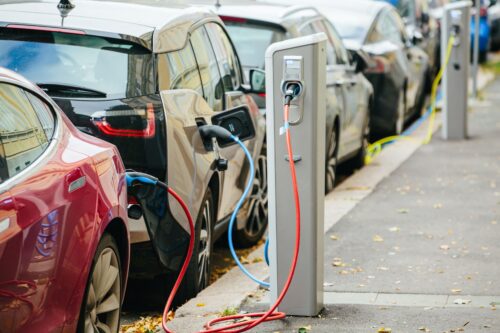
With transportation now the largest source of U.S. greenhouse gas emissions, several states are taking comprehensive steps to help enable residents and businesses to use and charge electric vehicles, yet many others have done little to reduce barriers, according to a first-of-its-kind report released today by the American Council for an Energy-Efficient Economy.
Supporting Rural Communities with State Energy Efficiency Policy
State energy efficiency policies are a key tool for delivering energy savings to rural communities across the country. State regulators and policymakers are using a variety of policies – such as energy efficiency resource standards and performance incentives – to support rural residents, businesses, institutions, and farms. In a new report, ACEEE highlights the policies that several states are using to deliver the benefits of energy efficiency to rural community members. Policy professionals from Vermont, Oregon, and Colorado join report author Mary Shoemaker in a webinar to discuss energy efficiency policies and programs they are using to serve rural populations.
Which states are doing the most to save energy and which are falling behind? And how has COVID-19 and the resulting recession affected their efforts? In a comprehensive ranking of 32 metrics in five policy areas, ACEEE highlights national winners and, for the first time, regional winners and states to watch. The report looks at the top states for utility-sector efficiency, building energy codes, appliance standards, electric vehicles, and other policies and programs. Report authors were joined by leaders from California, Colorado, and Nevada. Learn more at: https://www.aceee.org/state-policy/scorecard
City Efforts to Realize Low-Carbon, Equitable Transportation
Research from ACEEE’s 2020 City Clean Energy Scorecard shows that some cities have taken key steps over the past 18 months to reduce transportation-related emissions, with several municipalities releasing sustainable transportation plans and four cities (of 100) taking new steps to create compact, transit-oriented communities. However, our research also suggests that all cities can do much more, including adopting vehicle-miles-traveled (VMT) reduction targets and tracking progress toward meeting them. In this webinar, ACEEE discusses research findings, and officials from Minneapolis and Washington, DC share strategies to reduce transportation-related emissions and inequities.
The Behavior, Energy & Climate Change Conference (BECC) is the premier international conference focused on understanding human behavior and decision making and using that knowledge to accelerat...
City Partnerships for Centering Equity in Clean Energy Policy and Implementation
In this webinar, ACEEE discusses research findings about efforts to advance social equity in two leading cities, Providence and Portland, OR. Leah Bamberger and Monica Huertas will discuss efforts in Providence to center equity in climate action planning, including the work of the Racial and Environmental Justice Committee and development of the Climate Justice Plan. Oriana Magnera of Verde will discuss the Zero Cities Project in Portland, an effort to prioritize policies that increase racial equity and achieve a zero-carbon building sector by 2050.
Energy Efficiency and Climate Policy Forum VIRTUAL
Forum Overview ACEEE research has found that energy efficiency can halve U.S. energy use and greenhouse gas emissions by 2050. With growing interest in policies to address global climate change, as...
How Biden Can Cut Carbon Emissions and Utility Bills with Appliance Standards
Meeting the climate and energy goals spelled out by President-elect Biden will require that the new administration prioritize actions to save energy and cut emissions from day one. U.S. appliance, equipment and lighting standards have done more to save energy in buildings than any other policy but the Department of Energy (DOE) has fallen woefully behind on its obligations to update them. DOE has missed more than two-dozen legal deadlines and a similar number are coming due within the next four years. This briefing presented the findings of a major new report from the Appliance Standards Awareness Project and the American Council for an Energy-Efficient Economy that examines how much can be accomplished for the climate and for consumers' pocketbooks with appliance, equipment, and lighting standards adopted by DOE within the next four years.
BECC Webinar: Fusing Facts And Feelings To Motivate Action On Climate Change
Solutions to climate change rest on science, technology, political will, and public support. In this talk Shahzeen Attari discusses efforts from her lab over the past decade that aim to address problems related to human behavior, resource use, and climate change. Using methods that have strong links to environmental and cognitive science, they have investigated questions ranging from how people think about how much energy different appliances use, how to correct misperceptions using expert heuristics, what energy mix people want us to use in 2050, and some factors that shape the credibility of climate communicators. She provides an overview of some of their main research findings and a taste of our current research projects.
Fusing Facts And Feelings To Motivate Action On Climate Change
Solutions to climate change rest on science, technology, political will, and public support. In this talk Shahzeen Attari discusses efforts from her lab over the past decade that aim to address problems related to human behavior, resource use, and climate change. Using methods that have strong links to environmental and cognitive science, they have investigated questions ranging from how people think about how much energy different appliances use, how to correct misperceptions using expert heuristics, what energy mix people want us to use in 2050, and some factors that shape the credibility of climate communicators. She provides an overview of some of their main research findings and a taste of our current research projects.
Electrifying Space Heating in Existing Commercial Buildings
In this webinar, ACEEE presented results from its new study investigating the electrification of commercial buildings HVAC retrofits, including energy and carbon savings, cost-effectiveness, and policy recommendations. An engineer from Trane joined the webinar to provide a manufacturer’s perspective on the growing use of heat pumps and also some of the challenges. In addition, a UC Davis energy manager described how his team is approaching electrifying buildings on campus through the use of heat pumps, energy storage, and geoexchange.
Expanding Opportunity through Energy Efficiency Jobs
Hispanic, Latinx people, Black people, and women are underrepresented in the energy efficiency workforce. Efficiency program administrators can play an important role in increasing access for these workers and students and prepare them for efficiency jobs. In this webinar ACEEE presents findings from a new report on inclusive energy efficiency workforce development programs from utilities and efficiency program administrators. Staff from the New York Energy Research & Development Authority (NYSERDA) and District of Columbia Sustainable Energy Utility (DCSEU) joined to share their firsthand experiences administering workforce development programs. Learn about these programs and how to design economic recovery efforts to support energy efficiency job access for disadvantaged workers SHOW LESS
BECC Webinar – Encouraging Pro-environmental Behaviours: What Works, What Doesn’t, And Why?
If we know what motivates people to engage in pro-environmental behaviour, we can design (more) effective behaviour change interventions. Research from psychology can provide insights into people’s motivations for and barriers to engaging in pro-environmental behaviour. In this webinar, Wokje Abrahamse gives an overview of key research findings from psychology. The aim of the webinar is to explore how we can (more) effectively encourage the uptake of pro-environmental behaviours.
Evaluating Energy Efficiency Programs: Policies, Practices, and New Tools
Program evaluation plays an essential role in assessing the impacts of utility energy efficiency programs and improving their performance. In this webinar ACEEE presented results from a national survey of state policies and practices for evaluation, measurement, and verification (EM&V). The survey finds, for example, that evaluation policies and practices continue to vary widely from state to state, although many of the underlying methodological foundations of EM&V are common among states. Another finding is that today’s evaluators have a larger and more diverse set of tools, techniques, and resources than was available eight years ago when ACEEE conducted a similar national survey. Staff from E4theFuture joined ACEEE staff to discuss resources they have developed to support and guide program evaluators.
Which cities are leading the United States in clean energy efforts and which are falling behind? Learn about the findings of the 100-city scorecard, the most comprehensive national report tracking city progress toward climate goals. As cities struggle to safely put people back to work and recover from the COVID-19 recession, speakers explored what cities are doing and can do better to advance energy efficiency and renewable power — critical tools for creating jobs, lowering utility bills, building resilience, reducing pollution, protecting health, and mitigating climate change. Speakers also focused on the ways their programs are based on community input and designed to serve all residents.
How Energy Efficiency Can Help Rebuild North Carolina’s Economy and Reduce Emissions
Last year, North Carolina took important steps to bolster energy affordability, accelerate the clean energy economy, and fight climate change by issuing its state Department of Environmental Quality’s Clean Energy Plan and the Duke Nicholas Institute’s Energy Efficiency Roadmap. ACEEE published new research analyzing how some of the energy efficiency policies and programs recommended by in-state stakeholders can help rebuild North Carolina’s economy through energy, greenhouse gas, and bill savings. In this webinar, ACEEE’s researchers shared their results, and three leaders in energy efficiency in North Carolina – Sushma Masemore of the State Energy Office, Bridget Herring of the City of Asheville, and Jen Weiss of the Nicholas Institute at Duke University discussed their efforts to advance energy efficiency in the state.
The transportation sector offers huge potential to slash greenhouse gas emissions through electrification. This webinar brought together industry experts to speak on the important role financing structures play to electrify our commercial and public fleets!
How High Are Household Energy Burdens? Report Findings and Policy Solutions
New research from ACEEE shows that low-income households, as well as Black, Hispanic, and Native American households, pay a disproportionally larger share of their income on energy bills as compared to the average household. As the pandemic and recession continue to strain family budgets and exacerbate existing inequalities, policies to ensure that families are able to access affordable energy remain vital. ACEEE’s new report, How High Are Household Energy Burdens: An Assessment of National and Metropolitan Energy Burdens Across the United States (to be released Thursday Sept 10 at 11am) examines how energy burdens—the percent of income spent on energy bills—differ nationally, regionally, and in 25 metro areas. The report explores burdens by demographic groups and building types, such as low-income, Black, Hispanic, Native American, older adults, renters, older buildings, and affordable multifamily households. Many families with high energy burdens live in older, inefficient housing with older appliances and heating and cooling systems that waste energy. The report explores strategies to improve and expand low-income energy efficiency and weatherization programs as a way to address high energy burdens. The webinar included an overview of the report findings and recommendations, as well as additional examples of how states and cities are enacting policies and programs to lower high energy burdens and achieve more affordable energy in their communities.
Building Energy Performance Standards the Importance of Financing to Fund Critical Upgrades
To meet long-term climate goals, new and more aggressive approaches are needed to obtain substantial energy savings and reduce greenhouse gas emissions from existing buildings. Mandatory building performance standards are one such approach. This webinar explored how three jurisdictions are implementing building performance standards, and the financial instruments that can be complimentary to fund the necessary upgrades for building owners.
For the first time, we offered a virtual 2020 Summer Study on Energy Efficiency in Buildings. We planned to host this 21st biennial event in our usual, beloved location — the gorgeous gro...
Increasing Interest in Energy Efficiency Through Real Estate Listings
Could energy efficiency information in online real estate listings nudge home buyers to click on homes that are more efficient? Does the form in which home buyers see the information matter? Can a voluntary labeling program work as well as a mandatory labeling program? In this webinar, the Director of the Behavior and Human Dimensions Program at ACEEE, Reuven Sussman, teams up with the Management & Programs Analyst in the U.S. Department of Energy’s Building Technologies Office, Madeline Salzman, to discuss the results and implications of a first-of-its-kind online experiment addressing these questions.
Forum Overview In July 2020, ACEEE hosted its 12th Hot Water Forum virtually with over 230 attendees. Over the four days, 16 breakout sessions were presented on the smartest, most cost-effective wa...
Julie Colehour and Nancy Lee will use their combined 50 years of planning and implementing social marketing campaigns, to highlight the common mistakes they have seen come up time and time again. The social marketing planning process is complex and one wrong decision can dramatically impact your results. This presentation will focus on 10 common Social Marketing Pitfalls and how to avoid them.
How Can Electrification Enable Decarbonization of Industry?
Beneficial electrification stands out as one of the best low-carbon ways to decarbonize industry. This webinar will explore its promising opportunities, existing and emerging technologies, and routes to accelerate adoption. It will also discuss the policies and partnerships that are needed to lower hurdles and spur transformative action.
BECC webinar: Maximizing impact of energy affordability assistance programs
In this webinar, Drs. Michelle Hilscher and Sarah Carpentier, two behavioral scientists at BEworks,discussed the psychological and behavioral drivers behind enrolment in energy affordability assistance programs, including how the barriers of negative social stigma and hassle costs can be exacerbated by the so called “scarcity mindset”. They will present evidence-backed strategies to increase enrolment in these programs among the people who need them most, and will provide behaviorally-informed recommendations for policy makers hoping to effect maximal change to reduce residential energy burden.
The Sustainable States Community Energy Challenge: An Opportunity for your Community
The Challenge will support 30 communities in five states to assess their clean energy goals and initiatives, compare efforts across similarly-sized cities, assess future initiatives, and support a city cohort in each state. Communities working in Green Cities California, Minnesota GreenStep Cities, Sustainable CT, Sustainable Jersey, and Sustainable Maryland and are eligible to participate. On this introductory webinar, you will hear from the Sustainable States Network (SSN) and the American Council for an Energy-Efficient Economy (ACEEE). SSN will describe the goals of the Challenge, and ACEEE will provide a tutorial of a key resource to be used in the Challenge, the Local Clean Energy Self-Scoring Tool.
Energy Efficiency Can Get Us Halfway to Climate Goals
As we battle the COVID-19 pandemic, the threat of climate change remains and will also demand incredible resolve to address. Energy efficiency is a vital tool for putting people back to work and slashing harmful emissions. On Earth Day, join us as we explore how this tool can help revive the COVID-wracked economy and at the same time, get us halfway to U.S. climate goals by halving energy use and emissions. ACEEE’s new Call to Action offers a roadmap.
BECC Webinar: Climate Change in the Time of Coronavirus
As a community devoted to a sustainable planet, BECC could not ignore the impact that COVID-19 is having on human behavior and its relationship to our climate. Join us to explore how COVID is affecting our climate - the good, the bad, and the to-be-determined.
BECC Webinar: Nudging the commute: Applying behavioral insights to transportation demand management
In this webinar, you’ll hear from one of North America’s leading researchers – who works across academic and private sectors – about what behavioral science can tell us about why people drive, and why it’s so hard to change this behavior. You will also learn about the latest wave of research coming from cities and public agencies that looks at how evidence based “nudges” can get people out of their cars, and onto bikes, buses, and walking shoes. Learn more a https://beccconference.org/
BECC 2020 Webinar: Engaging Non-Experts – Visual Storytelling for Your Data
Visuals (including data visualization, infographics and visual storytelling) are an important method of showing complex systems – and they can be a useful tool to inspire action with your audiences. This session is an introduction to applying visual narrative to your data – with lots of examples. Learn how you can translate your research, data, and other environmental information into visuals to increase engagement.
This second edition of the Utility Energy Efficiency Scorecard assesses the 52 largest US electric utilities across a range of energy efficiency metrics. The metrics fall into three categories critical to utility-sector efficiency: (1) energy efficiency program performance, (2) program offerings and portfolio comprehensiveness, and (3) enabling mechanisms for efficiency.
Chicago Marriott Downtown Magnificent Mile Chicago, IL ACEEE held its second Rural Energy Conference in the Midwest. This dynamic one-day event explored how energy efficiency and c...
BECC 2020 Webinar: The Dragons of Inaction – and How to Slay Them
Most people now understand that environmental problems are human problems; we cause them, and it is our job to fix them. Yet many people, even those of us who have the best of intentions, are still not doing enough in their own lives to help. Why is that? How can the gap between good intentions and impactful behavior be closed?
Cities around the world are building resilient communities to prepare for the impacts of climate change. But to what extent are cities incorporating energy efficiency and renewable energy into their resilience plans? A new ACEEE report looks at the sixty-six resilience plans from cities across globe and highlights cities that exemplify clean energy and resilience planning, the energy initiatives cities are pursuing to boost community resilience, and the initiatives that seek to remedy energy inequities in their cities.
How do Nonresidential Energy Efficiency Programs Benefit Low Income Communities
This webinar will highlight the findings of a newly released ACEEE report on how energy efficiency program implementers reach nonresidential and community-serving institutions in low-income areas. These groups may include nonprofits, schools, local government buildings, locally owned businesses, medical facilities, shelters, and community centers. The ACEEE report surveys 39 programs that serve these institutions and provides insights on design, delivery, and evaluation trends, as well as policy considerations. The webinar will also include two program case study examples, including Energy Outreach Colorado’s Nonprofit Energy Efficiency Program and the City of Minneapolis’s Green Cost Share Program. The program implementers will discuss how their programs reach community-serving institutions in low-income communities through program design, delivery, partnerships, and key successes.
2020 Conference on Health, Environment, and Energy
Hyatt Centric French Quarter New Orleans, LA ACEEE's Conference on Health, Environment, and Energy (CHEE) returned to New Orleans, January 21-23, 2020. The event showcased the groundbreaking resear...
Theme: Scaling Up Hyatt Regency Sacramento, CA November 17, 2019 to November 20, 2019 The Behavior, Energy & Climate Change Conference (BECC) is the premier international conference f...
A rising number of states are showing US leadership on clean energy by adopting ambitious goals and energy-saving rules for buildings, appliances, and vehicles. The 13th annual State Energy Efficiency Scorecard This 13th identifies the leaders – Massachusetts and California; the most-improved states, notably Maryland; the states that lost ground such as Kentucky; and those lagging behind, including North Dakota and Wyoming.
2019 National Conference on Energy Efficiency as a Resource
Radisson Blu Minneapolis Downtown Minneapolis, MN In October 2019 in Minneapolis, ACEEE hosted its tenth National Conference on Energy Efficiency as a Resource (EER), the premier US convening ...
Hack Your Program Design Process - Interdisciplinary Collaboration for Creative Problem Solving Shift critical thinking into high gear by learning ways to apply design thinking and generate and embrace new ideas. Sometimes you need a little strategic disruption to break through the status quo and develop something that is – at best, truly innovative and at worst, a much better solution for the problems you’re facing. In this webinar you will learn a few simple ways to become the unbalanced force to disrupt the inertia and bring out new and interesting ideas that might not be comfortable and safe but may very well advance the needle on results. This is the sixth webinar in a series sponsored by the Behavior, Energy, & Climate Change Conference (BECC). BECC brings together social science researchers and actors in business, government, and the non-profits sector to discuss methods of taking action on climate change. This year’s conference is November 17-20, in Sacramento, CA
Energy efficiency can slash US energy use and greenhouse gas emissions by about 50% by 2050, getting us halfway to our national climate goals. We can achieve almost all these savings, worth more than $700 billion in 2050, by dramatically scaling up government policies and programs. This report examines 11 packages of efficiency opportunities in every economic sector and the policies that could unlock each of them.
US cities are ramping up their clean energy efforts, notably with stricter energy-saving rules for buildings, but only a few cities appear on track to meet their community-wide climate goals. ACEEE's 2019 City Clean Energy Scorecard tracks policy efforts to advance renewable energy in addition to energy efficiency in 75 cities across the United States.
DoubleTree by Hilton Portland Portland, OR The theme for this historic Summer Study on industrial energy efficiency was “Inspiring Action for a Sustainable Future.” We chose our the...
Employing Energy Efficiency to Protect Health and Mitigate the Effects of Climate Change
Energy efficiency is a cost-effective strategy for reducing greenhouse gas emissions and mitigating the health effects of climate change. By saving energy in buildings and making vehicles more fuel efficient, we reduce our need to burn fossil fuels to generate electricity. These reductions in pollution mean big gains for health. Doctors will share their experiences advocating for energy efficiency policies as a strategy to mitigate the health effects of climate change in state legislatures. Experts will also discuss how energy efficiency can play a role in protecting public health by reducing greenhouse gases and other harmful pollutants.
Next Generation Energy Efficiency Resource Standards
Energy efficiency resource standards (EERS) have been a key tool for delivering energy savings in states across the country, driving 80% of all utility savings reported across the United States in recent years. Now states are looking to their energy efficiency policies to do more. New approaches to EERS policies can help states meet aggressive climate goals, lower costs, give utilities the flexibility they need to meet demand, encourage beneficial electrification, and deliver benefits like bill savings and healthier homes to those with the greatest need. In our new report, ACEEE will highlight the approaches leading states including Hawaii, New York, Massachusetts, Minnesota, and California are taking to evolve their energy efficiency resource standards to align with these goals.
BECC Webinar: Utilities investing in behavior change programs: Get the inside scoop!
Residential behavior programs are providing a larger share of total utility portfolio savings than ever before, but what does the future hold for these programs? We’ve got the inside scoop on how utilities across the industry are approaching behavior programs, how behavior program spending and savings trends have changed over the past several years, and what this means for future behavior programs. In this webinar, we’ll present an overview of the current utility behavior program landscape, then share case studies of utilities that have put behavioral principles into action—within home energy report programs as well as outside of them. We will show you how to drive deeper savings and improve the customer experience by including commitments, prompts, follow-through, and other elements in your programs, and get our take on the future of behavior programs.
BECC Webinar: How to Scale Up Climate Solutions From Tens of Thousands to Millions
Is policy change the solution to climate change? Speeding up the process of GHG abatement from the current level of about 1% to the 5% needed to reach U.S. goals is arguably the most important challenge of the 21st century. Policy alone is insufficient to meet this challenge. Despite more than a decade of aggressive climate policy, California’s emissions have changed very little relative to the United States overall. Individual and collective behavior must play an important role to scale up needed change. Climate change is the consequence of countless daily decisions by individuals, households, businesses, communities, and governments. What is the potential to scale up adoption of low-carbon technologies and practices at all of these scales? This webinar explained carbon footprints, discussed how they vary over time and space, and provided examples of how to scale up climate solutions to millions of change agents across the United States and the world.
Realizing the Economic Impacts of Energy Efficiency in Pennsylvania
Energy efficiency is a power house job creator. Recent research from ACEEE finds that changes to Pennsylvania’s energy efficiency laws could deliver more than 30,000 jobs to the Commonwealth. What do these jobs look like, and how do we make them a reality? In this webinar, ACEEE and the Keystone Energy Efficiency Alliance laid out the roadmap to creating jobs through expanded energy efficiency in Pennsylvania. We were joined by experts to learn how the economic development impacts of energy efficiency have already taken root across the state, offering new opportunities for business investments and workforce development.
ACEEE launched a new working group and webinar series to explore the intersection of health, environment, and energy. The new webinar series will highlight the latest research from experts in the field, emphasizing promising practices in program design and policy implementation. The first webinar in our series, Designing Buildings that Improve Occupant Health, featured presenters who discussed methods for addressing health in buildings with architectural design, in-home assessments and interventions, and building labeling and certification.
Emerging Opportunities in Buildings Series – Focus on Indoor Agriculture
A variety of horticultural products are grown indoors either in greenhouses or, increasingly, in fully-enclosed buildings. To be successful, cultivators must create the optimal growing conditions for a commercial crop, using artificial lighting, heating and cooling, and dehumidification to mimic the ideal outdoor environmental conditions favored by each plant. It takes a lot of energy to create these conditions, making indoor agriculture–also known as controlled environment agriculture (CEA)—an energy-intensive endeavor. As the industry experiences a surge of interest and increased investment, greater attention is being paid to opportunities for energy efficiency. In this webinar, ACEEE summarized the findings of a new brief in its Emerging Opportunities in Buildings Series covering controlled environment agriculture. SHOW LESS
Storytelling is a powerful tool to engage, educate, and empower people to take action on climate change. Research has found that stories are more interesting, understandable, and persuasive than other forms of communication. And best of all? Anybody can do it! Communication and climate change expert Dr. Beth Karlin presented on how you can start to integrate storytelling into your work. It's easier (and more fun) than you may think.
The National Press Club Washington, DC On May 6, ACEEE held its first Forum on Connected and Automated Vehicles: Energy Impacts (CAVs) event. Overview CAVs are capturin...
Emerging Opportunities in Buildings Series; Focus on Residential HVAC
Residential heating and cooling have long been a target of energy efficiency projects and efficiency program portfolios. Exciting new opportunities expand on long-standing envelope and HVAC system upgrades and further reduce the energy required for space conditioning in homes. These include new and innovative technologies, but also new information tools and program design and implementation approaches to better align energy efficiency and the interests of both electric and gas utilities. In this webinar, ACEEE will summarize findings of two new briefs in its Emerging Opportunities in Buildings Series covering 1) Residential Window Attachments and 2) Dual-Fuel Programs. Attendees will also hear from some of the experts that contributed their knowledge to the briefs.
BECC Webinar: After the Audit Efficiency Assessment Reports
Tens of thousands of home energy assessments are conducted every year in the United States, but many recipients do not follow through on their recommendations. We studied 45 sample assessment reports by coding them for design and content elements, sending them for review by a panel of experts (energy assessors, graphic designers, and behavioral scientists), and examining a subset using an eye-tracker.
Hilton Nashville Downtown Nashville, TN ACEEE held it's annual 2019 Hot Water Forum, where experts shared the latest on technologies and techniques to improve how we make, distribute, and...
Designing Behavior Change Programs for Encouraging Energy Efficiency
This webinar was recorded on March 6, 2019. Do you have questions about behavior change and energy efficiency? Curious about how you can leverage social marketing to promote smarter energy use? Two prominent communities have an exciting behavior change 101 event for you! The Behavior, Energy & Climate Change Conference (BECC) and The Social Marketing Association of North America (SMANA) will be collaborating to present a webinar that will explain several theories of behavior change along with a systematic approach for designing, implementing and evaluating these programs. Dr. Sussman, co-chair of BECC and Senior Manager of the Behavior and Human Dimensions Program at ACEEE, will describe several examples he helped design, as well as other relevant programs. BECC 2019 is going to be held in Sacramento, CA, November 17-20. If you want to learn more about the conference or submit a presentation abstract, visit: https://beccconference.org
Emerging Opportunities in Buildings Series, Focus on Commercial Buildings
This webinar, recorded on February 7, 2019, discusses integrated building systems, energy storage, and energy as a service, all in the context of energy efficiency. Presenting are Jen Amann of ACEEE, Todd Olinsky-Paul of Clean Energy Group, and Greg Leventis of the Clean Energy Group.
The Role for Efficiency in State and Provincial Programs to Price Carbon
The webinar, recorded on January 3, 2019, features Steve Nadel, executive director of ACEEE, Cassandra Kubes, an ACEEE research manager, and Brendan Haley, policy director at Efficiency Canada.
2018 Conference on Health, Environment, and Energy
Hyatt Centric French Quarter New Orleans New Orleans, LA December 03, 2018 to December 05, 2018 In December 2018 in New Orleans, ACEEE hosted its first Conference on Health, Environment, ...
2018 National Convening on Utilities and Electric Vehicles
Drawing on its experience in the transportation and utilities sectors and on our work to advance the energy efficiency and public policy benefits of electric vehicles, ACEEE hosted a one-day conven...
Virtual Session of the Upcoming Conference on Health, Environment and Energy
The webinar, which took place on October 31, 2018, included as speakers Sara Hayes (ACEEE), Laura Rodormer (National Grid), Jalonne White-Newsome (Kresge Foundation), and Mona Safarty (Medical Society Consortium on Climate and Health). To find out more about CHEE, visit https://aceee.org/conferences/2018/chee
Small towns and rural countryside make up three-fourths of the land area in the United States and are home to 14% of the total US population. Rural America, defined as areas with a population of le...
2018 Behavior, Energy and Climate Change Conference
Hyatt Regency Washington on Capitol HillWashington, DCOctober 07, 2018 to October 10, 2018BECC is the premier event focused on understanding individual and organizational behavior and dec...
The webinar occurred on October 4, 2018, upon the release of the 2018 State Energy Efficiency Scorecard. Speakers include lead author Weston Berg and executive director Steve Nadel of ACEEE, Judith Judson of the Massachusetts Department of Energy Resources, and Andrew McAllister of the California Energy Commission. For further information about the findings, see this video: https://youtu.be/mhIH8_SmWlY To download the State Scorecard, go to https://aceee.org/state-policy/scorecard
Reaching Rural Communities with Energy Efficiency Programs
The webinar occurred on September 20, 2018, upon the release of the ACEEE report Reaching Rural Communities with Energy Efficiency Programs. The report can be downloaded at http://aceee.org/research-report/u1807
Asilomar Conference Grounds Pacific Grove, CA Buildings Summer Study Overview The 2018 ACEEE Summer Study was the 20th biennial ACEEE conference on Energy Efficiency in Buildings. This preeminent m...
Exploring the Role of Cities in Supporting the Energy Efficiency Workforce
The webinar, recorded on July 26, 2018, features panelists Mary Shoemaker of ACEEE, Camille Pollan of the City of New Orleans Office of Resilience and Sustainability, Veronica Soto of Emerald Cities Los Angeles, and Adam Jacobs of the City of Boston Department of the Environment
This webinar, on the topic of household energy burdens and opportunities for energy efficiency in rural America, coincides with the release of a report by Energy Efficiency for All and ACEEE. Speaking are Ariel Drehobl of ACEEE, Khalil Shahyd of NRDC and EEFA, Mike Smith of Electric Cooperatives of South Carolina, and Becky Eberle of Pacific Power/Rocky Mountain Power. The report can be downloaded at http://aceee.org/research-report/u1806
Best Practices from Across the Globe ACEEE convened a one-day symposium to highlight international energy efficiency best practices, with a particular focus on opportunities for improvement in the ...
The webinar, hosted by ACEEE senior local policy research analyst Stefen Samarripas, discusses the potential for energy efficiency retrofits and solar power in affordable multifamily buildings. Speakers include Andrew Brooks of the Association for Energy Affordability, John R. D'Agostino of Connecticut Green Bank, and Jared Lang of the National Housing Trust. The webinar occurred on May 15, 2018, upon the release of the ACEEE report Our Powers Combined: Energy Efficiency and Solar in Affordable Multifamily Buildings, which can be found here: http://aceee.org/research-report/u1804
How do you finance energy efficiency? The 2018 Finance Forum explored innovative models that discovered what works, and why. Our dynamic conference provided attendees with the tools and knowledge t...
In advance of the 2018 Energy Efficiency Finance Forum, moderator Brian Stickles invites Adam Krop of CDP Cities North America, Thomas Deyo of Montgomery County Green Bank, and Gwen Yamamoto Lau of Hawaii Green Infrastructure Authority to present their unique perspectives on financing clean energy projects. The conference takes place in Tarrytown, NY May 21 and 22, 2018. For more on Energy Efficiency Finance Forum, visit http://aceee.org/conferences
Mission Attainment: Incorporating Pollution Reductions from Energy Efficiency in States
The webinar, held on April 20, 2018, discusses the release of a new ACEEE report on states meeting specific pollution reductions required under the EPA Natonal Ambient Air Quality Standards (NAAQS). Speakers include Cassandra Kubes of ACEEE, Robyn DeYoung of EPA, and Nancy Seidman of the Regulatory Assistance Project.
The Next Nexus Exemplary Programs That Save Energy and Improve Health
The webinar took place on March 27, 2018, the day the The Next Nexus, an ACEEE report awarding exemplary energy-saving and health-improving programs, was released. The report can be found here: http://aceee.org/research-report/h1802 For more on ACEEE's health and environment work, please see Topic: Climate Change Policy and Topic: Indoor Air Quality
ACEEE’s Hot Water Forum is the only technical conference about efficiently making, distributing, and using hot water, regardless of its source. Since 2008, the Hot Water Forum has brought together ...
Webinar For The Release Of The ACEEE/PSR Report Saving Energy, Saving Lives
The webinar, which took place on February 21, 2018, discusses a report released that day by ACEEE and Physicians for Social Responsibility (PSR) called "Saving Energy, Saving Lives: The Health Impacts of Avoiding Power Plant Pollution with Energy Efficiency. The report finds that in many areas, reducing annual electricity use would reduce air pollution and save more than 6 lives a day, prevent nearly 30,000 asthma episodes a year, and save Americans up to $20 Billion in avoided health harms per year. Webinar speakers: Sara Hayes, Program Manager for Health and Environment, ACEEE Barbara Gottlieb, Director, Environment and Health, PSR Dr. Ned Ketyer, M.D., F.A.A.P., member, American Academy of Pediatrics Council on Environmental Health The report can be found at http://aceee.org/research-report/h1801 .
Reuven Sussman, ACEEE Behavior Program manager, discusses his new report, which uses a behavioral science approach to answer the question, How can home energy assessments lead to more energy efficiency upgrades? The report, How to Talk About Home Energy Upgrades, can be downloaded from https://aceee.org/research-report/b1701. The webinar was recorded on Nov 7, 2017.
2017 Behavior, Energy and Climate Change Conference
Hyatt Regency Sacramento Sacramento, CA October 15, 2017 to October 18, 2017 BECC is the premier event focused on understanding individual and organizational behavior and decision-making ...
This webinar, recorded on September 28, 2017, discusses the results from the newly released 2017 State Energy Efficiency Scorecard. Presenters include Steve Nadel, executive director of ACEEE, Kathleen Hogan, deputy assistant secretary for energy efficiency at EERE, Weston Berg, research analyst at ACEEE and lead author of the 2017 Scorecard, and Annie Gilleo, senior manager for state policy at ACEEE.
2017 Summer Study on Energy Efficiency in Industry
Advancing Industrial Energy Efficiency through Collaboration Industrial energy efficiency has always been about people. The latest technologies often get the most attention, but it’s the people who...
Results From ACEEE’s First Ever Utility Energy Efficiency Scorecard
Recorded 6/21/17. A webinar to discuss the results of the 2017 Utility Energy Efficiency Scorecard. Speakers include Brendon Baatz, ACEEE - Senior Manager (Moderator); Grace Relf, ACEEE - lead author of the Scorecard; Stacey Paradis, MEEA - Executive Director; Cyrus Bhedwar, SEEA - Director of Policy; and Samantha Caputo, NEEP - Research Associate.
How do you finance energy efficiency? The 2017 Finance Forum explored innovative models and find out what works, and why. Our dynamic event helped attendees get started on financing projects that s...
Innovative Approaches from Emerging Technologies to Market Transformation Attendees explored cutting-edge ideas, strategies, and collaboration at the premier spring event dedicated to energy effici...
Overview The ACEEE Hot Water Forum (HWF) is the premier technical conference dedicated to making water hot, distributing it with low losses, and using water with efficient fixtures and practices. S...
Renaissance Baltimore Harborplace Hotel Baltimore, MD October 20, 2016 to October 22, 2016 Entering into its tenth year – BECC is the premier event focused on understanding individual and...
Part 5 of the 2016 ACEEE Clean Power Plan Webinar Series. This final webinar in the series was recorded on July 28, 2016. It covers the topic of energy efficiency in the Clean Energy Incentive Program, which is a portion of the Clean Power Plan.
Paying to Save Money: Energy Efficiency and the Clean Power Plan
Part of the ACEEE Clean Power Plan webinar series. This presentation was recorded on June 23, 2016. For more information on the series, plus other CPP resources, see http://aceee.org/topics/clean-power-plan
Achieving Deep Energy Efficiency The 2016 ACEEE Energy Efficiency Finance Forum was held May 22 - 24, 2016 at the Newport Marriott in Newport, Rhode Island. Energy efficiency has taken on a new lev...
Complying with the Clean Power Plan: An Opportunity for the Industrial Sector
Part 3 of the ACEEE Clean Power Plan Webinar Series. For more resources on energy efficiency and the Clean Power Plan, see http://aceee.org/topics/clean-power-plan
Celebrating 20 Years of Achieving Energy Efficiency through Market Transformation In 2016, we celebrated 20 years of innovative thinking, collaborative action, and commitment to addressing the oppo...
Overview The ACEEE Hot Water Forum (HWF) is the premier technical conference dedicated to making water hot, distributing it with low losses, and using water with efficient fixtures and practices. S...
Energy Efficiency and Low Income Communities in the Clean Power Plan: A Billion Dollar Deal
ACEEE's Lauren Ross and Sara Hayes provide an overview on energy efficiency, low-income communities, and the Clean Power Plan. They discuss how the Clean Power Plan could mean over a billion dollars in investment for low-income communities, and they discuss ways in which communities can leverage opportunities in the Clean Power Plan to improve housing and services. This includes what types of energy efficiency projects and policies could count towards state compliance and how these programs are currently being implemented across the country. The webinar concludes with a discussion of ways advocates can ensure that the interests of low-income communities are represented in EPA's rules and state plans.
A Preview to the 2015 ACEEE Intelligent Efficiency Conference
If you’d like to learn more about the Intelligent Efficiency Conference and intelligent efficiency in general, this webinar, recorded on October 22nd, will get you started. In the webinar, we provide an overview of intelligent efficiency and explain how Boston has become a leader in using intelligent efficiency to improve city management and provide new services. These smart-city practices are one of the reasons Boston scored #1 in our 2015 City Energy Efficiency Scorecard, and why we chose the city for the conference. The webinar panel is comprised of: Penni McLean-Conner, Chief Customer Officer and Senior Vice President of Customer Group for Eversource Energy (and ACEEE Board Member) Badri Raghavan, Chief Data Scientist for First Fuel Arah Schuur, Director, Energy Efficiency Division, Massachusetts Department of Energy Resources They joined Ethan Rogers, ACEEE's Senior Program Manager, Industry, for an hour-long discussion of intelligent efficiency, smart cities and the 2015 conference, and answered questions from attendees.
Multifamily Housing Offers Opportunity to Utilities Seeking to Meet Energy Efficiency Goals
Multifamily Housing Offers Opportunity to Utilities Seeking to Meet Energy Efficiency Goals By Kate Johnson, ACEEE, Anne McKibbin, CNT Energy, and Todd Nedwick, National Housing Trust The multifamily housing sector represents a sizeable opportunity to achieve energy savings through targeted energy efficiency programs. This webinar presentation reviews the latest research on multifamily energy efficiency programs from ACEEE, CNT Energy and the National Housing Trust.
This webinar was held on June 5, 2012. The first major new source of energy to be discovered in years - "intelligent efficiency" - has the potential to dwarf the impact of other older and better-known sources of energy and will be key to providing the power America needs in a carbon-constrained world, according to a major new report from the American Council for an Energy-Efficient Economy (ACEEE) to be released June 5, 2012, during a live webinar. Experts from ACEEE and leading U.S. corporations will explain how intelligent efficiency will far outstrip the impact of energy efficiency as it is understood today. The new ACEEE report outlines both what intelligent efficiency is and also provides case studies of how the new energy source is now starting to be used by major corporations. Check out the report: http://aceee.org/e125
Support the Work That Makes Energy Go Further
ACEEE’s independent research and advocacy depend on the support of foundations, businesses, and individuals committed to cutting energy bills, waste, and climate pollution.