ACEEE | American Council for an Energy-Efficient Economy
Jul 27, 2026
Efficiency Saves: Cutting Energy Waste Can Save $31,000 per Household
The United States faces interlocking energy challenges: rising home energy bills and gasoline prices; new demand for electricity from data centers and other loads; high greenhouse gas emissions from burning fossil fuels.
Now, a new era of energy efficiency progress in our buildings, transportation, and industry is needed to meet this moment. This wide-ranging study finds a massive opportunity.
The United States faces interlocking energy challenges: rising home energy bills and gasoline prices; new demand for electricity from data centers and other loads; high greenhouse gas emissions from burning fossil fuels.
Now, a new era of energy efficiency progress in our buildings, transportation, and industry is needed to meet this moment. This wide-ranging study finds a massive opportunity.
Energy efficiency improvements and demand flexibility measures completed between now and 2050 could:
Save about
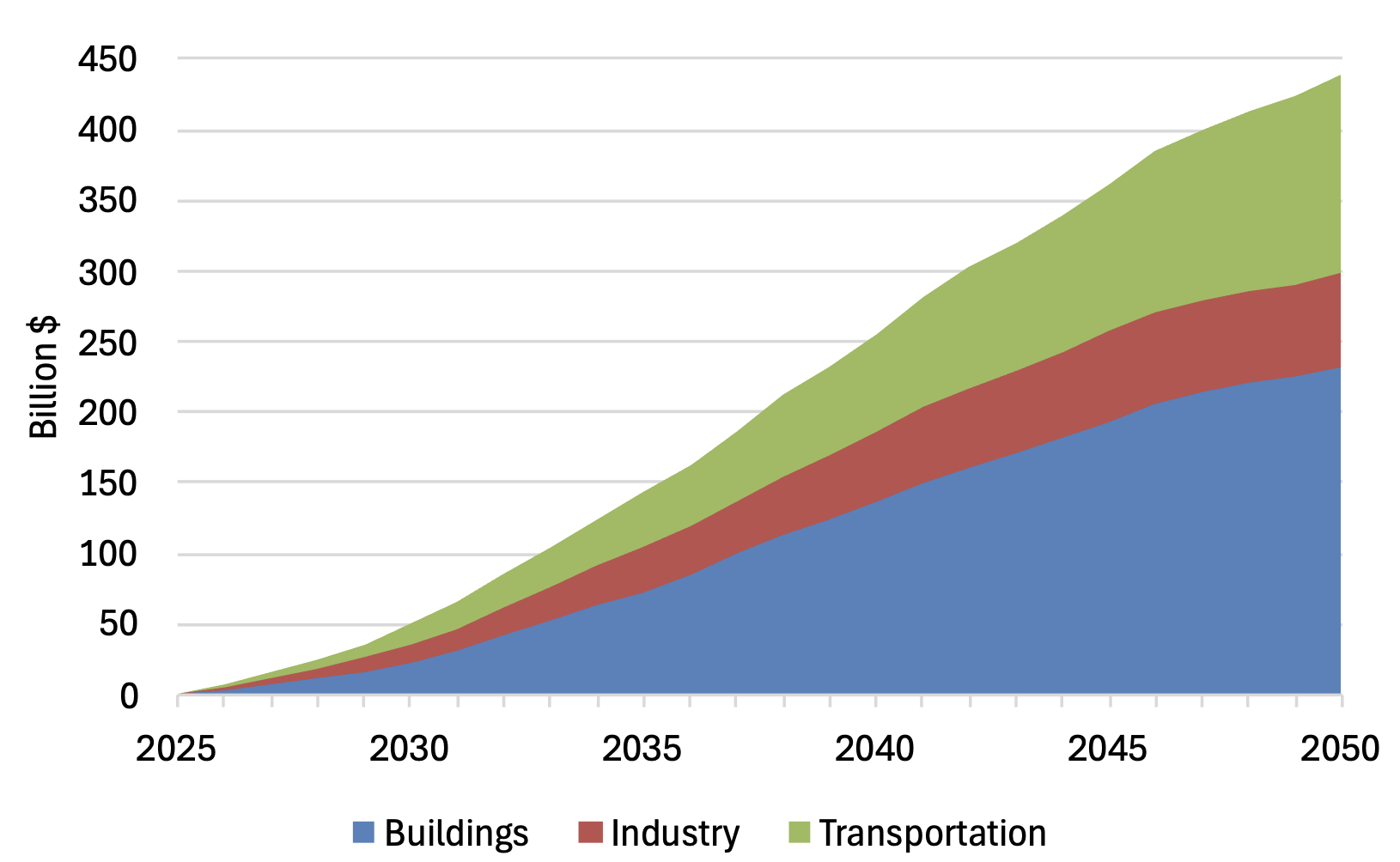
$4.8 trillion
in energy and related costs, equivalent to almost
$31,000 per household.
From electric efficiency measures alone, reduce peak electric demand by the output of
400+ large power plants.
Spur an additional
1 million net jobs
per year, on average.
Reduce climate pollution by
one-third by 2050.
Cut small particulate and other air pollution at scale to avert approximately
280,000 deaths.
Energy cost savings by year in real 2025 dollars from the set of energy efficiency and demand flexibility measures
Key opportunity areas
Buildings
Equipment efficiency
Reduce waste from new appliances, equipment, and lighting, including shifting from inefficient electric heating to heat pumps.
Zero-emission new buildings
Make new homes and commercial buildings more efficient so remaining energy needs can be met with clean electricity.
Existing building improvements
Improve insulation and air sealing and switch from fuels to heat pumps and other efficient electric equipment.
Industry
Industrial efficiency and electric heat
Reduce energy waste from industrial processes and use efficient electrical equipment for low- and medium-temperature heat.
Reduced industrial materials
Reduce the need for industrial materials and products through lower waste, efficient utilization, and longer lifetimes.
Transportation
Efficient and electric vehicles
Improve the efficiency of new cars, SUVs, trucks, and buses, including by running more of them on electric batteries.
Transportation system efficiency
Reduce the need for driving cars and trucks by improving the availability of and access to other transportation options.
Grid
Demand flexibility
Shift electricity demand away from times of high demand on power plants and the grid and toward times when abundant sun and wind power are available.
Bridging the Equity Gap for Utility Energy Efficiency Programs
Utility energy efficiency programs have increased investment in low-income households, but significant gaps remain. This report examines spending and savings trends across 48 major U.S. utilities, identifies barriers to expanding low-income programs and highlights policies and program strategies that can improve energy affordability and equitable access to efficiency upgrades.
Congress Can Cut Freight Costs and Consumer Prices by Addressing Key Issues in the BUILD America 250 Act
The BUILD America 250 Act, advanced by the U.S. House Transportation and Infrastructure Committee, would eliminate or weaken many programs that help lower transportation …
Home Energy Reports and Beyond: Meeting the Moment with Behavior-Based Energy Efficiency
Home energy report programs, in which utilities provide households with personalized insights into their energy use and tips to lower their bills, are a…
Support the Work That Makes Energy Go Further
ACEEE’s independent research and advocacy depend on the support of foundations, businesses, and individuals committed to cutting energy bills, waste, and climate pollution.
Ungar, Lowell, Matt Malinowski, Peter Huether, Archibald Fraser, Andrew Hoffmeister, and Rachel Margolis. 2026. Efficiency Saves: Cutting Energy Waste Can Save $31,000 per Household. Washington, DC: ACEEE. aceee.org/resource/efficiency-saves