Skip to Content

Planned Strategically, Federal Buy Clean Investment Can Increase Its Impact Exponentially 

To grow the market for low-carbon building materials, agencies must coordinate with states, involve the private sector in development, and leverage federal funds.

With public procurement under the Buy Clean policies of the Inflation Reduction Act and Infrastructure Investment and Jobs Act, the U.S. General Services Administration, the U.S. Department of Transportation, and states have an enormous opportunity to launch, cultivate, and support a robust market for low-carbon materials like concrete, steel, glass, and asphalt, which will be critical to reducing embodied carbon emissions in buildings while decarbonizing the industrial sector. 

To achieve this transformation, the federal agencies must select projects strategically, coordinate with state and local efforts to drive demand, involve the private sector in the project development process to build capacity, and leverage other federal funding to grow the market for low-carbon materials. Using concrete as an example, we identify regions of the United States where these efforts are more likely to succeed based on the size of the construction market, the number of concrete and cement manufacturers and contractors, readiness to support new construction techniques and capacity of the workforce to do so, and locations of GSA-owned buildings. 

We rank states on their potential to scale up low-carbon concrete based on these factors. The top ten states are California, New York, Texas, Colorado, Michigan, Illinois, Ohio, Florida, North Carolina, and Washington. Without clear government commitment to sustaining the low-carbon concrete market through its early and riskiest stages, manufacturers will be reluctant to enter it. It is critical that policymakers understand these concerns and take targeted action, with priority to the states we have identified in this brief. 
Related Resources

The Electric Furnace Fix: How Replacing Air Conditioners with Heat Pumps Reduces Electric Heating Bills and Winter Peak Demand in the U.S. South
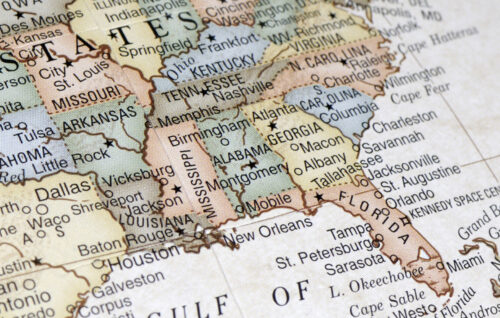
Close-up of a desktop globe showing the United States
  • Research Report
  • Homes and Buildings
  • Utilities and the Power Sector
  • The Electric Furnace Fix: How Replacing Air Conditioners with Heat Pumps Reduces Electric Heating Bills and Winter Peak Demand in the U.S. South

    Helping millions of Southern households shift most of their heating from inefficient electric resistance to heat pumps would dramatically lower utility bills and ease strain on the grid.

    Nov 17, 2026

    Near-Term Pathways to Reduce Emissions from Ethane Crackers
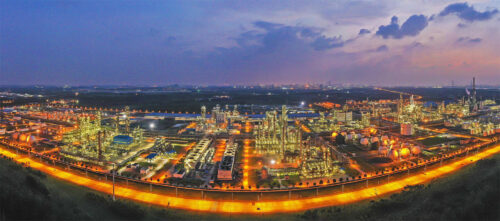
    Aerial view of an ethylene cracker plant
  • Research Report
  • White Paper
  • Industry and Manufacturing
  • Near-Term Pathways to Reduce Emissions from Ethane Crackers

    Informed by interviews with over 40 experts across ethylene operators, engineering companies, national labs, benchmarking firms, and more, this paper conveys key aspects about what is actionable, where improvements are needed, and the paths that should be pursued to advance technologies that will meet evolving customer demands, address competition, and significantly lower the environmental impact of ethylene production. 

    Nov 10, 2026

    Support the Work That Makes Energy Go Further

    ACEEE’s independent research and advocacy depend on the support of foundations, businesses, and individuals committed to cutting energy bills, waste, and climate pollution.