This white paper presents findings and how to apply lessons learned from a June 2024 study trip to industrial electrification sites in Denmark.
Key Findings
- Strong, clear national policy (and international standards and collaboration) drives industrial electrification in Denmark
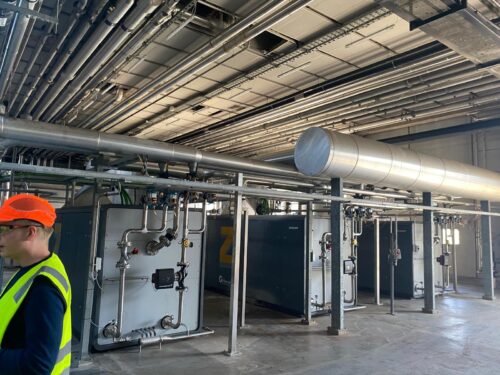
- Demonstrations of the use of electric technologies and energy efficiency in industrial plants are critical to provide guidance and reassurance for future decarbonization projects.
- Dynamic electricity pricing, a national energy data hub, and energy cooperation have been other important drivers of Danish electrification. Applying international expertise from successful projects, like those seen in Denmark, will require close collaboration between groups of stakeholders, including policymakers, utilities, facilities, technology vendors, and others.
- Public-private partnerships between manufacturers and government are critical for accountability, government understanding of industry needs, and engagement.
|
Electric technologies are essential for decarbonizing industrial process heat, which is a major source of emissions in the U.S. They are also critical for reducing energy costs, improving modularity of heating to meet specific temperature requirements, and boosting the competitiveness of domestic manufacturers. (Rightor et al. 2022; Hoffmeister, Chen and Eisen 2024)
This white paper looks toward electrification-enabling strategies that are in place or being pursued internationally, where there is more experience. It describes the political, economic, and energy landscapes that have allowed the uptake of electric technologies in the industrial sector, and the suite of policies and approaches that can be appropriated for the U.S. to the same effect. The lessons described in this white paper are based on a study trip to Denmark in June 2024 that was led by the American Council for an Energy-Efficient Economy (ACEEE) and sponsored by the Consulate General of Denmark in Silicon Valley.
National policy and regulation are essential for creating an environment conducive to industrial electrification
Danish policies, political goals, funding pools, and data transparency have been critical in establishing a manufacturing landscape ready for electrification. Policies such as carbon taxes and subsidy programs have created market incentives for decarbonization through electrification. Political goals have enabled market certainty, public funding pools have created the capital necessary for industrial capex investments, and greater data transparency has allowed for the dissemination of success stories and the reduction of perceived risks.
In the U.S., we can replicate this landscape through long-term federal and state commitments to electrify the industrial sector, effective state and federal policies in support of efficiency and electrification, public-facing case studies of electric technologies, and public funding pools that can make electrification of industrial processes affordable at scale.
Utilities and grid operators can improve the affordability of industrial electrification
The Danish dynamic electricity-pricing model for commercial and industrial customers has allowed for economical electrification and the associated load increases and for these same customers to anticipate rates and plan energy consumption accordingly.
In the U.S., we should apply these lessons in industrial rate design and demand side programs, accommodating electricity demand through infrastructure buildout and additional resiliency measures. Additionally, data-sharing and real-time energy models similar to the Danish approach would allow utility customers to make more informed energy purchasing decisions.
Collaborations between government agencies and industry can minimize risks and build coalitions in decarbonization efforts
In Denmark, public-private partnerships and other joint ventures between industrial companies and the Danish government have helped minimize risks for industry while the government can ensure progress is made toward decarbonization goals. Additionally, collaboration has helped consolidate industry behind a holistic and cohesive action plan.
U.S. industry and government agencies can adopt a similar model, building sector alignment and coalitions around strategies. Through this approach, industrial companies can share concerns to help government agencies know which barriers need to be mitigated with the most urgency, and to deliver funding to the most critical parts of the electrification supply chain.
Electric technologies must be ready and available to meet demand
Denmark and other European countries have invested heavily in the manufacturing of electric technologies. They have also promoted public demonstrations and case studies of those technologies in international publications. Despite that, there are still supply chain issues to overcome and a need for additional investment in the manufacturing of electric technologies and their components to meet growing demand.
To avoid stoking demand and faith in technologies that cannot be expeditiously delivered to end-users, the U.S. needs to make similar investments in the manufacturing of electric technologies and research and development into new applications and increased capacities of such technologies.