ACEEE | American Council for an Energy-Efficient Economy
Apr 1, 2003
Realizing Energy Efficiency Opportunities in Industrial Fan and Pump Systems
Fans and pumps account for more than a quarter of industrial electricity consumption nationally. Six industries represent 84% of the potential industrial fan and pump energy savings: chemical manuf…
Realizing Energy Efficiency Opportunities in Industrial Fan and Pump Systems
Complete the form to access this resource.
Fans and pumps account for more than a quarter of industrial electricity consumption nationally. Six industries represent 84% of the potential industrial fan and pump energy savings: chemical manufacturing; paper manufacturing; petroleum and coal products manufacturing; mining; food manufacturing; and primary metal manufacturing. Optimizing the operation of these fans and pumps could achieve electricity savings ranging from 20 to well over 50%.
While a range of efficiencies exist for fans and pumps, the opportunity exists less with increasing the efficiency inherent in the equipment and more with increasing the efficiency of the application of the equipment. Part of this potential results from the fact that fan and pump energy use varies as aproximately the cube of motor speed. In matching the pump and fan characteristics to the process requirements, the target is achieving the lowest flow, and thus the lowest energy usage. A number of approaches can be used to accomplish this, with the optimal approach depending upon the particular circumstances. Knowing the process requirements is key to determining the correct speed of pumps and fans. While this is not a complex engineering problem, it requires familiarity with both the facility processes, and fan and pump system design. Most optimization projects involve greater engineering costs than equipment costs. The average payback for a good optimization project is about 1.2 years, with the cost of saved energy on the order of $0.012 per kilowatt-hour (kWh). These estimates do not account for productivity gains known to exist at many of the sites, which are sometimes as much as two to five times the energy savings.
While the potential for fan and pump system efficiency has long been realized in the engineering community, attempts to design energy efficiency programs to capture this potential only date back just over a decade. To date, these programs have struggled to balance the needs for site-specific engineering services with program costs, though interest remains high among mature industrial programs in developing program strategies.
Since the biggest challenge has been high program cost for opportunity identification and solution design, it is important that programs quickly focus their efforts on sites likely to result in implemented savings. Programs focused on a few specific industries appear most effective. Programs will need to assemble a toolkit from the extensive existing materials, and identify key local and North American consulting resources that can provide assistance. Under this program approach, there will be limited need for equipment incentives because of the high benefit-cost ratio for most projects. The more important focus should be on incentivizing the engineering service, since once a project is designed the customer is likely to proceed with implementation if it can be shown to be profitable.
Toward Best Practices for Industrial Innovation: Lessons from the Department of Energy’s Industrial Demonstrations Program
This paper highlights a central lesson for policymakers: Industrial innovation requires alignment across government programs (grants, procurement), financing mechanisms (tax credits, loans), and institutional capacity. When these three are backed by sustained commitment from the public sector, private industry, and external stakeholders, the transition from demonstration to deployment becomes viable.
Bridging the Equity Gap for Utility Energy Efficiency Programs
Utility energy efficiency programs have increased investment in low-income households, but significant gaps remain. This report examines spending and savings trends across 48 major U.S. utilities, identifies barriers to expanding low-income programs and highlights policies and program strategies that can improve energy affordability and equitable access to efficiency upgrades.
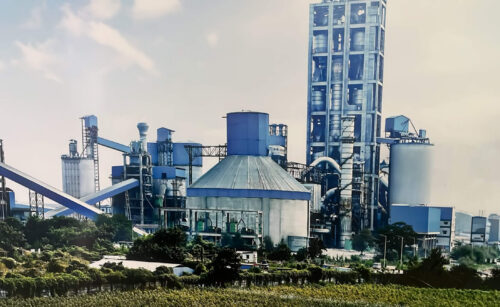
This report identifies pathways for India’s cement industry to decarbonise at a pace compatible with the national climate goal of net-zero emissions by 2070.
Efficiency Saves: Cutting Energy Waste Can Save $31,000 per Household
The United States faces interlocking energy challenges: rising home energy bills and gasoline prices; new demand for electricity from data centers and other loads; high greenhouse gas emissions from burning fossil fuels.
Now, a new era of energy efficiency progress in our buildings, transportation, and industry is needed to meet this moment. This wide-ranging study finds a massive opportunity.
Support the Work That Makes Energy Go Further
ACEEE’s independent research and advocacy depend on the support of foundations, businesses, and individuals committed to cutting energy bills, waste, and climate pollution.