
This award recognizes energy efficiency programs that serve medium and large industrial customers. The winning programs are commendable for facilitating technological changes to improve energy efficiency of industrial processes and motor systems. Strategic energy management is a leading approach for industrial programs to achieve comprehensive energy savings.
Leader of the Pack: Strategic Energy Management, ComEd with CLEAResult; Illinois
| Program start year | 2014 |
| Energy savings | 29.3 million kWh in 2023. Cumulative savings of 172 million kWh from 2015 through 2023. |
| Number of participants | 92 industrial accounts in 2024 |
| Budget for most recent year | $9.61 million in 2024 |
| Program website | https://www.comed.com/ways-to-save/for-your-business/energy-management/strategic-energy-management |
| Link to most recent evaluation report | https://www.ilsag.info/wp-content/uploads/ComEd-Behavior-Bus_Pub-CY2022-Impact-Report-2023-04-24-Final.pdf |
ComEd’s Strategic Energy Management (SEM) Program in Illinois is a model for delivering effective energy-efficiency solutions to industrial customers across a variety of sectors, like manufacturing, food & beverage, automobiles, and wastewater treatment. Through continuous engagement and support between the program implementers and customers, participants can identify low-cost and no-cost measures to improve process and energy efficiency within their facilities. In 2023, the SEM program achieved over 29.3 million kWh in verified energy savings. The program has grown significantly from its beginning as a pilot program in 2014 with 14 industrial sites participating.
The program works closely with companies to offer coaching, engineering, and training to lower barriers to participating. In addition, for the last three years, the program has included an internship program to build a pipeline to full-time jobs in the energy efficiency industry. For this focus on equity and non-energy benefits to industrial customers, ComEd’s SEM Program is a Leader of the Pack.
Key accomplishments and program features:
- The ComEd SEM Program yields significant and substantial long-term kWh savings for industrial customers in Illinois.
- In certain cases, for capacity-constrained industrial firms, ComEd provides most of the compensation for a dedicated energy management professional.
- The SEM program includes an internship program to train the next generation of energy management professionals. Recruitment focuses on students within disadvantaged communities and who may not have considered energy efficiency as a career path. To date, four interns have been hired into full-time energy efficiency roles.
- Industrial customers were key large participants in a broad-based community cohort focused in a disadvantaged community. This enabled industrial customers to collaborate with the community where they are located.
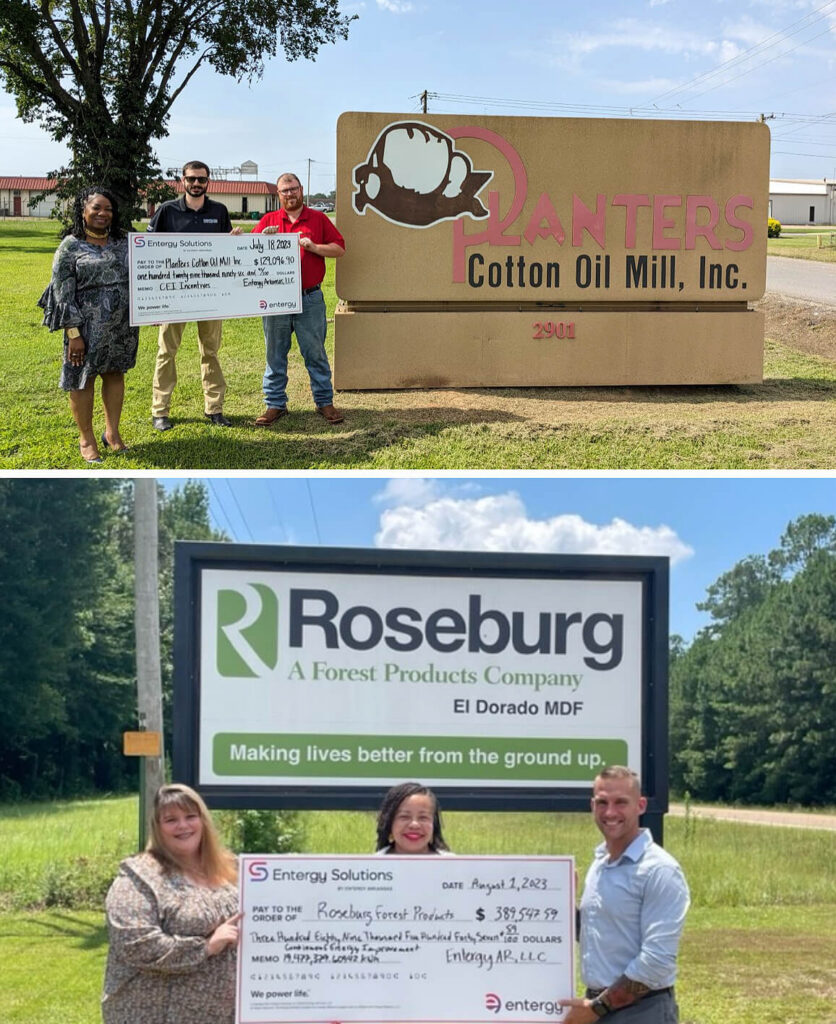
Exemplary Program: Large Commercial & Industrial Solutions; Entergy Arkansas with CLEAResult, Arkansas
| Program website | https://www.entergy-arkansas.com/your_business/save_money/ee/commercial/ |
| Link to most recent evaluation report | Report (docx) |
Entergy Arkansas offers a Large Commercial & Industrial Program to provide technical and financial assistance for energy efficiency programming within large industrial facilities with a peak demand of 100 kW or greater.
Key accomplishments and program features:
- In 2023, the program included 311 customers, who in total saved over 105 MWh and achieved carbon dioxide emissions reductions of 76,000 metric tons.
- The program’s success results from continuous energy improvement (CEI) and custom process- and energy-efficiency projects.
- The program provides trainings, incentives, and free assessments for participating customers.
Exemplary Program: Rocky Mountain Power Wattsmart – Managed Accounts Program Delivery; Rocky Mountain Power with Cascade Energy; Utah, Idaho, Wyoming
| Program website | https://www.rockymountainpower.net/ |
| Link to most recent evaluation report | Utah Wattsmart Business Program Evaluation |
The Rocky Mountain Power Wattsmart program for industrial customers provides strategic energy management (SEM) trainings and consultations to deliver significant energy savings for customers. While RMP’s Wattsmart program has existed for decades, the program’s service offerings have continuously evolved to cost-effectively help customers reduce their energy use.
Key program accomplishments and program features:
- Managed industrial accounts enrolled in the Wattsmart program saved over 118 million kWh across 235 projects in 2023.
- The program utilizes incentives at $0.15/kWh capped at a one-year payback in Utah and Idaho. Wyoming incentives are $.10/kWh
- Customers in Utah and Idaho can also participate in an Energy Project Manager program where the customer’s energy management staff is co-funded up to $75,000/year.

Support the Work That Makes Energy Go Further
ACEEE’s independent research and advocacy depend on the support of foundations, businesses, and individuals committed to cutting energy bills, waste, and climate pollution.